Kirjojen hintavertailu. Mukana 11 699 587 kirjaa ja 12 kauppaa.

Kirjahaku

Etsi kirjoja tekijän nimen, kirjan nimen tai ISBN:n perusteella.

6 kirjaa tekijältä Albert L. Hurtado

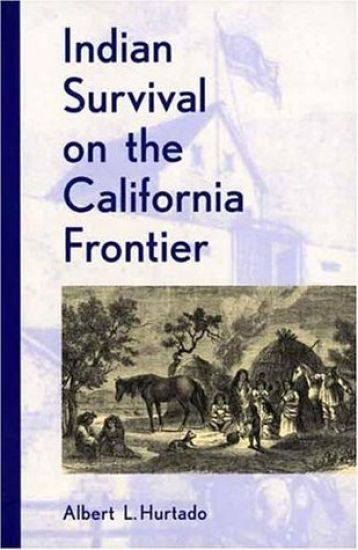
Indian Survival on the California Frontier

Indian Survival on the California Frontier

Albert L. Hurtado

Yale University Press
1990
pokkari
During the middle decades of the nineteenth century, when vast numbers of whites poured into California, the native Indian population was decimated through disease, starvation, homicide, and a declining birth rate. In this prize-winning book, Albert L. Hurtado focuses on the Indians who survived this harrowing time. Hurtado considers the ways in which native life and culture persisted, how the survivors integrated their lives with white society, and how the now-dominant whites related to the Indians living and working with them. “Anyone interested in California Indians should read this book.”—William Bright, Los Angeles Times Book Review “Hurtado takes a fresh look at the role Native Americans played in shaping frontier California. The Indians emerge from this study not merely as victims of white rapaciousness but as an active historical influence, serving as both a resistance force to white incursion and as prime shapers of the agricultural work force.”—Booklist “A wide-ranging and imaginative discussion of significant issues that are at the very center of scholarship on western settlement during the nineteenth century.”—Roger Nichols, University of Arizona Winner of the 1989 Ray Allen Billington Prize awarded by the Organization of American Historians for the best book in American frontier history.
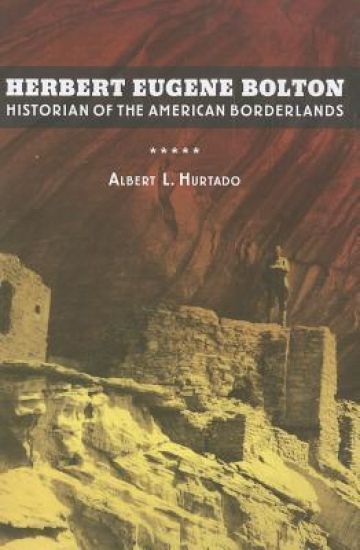
Herbert Eugene Bolton

Herbert Eugene Bolton

Albert L. Hurtado

University of California Press
2012
sidottu
This definitive biography offers a new critical assessment of the life, works, and ideas of Herbert E. Bolton (1870-1953), a leading historian of the American West, Mexico, and Latin America. Bolton, a famous pupil of Frederick Jackson Turner, formulated a concept - the borderlands - that is a foundation of historical studies today. His research took him not only to the archives and libraries of Mexico but out on the trails blazed by Spanish soldiers and missionaries during the colonial era. Bolton helped establish the reputation of the University of California and the Bancroft Library in the eyes of the world and was influential among historians during his lifetime, but interest in his ideas waned after his death. Now, more than a century after Bolton began to investigate the Mexican archives, Albert L. Hurtado explores his life against the backdrop of the cultural and political controversies of his day.
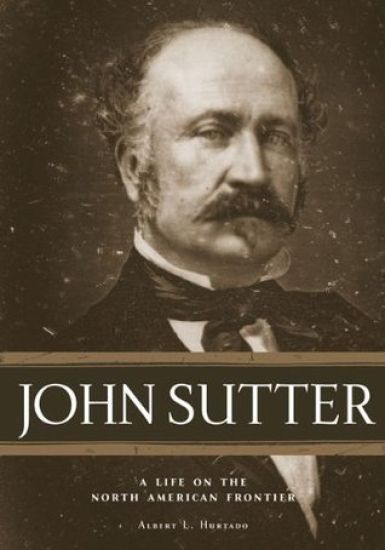
John Sutter

John Sutter

Albert L. Hurtado

University of Oklahoma Press
2006
sidottu
In the history of the American frontier, John Sutter (1803-1880) looms large. A Swiss expatriate who attempted to create a personal empire in California's Sacramento Valley, he founded New Helvetia, a cosmopolitan settlement whose economy depended on Indian slaves and free laborers. New Helvetia drew overland immigrants to California in the 1840s and then - after gold was discovered by Sutter's employees - a flood of fortune seekers. Sutter was poised to become one of the richest men in the West, but rapacious settlers and his own poor business sense sent his dreams crashing.Albert L. Hurtado has written the definitive biography of Sutter, mining a wealth of sources to create the first fully documented account of the man and his times. John Sutter explores Sutter's life in the broader context of America's rush for westward expansion while plumbing the inner dynamics of this erstwhile empire-builder.Sutter was a quintessential outsider driven by anxiety over status - a man of talent, vision, and heroic ambitions who nevertheless became the victim of his own inadequacies as a businessman and his inability to adjust to a rapidly changing frontier. Sutter was full of contradictions. While building a reputation as a humanitarian friend of destitute immigrants, he callously exploited Indians. Nevertheless, this penniless dreamer became one of the most important men in California and a major player in the American conquest of the West.
John Sutter

John Sutter

Albert L. Hurtado

University of Oklahoma Press
2008
nidottu
In the history of the American frontier, John Sutter (1803-1880) looms large. A Swiss expatriate who attempted to create a personal empire in California's Sacramento Valley, he founded New Helvetia, a cosmopolitan settlement whose economy depended on Indian slaves and free laborers. New Helvetia drew overland immigrants to California in the 1840s and then - after gold was discovered by Sutter's employees - a flood of fortune seekers. Sutter was poised to become one of the richest men in the West, but rapacious settlers and his own poor business sense sent his dreams crashing.Albert L. Hurtado has written the definitive biography of Sutter, mining a wealth of sources to create the first fully documented account of the man and his times. John Sutter explores Sutter's life in the broader context of America's rush for westward expansion while plumbing the inner dynamics of this erstwhile empire-builder.Sutter was a quintessential outsider driven by anxiety over status - a man of talent, vision, and heroic ambitions who nevertheless became the victim of his own inadequacies as a businessman and his inability to adjust to a rapidly changing frontier. Sutter was full of contradictions. While building a reputation as a humanitarian friend of destitute immigrants, he callously exploited Indians. Nevertheless, this penniless dreamer became one of the most important men in California and a major player in the American conquest of the West.
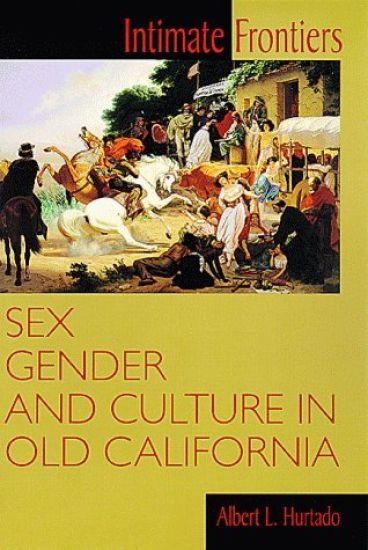
Intimate Frontiers

Intimate Frontiers

Albert L. Hurtado

University of New Mexico Press
1999
nidottu
This book reveals how powerful undercurrents of sex, gender, and culture helped shape the history of the American frontier from the 1760s to the 1850s. Looking at California under three flags -- those of Spain, Mexico, and the United States -- Hurtado resurrects daily life in the missions, at mining camps, on overland trails and sea journeys, and in San Francisco. In these settings Hurtado explores courtship, marriage, reproduction, and family life as a way to understand how men and women -- whether Native American, Anglo American, Hispanic, Chinese, or of mixed blood -- fit into or reshaped the roles and identities set by their race and gender.
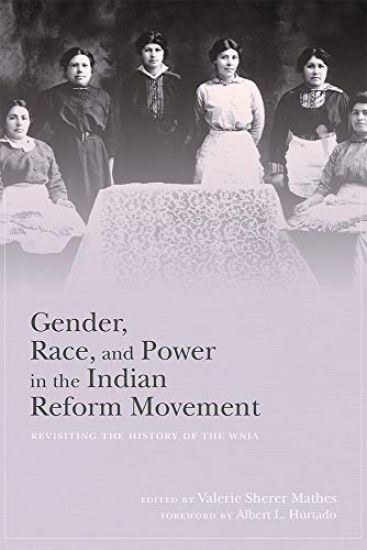
Gender, Race, and Power in the Indian Reform Movement

Gender, Race, and Power in the Indian Reform Movement

Albert L. Hurtado

University of New Mexico Press
2020
sidottu
Founded in the late nineteenth century, the Women's National Indian Association was one of several reform associations that worked to implement the government's assimilation policy directed at Native peoples. The women of the WNIA combined political action with efforts to improve health and home life and spread Christianity on often remote reservations. During its more than seventy-year history, the WNIA established over sixty missionary sites in which they provided Native peoples with home-building loans, founded schools, built missionary cottages and chapels, and worked toward the realization of reservation hospitals.Gender, Race, and Power in the Indian Reform Movement reveals the complicated intersections of gender, race, and identity at the heart of Indian reform. This collection of essays offers a new interpretation of the WNIA's founding, argues that the WNIA provided opportunities for indigenous women, creates a new space in the public sphere for white women, and reveals the WNIA's role in broader national debates centered on Indian land rights and the political power of Christian reform.