Kirjojen hintavertailu. Mukana 11 610 635 kirjaa ja 12 kauppaa.

Kirjahaku

Etsi kirjoja tekijän nimen, kirjan nimen tai ISBN:n perusteella.

2 kirjaa tekijältä Albert M. Craig

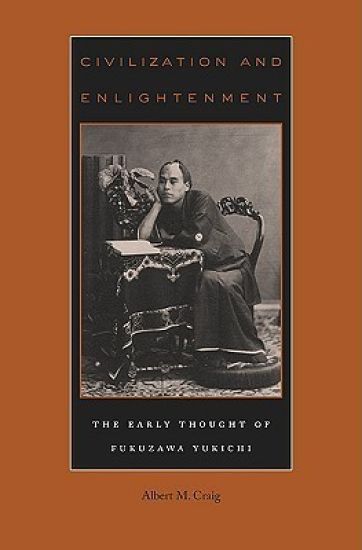
Civilization and Enlightenment

Civilization and Enlightenment

Albert M. Craig

Harvard University Press
2009
sidottu
The idea that society progresses through stages of development, from savagery to civilization, arose in eighteenth-century Europe. Albert Craig traces how Fukuzawa Yukichi, deeply influenced by the Scottish Enlightenment, “translated” the idea for Japanese society, both enriching and challenging the concept.Fukuzawa, an official in the Tokugawa government, saw his career collapse when the shogunate ended in 1867. Reinventing himself as a thinker and writer, he made his life work the translation and interpretation of the Western idea of the stages of civilization. He interpreted key Scottish intellectuals— Adam Smith, Adam Ferguson, William Robertson, John Millar; relied on American geographies to help explain how societies progress; and focused on invention as a key to civilization.By defining the role of “less developed” nations in the world order, Fukuzawa added a new dimension to the stage theory. But by the end of the 1880s, he had come to dismiss the philosophy of natural rights as “the fatuous idealism of Christian ministers.” Though civilization—as represented by Britain—was still his goal for Japan, he no longer saw the West as a uniformly beneficial moral force.This engaging history offers an illuminating look at an important figure and the world of ideas in nineteenth-century Japan.
Choshu in the Meiji Restoration

Choshu in the Meiji Restoration

Albert M. Craig

Lexington Books
2000
nidottu
When Commodore Perry arrived in Japan to open the country to Western trade in 1853, he found a medieval amalgam of sword-bearing samurai, castle towns, Confucian academies, peasant villages, rice paddies, upstart merchants, bath houses, and Kabuki. Fifteen years later, Japan was on its way to becoming the only non-Western nation in the nineteenth century with a modern centralized bureaucratic state and industrial economy. This book is a study of the Meiji Restoration that changed the face of Japan. Prominent historian Albert M. Craig tells its story through that of the domain of Choshu—whose role in the formation of modern Japan was not unlike that of Prussia in Germany—during the fifteen crucial years between 1853 and 1868. Whereas previous studies have stressed the role of discontented lower samurai and frustrated rich merchants and peasants in this transition, claiming that they provided the motive power behind the political movements of the Restoration period, this work sharply challenges these earlier interpretations. Craig instead emphasizes the vitality of traditional values in Japan's early reaction to the West and foregrounds the critical contribution of the old society to the formation of the new Meiji state. Choshu in the Meiji Restoration is a seminal work for scholars and students of Japanese history.