Kirjojen hintavertailu. Mukana 12 083 983 kirjaa ja 12 kauppaa.

Kirjahaku

Etsi kirjoja tekijän nimen, kirjan nimen tai ISBN:n perusteella.

11 kirjaa tekijältä Alberto Carpinteri

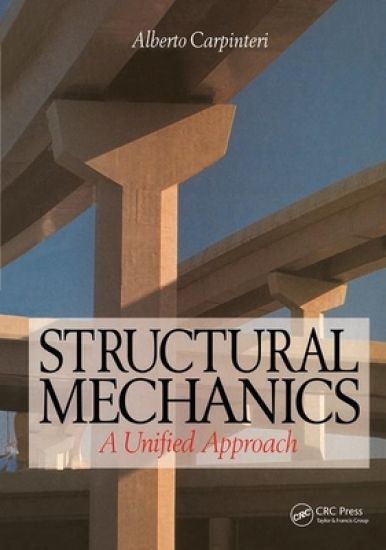
Structural Mechanics

Structural Mechanics

Alberto Carpinteri

CRC Press
2019
nidottu
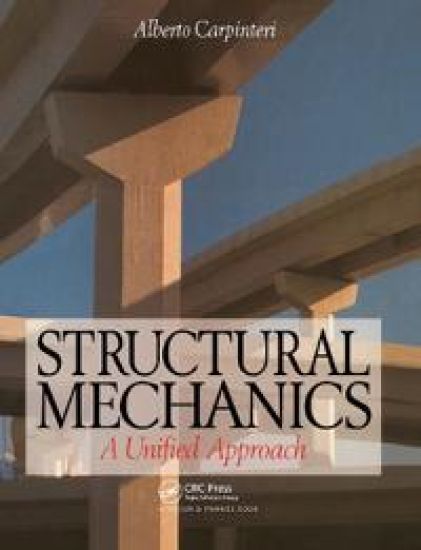
This book presents a complete and unified treatment of the fundamental themes of structural mechanics, ranging from the traditional to the most advanced topics, covering mechanics of linear elastic solids, theory of beam systems, and phenomena of structural failure. The book considers explicitly all the static and kenetic operators of structural mechanics with their dual character. Topics relating to structural symmetry are covered in a single chapter while dynamics is dealt with at various points. The logical presentation allows the clear introduction of topics such as finite element methods, automatic calculation of framed beam systems, plate and shell theory, theory of plasticity, and fracture mechanics. Numerous worked examples, exercises with complete solutions and illustrations make it accessible both as a text for students and as a reference for research workers and practicing engineers.
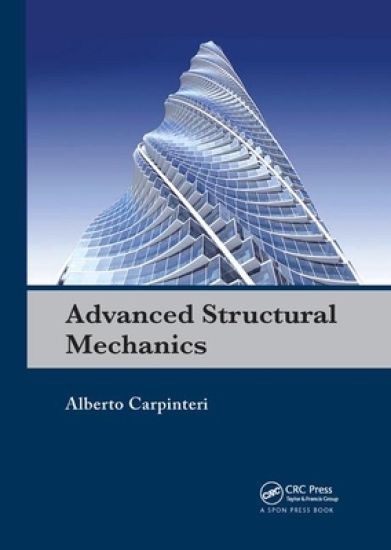
Advanced Structural Mechanics

Advanced Structural Mechanics

Alberto Carpinteri

CRC Press
2019
nidottu
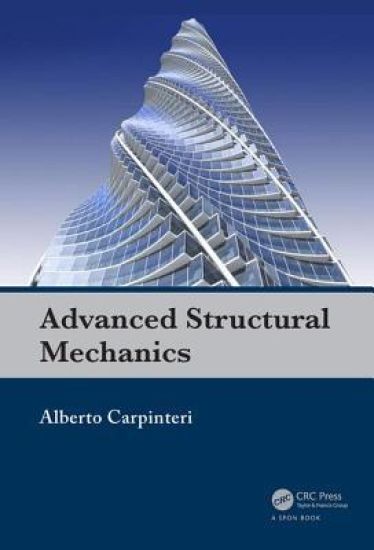
Building on the author’s Structural Mechanics Fundamentals, this text presents a complete and uniform treatment of the more advanced topics in structural mechanics, ranging from beam frames to shell structures, from dynamics to buckling analysis, from plasticity to fracture mechanics, from long-span to high-rise civil structures. Plane framesStatically indeterminate beam systems: Method of displacementsPlates and shellsFinite element methodDynamics of discrete systemsDynamics of continuous elastic systemsBuckling instabilityLong-span structuresHigh-rise structuresTheory of plasticityPlane stress and plane strain conditionsMechanics of fractureThis book serves as a text for graduate students in structural engineering, as well as a reference for practising engineers and researchers.
Structural Mechanics Fundamentals

Structural Mechanics Fundamentals

Alberto Carpinteri

CRC Press
2013
nidottu
Structural Mechanics Fundamentals gives you a complete and uniform treatment of the most fundamental and essential topics in structural mechanics. Presenting a traditional subject in an updated and modernized way, it merges classical topics with ones that have taken shape in more recent times, such as duality. This book is extensively based on the introductory chapters to the author’s Structural Mechanics: A Unified Approach.Coverage includes:The basic topics of geometry of areas and of kinematics and statics of rigid body systemsThe mechanics of linear elastic solids—beams, plates, and three-dimensional solids—examined using a matrix approachThe analysis of strain and stress around a material pointThe linear elastic constitutive law, with related Clapeyron’s and Betti’s theoremsKinematic, static, and constitutive equationsThe implication of the principle of virtual workThe Saint Venant problemThe theory of beam systems—statically determinate or indeterminateMethods of forces and energy for the examination of indeterminate beam systemsThe book draws on the author’s many years of teaching experience and features a wealth of illustrations and worked examples to help explain the topics clearly yet rigorously. The book can be used as a text for senior undergraduate or graduate students in structural engineering or architecture and as a valuable reference for researchers and practicing engineers.
Advanced Structural Mechanics

Advanced Structural Mechanics

Alberto Carpinteri

CRC Press
2017
sidottu
Building on the author’s Structural Mechanics Fundamentals, this text presents a complete and uniform treatment of the more advanced topics in structural mechanics, ranging from beam frames to shell structures, from dynamics to buckling analysis, from plasticity to fracture mechanics, from long-span to high-rise civil structures. Plane frames Statically indeterminate beam systems: Method of displacements Plates and shells Finite element method Dynamics of discrete systems Dynamics of continuous elastic systems Buckling instability Long-span structures High-rise structures Theory of plasticity Plane stress and plane strain conditions Mechanics of fractureThis book serves as a text for graduate students in structural engineering, as well as a reference for practising engineers and researchers.
Structural Mechanics

Structural Mechanics

Alberto Carpinteri

Spon Press
1997
sidottu
This book presents a complete and unified treatment of the fundamental themes of structural mechanics, ranging from the traditional to the most advanced topics, covering mechanics of linear elastic solids, theory of beam systems, and phenomena of structural failure. The book considers explicitly all the static and kenetic operators of structural mechanics with their dual character. Topics relating to structural symmetry are covered in a single chapter while dynamics is dealt with at various points. The logical presentation allows the clear introduction of topics such as finite element methods, automatic calculation of framed beam systems, plate and shell theory, theory of plasticity, and fracture mechanics. Numerous worked examples, exercises with complete solutions and illustrations make it accessible both as a text for students and as a reference for research workers and practicing engineers.
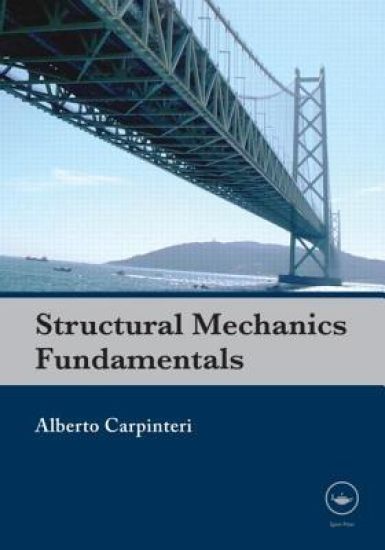
Structural Mechanics Fundamentals

Structural Mechanics Fundamentals

Alberto Carpinteri

CRC Press
2018
sidottu
Structural Mechanics Fundamentals gives you a complete and uniform treatment of the most fundamental and essential topics in structural mechanics. Presenting a traditional subject in an updated and modernized way, it merges classical topics with ones that have taken shape in more recent times, such as duality. This book is extensively based on the introductory chapters to the author’s Structural Mechanics: A Unified Approach.Coverage includes:The basic topics of geometry of areas and of kinematics and statics of rigid body systemsThe mechanics of linear elastic solids—beams, plates, and three-dimensional solids—examined using a matrix approachThe analysis of strain and stress around a material pointThe linear elastic constitutive law, with related Clapeyron’s and Betti’s theoremsKinematic, static, and constitutive equationsThe implication of the principle of virtual workThe Saint Venant problemThe theory of beam systems—statically determinate or indeterminateMethods of forces and energy for the examination of indeterminate beam systemsThe book draws on the author’s many years of teaching experience and features a wealth of illustrations and worked examples to help explain the topics clearly yet rigorously. The book can be used as a text for senior undergraduate or graduate students in structural engineering or architecture and as a valuable reference for researchers and practicing engineers.
Mechanical damage and crack growth in concrete

Mechanical damage and crack growth in concrete

Alberto Carpinteri

Kluwer Academic Publishers
1986
sidottu
Following Volumes III and IV that dealt with the fracture mechanics of concrete emphasizing both material testing and structural application in general, it was felt that specimen size and loading rate effects for concrete require further attention. The only criterion that has thus far successfully linearized the highly nonlinear crack growth data of concrete is the strain energy density theory. In particular, the crack growth resistance curves plotting the strain energy density factor versus crack growth known as the SR·curves are straight lines as specimen size and loading steps or rates are altered. This allows the extrapolation of data and provides a useful design methodology. This book is unique in that it is devoted specifically to the application of the strain energy density theory to civil engineering structural members made of concrete. Analyzed in detail is the strain softening behavior of concrete for a variety of different components including the influence of steel reinforcement. Permanent damage of the material is accounted for each increment of loading by invoking the mechanism of elastic unloading. This assumption is justified in concrete structures where the effective stiffness depends primarily on the crack growth rate and load history. Crack growth data are presented in terms of SR-curves with emphases placed on scaling specimen size which alone can change the mode of failure from plastic collapse to brittle fracture. Loading rate effects can also be scaled to control failure by yielding and fracture.
Mechanical damage and crack growth in concrete
Following Volumes III and IV that dealt with the fracture mechanics of concrete emphasizing both material testing and structural application in general, it was felt that specimen size and loading rate effects for concrete require further attention. The only criterion that has thus far successfully linearized the highly nonlinear crack growth data of concrete is the strain energy density theory. In particular, the crack growth resistance curves plotting the strain energy density factor versus crack growth known as the SR·curves are straight lines as specimen size and loading steps or rates are altered. This allows the extrapolation of data and provides a useful design methodology. This book is unique in that it is devoted specifically to the application of the strain energy density theory to civil engineering structural members made of concrete. Analyzed in detail is the strain softening behavior of concrete for a variety of different components including the influence of steel reinforcement. Permanent damage of the material is accounted for each increment of loading by invoking the mechanism of elastic unloading. This assumption is justified in concrete structures where the effective stiffness depends primarily on the crack growth rate and load history. Crack growth data are presented in terms of SR-curves with emphases placed on scaling specimen size which alone can change the mode of failure from plastic collapse to brittle fracture. Loading rate effects can also be scaled to control failure by yielding and fracture.
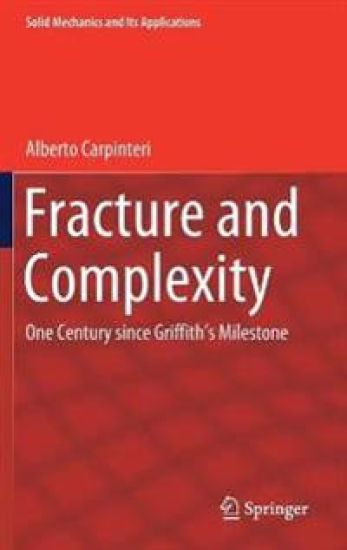
Fracture and Complexity

Fracture and Complexity

Alberto Carpinteri

Springer
2021
sidottu
The book explores the two opposite natural trends of composite systems: (i) order and structure emerging from heterogeneity and randomness, and (ii) instability and chaos arising from simple nonlinear rules. Providing insights into the rapidly growing field of complexity sciences, the book focuses on the role of complexity in fracture mechanics. It firstly discusses the occurrence of self-similarity and fractal patterns in deformation, damage, fracture, and fragmentation of heterogeneous materials and the apparent scaling of the nominal mechanical properties of disordered materials, as well as of the time-to-failure after fatigue and creep loading. Then the book addresses criticality in the acoustic emissions from damaged structures and tectonic faults. Further, it examines the snap-back instability in the structural behavior of relatively large composite structures in the framework of catastrophe theory, and lastly describes the transition toward chaos in the dynamics of cracked elements.
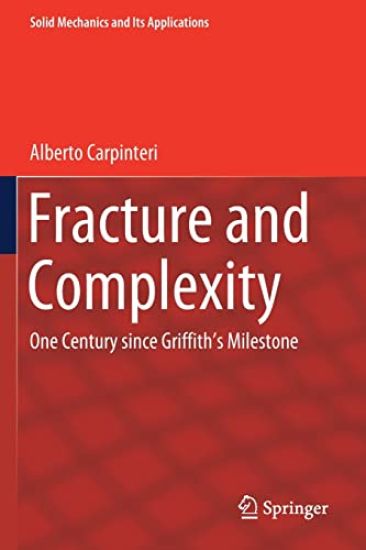
Fracture and Complexity

Fracture and Complexity

Alberto Carpinteri

Springer
2022
nidottu
The book explores the two opposite natural trends of composite systems: (i) order and structure emerging from heterogeneity and randomness, and (ii) instability and chaos arising from simple nonlinear rules. Providing insights into the rapidly growing field of complexity sciences, the book focuses on the role of complexity in fracture mechanics. It firstly discusses the occurrence of self-similarity and fractal patterns in deformation, damage, fracture, and fragmentation of heterogeneous materials and the apparent scaling of the nominal mechanical properties of disordered materials, as well as of the time-to-failure after fatigue and creep loading. Then the book addresses criticality in the acoustic emissions from damaged structures and tectonic faults. Further, it examines the snap-back instability in the structural behavior of relatively large composite structures in the framework of catastrophe theory, and lastly describes the transition toward chaos in the dynamics of cracked elements.