Kirjojen hintavertailu. Mukana 11 747 804 kirjaa ja 12 kauppaa.

Kirjahaku

Etsi kirjoja tekijän nimen, kirjan nimen tai ISBN:n perusteella.

32 kirjaa tekijältä Albrecht Classen

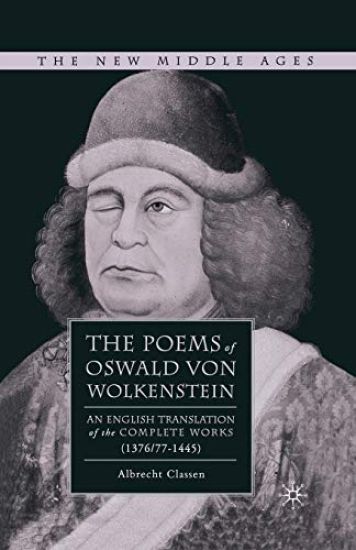
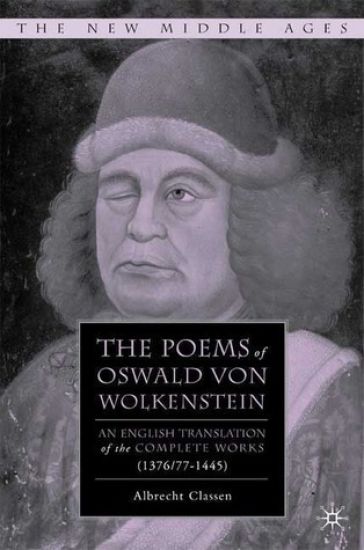
The Poems of Oswald Von Wolkenstein

The Poems of Oswald Von Wolkenstein

Albrecht Classen

Palgrave Macmillan
2009
sidottu
This book offers the first complete English translation of the poems by the late-medieval German (Tyrolean) Oswald von Wolkenstein (1376/1377-1445). Oswald von Wolkenstein was one of the leading poets of his time and created some of the most exciting, experimental, and also deeply religious-conservative poetry of the entire Middle Ages and far beyond. German scholarship and musicologists have long recognized the extraordinary strength and power of Oswald s Middle High German songs, both in terms of his poetic imagery and his musical performance. This book proves Oswald's uvre to be one of the most idiosyncratic and individualistic in the entire late Middle Ages. Classen reveals how Oswald continued the medieval tradition, yet was a true innovator, exploring new attitudes toward love, sexuality, travel, war, politics, language, music, and, above all, his own individuality.
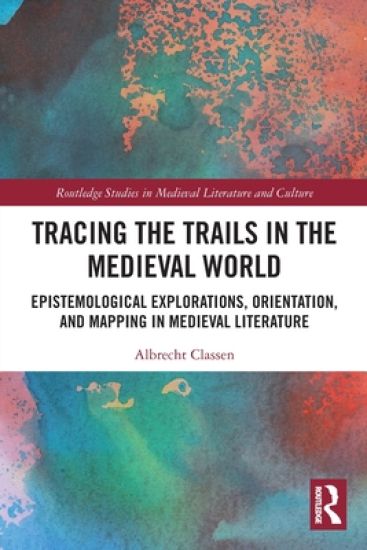
Tracing the Trails in the Medieval World
Every human being knows that we are walking through life following trails, whether we are aware of them or not. Medieval poets, from the anonymous composer of Beowulf to Marie de France, Hartmann von Aue, Gottfried von Strassburg, and Guillaume de Lorris to Petrarch and Heinrich Kaufringer, predicated their works on the notion of the trail and elaborated on its epistemological function. We can grasp here an essential concept that determines much of medieval and early modern European literature and philosophy, addressing the direction which all protagonists pursue, as powerfully illustrated also by the anonymous poets of Herzog Ernst and Sir Gawain and the Green Knight. Dante’s Divina Commedia, in fact, proves to be one of the most explicit poetic manifestations of the fundamental idea of the trail, but we find strong parallels also in powerful contemporary works such as Guillaume de Deguileville’s Pèlerinage de la vie humaine and in many mystical tracts.
Tracing the Trails in the Medieval World

Tracing the Trails in the Medieval World

Albrecht Classen

TAYLOR FRANCIS LTD
2023
nidottu
Every human being knows that we are walking through life following trails, whether we are aware of them or not. Medieval poets, from the anonymous composer of Beowulf to Marie de France, Hartmann von Aue, Gottfried von Strassburg, and Guillaume de Lorris to Petrarch and Heinrich Kaufringer, predicated their works on the notion of the trail and elaborated on its epistemological function. We can grasp here an essential concept that determines much of medieval and early modern European literature and philosophy, addressing the direction which all protagonists pursue, as powerfully illustrated also by the anonymous poets of Herzog Ernst and Sir Gawain and the Green Knight. Dante’s Divina Commedia, in fact, proves to be one of the most explicit poetic manifestations of the fundamental idea of the trail, but we find strong parallels also in powerful contemporary works such as Guillaume de Deguileville’s Pèlerinage de la vie humaine and in many mystical tracts.
Violence in Medieval Courtly Literature
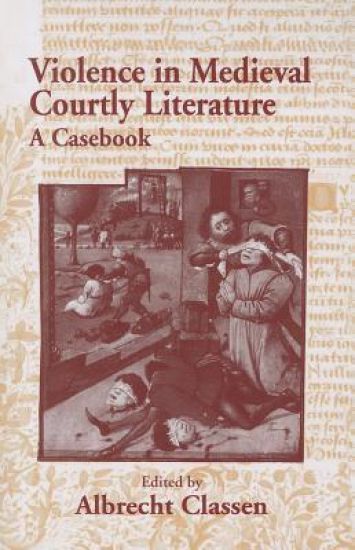
Although courtly literature is often associated with a chivalrous and idyllic life, the fifteen original essays in this collection demonstrate that the quest for love in the world of medieval courtly literature was underpinned by violence. Lovers were rejected, mistrust ruled, rape was a rampant problem, and marriage was often characterized by brutality. Albrecht Classen brings together an outstanding group of historical, cultural, and literary scholars in this volume to investigate the complicated, nuanced, and often surprising unions of love and violence in courtly medieval literature.
Violence in Medieval Courtly Literature
Although courtly literature is often associated with a chivalrous and idyllic life, the fifteen original essays in this collection demonstrate that the quest for love in the world of medieval courtly literature was underpinned by violence. Lovers were rejected, mistrust ruled, rape was a rampant problem, and marriage was often characterized by brutality. Albrecht Classen brings together an outstanding group of historical, cultural, and literary scholars in this volume to investigate the complicated, nuanced, and often surprising unions of love and violence in courtly medieval literature.
Early History of the Southwest through the Eyes of German-Speaking Jesuit Missionaries
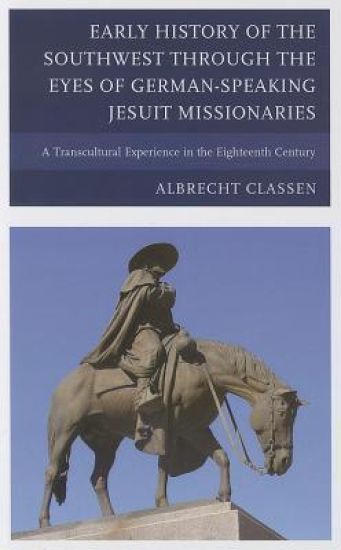
The history of the United States has been deeply determined by Germans throughout time, but hardly anyone has noticed that this was the case in the Southwest as well, known as Arizona/Sonora today, in the eighteenth century as Pimería Alta. This was the area where the Jesuits operated all by themselves, and many of them, at least since the 1730s, originated from the Holy Roman Empire, hence were identified as Germans (including Swiss, Austrians, Bohemians, Croats, Alsatians, and Poles). Most of them were highly devout and dedicated, hard working and very intelligent people, achieving wonders in terms of settling the native population, teaching and converting them to Christianity. However, because of complex political processes and the effects of the ‘black legend’ all Jesuit missionaries were expelled from the Americas in 1767, and the order was banned globally in 1773. As this book illustrates, a surprisingly large number of these German Jesuits composed extensive reports and even encyclopedias, not to forget letters, about the Sonoran Desert and its people. Much of what we know about that world derives from their writing, which proves to be fascinating, lively, and highly informative reading material.
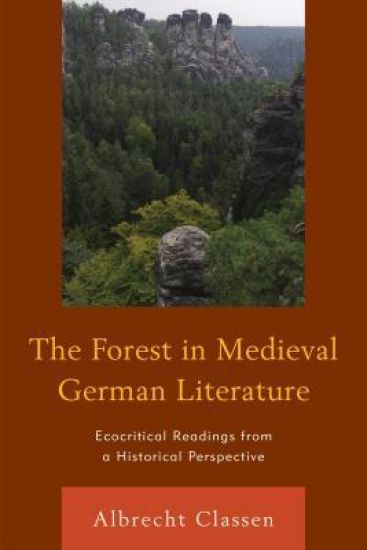
The Forest in Medieval German Literature

The Forest in Medieval German Literature

Albrecht Classen

Lexington Books
2015
sidottu
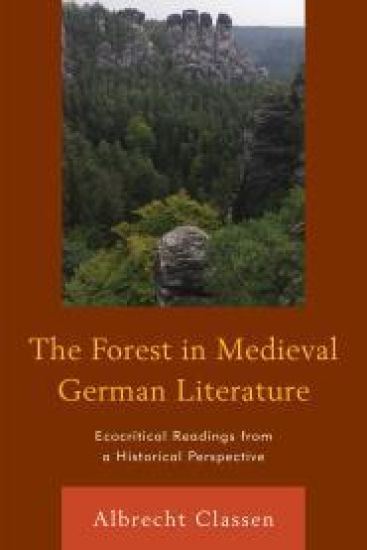
By pursuing an ecocritical reading, The Forest in Medieval German Literature examines passages in medieval German texts where protagonists operated in the forest and found themselves either in conflictual situations or in refuge. By probing the way the individual authors dealt with the forest, illustrating how their characters fared in this sylvan space, the role of the forest proved to be of supreme importance in understanding the fundamental relationship between humans and nature. The medieval forest almost always introduced an epistemological challenge: how to cope in life, or how to find one’s way in this natural maze. By approaching these narratives through modern ecocritical issues that are paired with premodern perspectives, we gain a solid and far-reaching understanding of how medieval concepts can aid in a better understanding of human society and nature in its historical context. This book revisits some of the best and lesser known examples of medieval German literature, and the critical approach used here will allow us to recognize the importance of medieval literature for a profound reassessment of our modern existence with respect to our own forests.
The Forest in Medieval German Literature

The Forest in Medieval German Literature

Albrecht Classen

Lexington Books
2019
nidottu
Cultural and literary historys are always somehow determined by natural history. The role of the forest in medieval German literature proves to be of supreme importance since the protagonists constantly find themselves in the dense realm of woods. Some of the woods challenge the characters existentially, while others provide shelter and protection to the protagonists. Pursuing an ecocritical reading, this monograph examines critical passages in some of the most important works in medieval German literature where protagonists operate in the forest and find themselves either in a conflictual situation or in a refuge. The natural environment of the fest, as presented by medieval German authors, offers new perspectives which will make the reading of this important corpus of premodern literature most relevant once again for the postmodern world. Both our current concerns with the forest as the green lungs of the entire environment and our past fascination with the forest in texts such as fairy tales connect us directly with the observations about the forest by medieval German poets. The special angle pursued in this study will allow us to reread some of the most important Middle High German narratives from a fresh perspective, shedding significant light on the hidden messages conveyed by the poets in their quest for meaning in human existence.
The Poems of Oswald Von Wolkenstein

The Poems of Oswald Von Wolkenstein

Albrecht Classen

Palgrave Macmillan
2008
nidottu
This book offers the first complete English translation of the poems by the late-medieval German (Tyrolean) Oswald von Wolkenstein (1376/1377-1445). Oswald von Wolkenstein was one of the leading poets of his time and created some of the most exciting, experimental, and also deeply religious-conservative poetry of the entire Middle Ages and far beyond. German scholarship and musicologists have long recognized the extraordinary strength and power of Oswald s Middle High German songs, both in terms of his poetic imagery and his musical performance. This book proves Oswald's uvre to be one of the most idiosyncratic and individualistic in the entire late Middle Ages. Classen reveals how Oswald continued the medieval tradition, yet was a true innovator, exploring new attitudes toward love, sexuality, travel, war, politics, language, music, and, above all, his own individuality.
Water in Medieval Literature

Water in Medieval Literature

Albrecht Classen

Lexington Books
2017
sidottu
Ecocritical thinking has sensitized us more than ever before to the tremendous importance of water for human life, as it is richly reflected in the world of literature. The great relevance of water also in the Middle Ages might come as a surprise for many readers, but the evidence assembled here confirms that also medieval poets were keenly aware of the importance of water to sustain all life, to provide understanding of life’s secrets, to mirror love, and to connect the individual with God. In eleven chapters major medieval European authors and their works are discussed here, taking us from the world of Old Norse to Irish and Latin literature, to German, French, English, and Italian romances and other narratives.
Water in Medieval Literature

Water in Medieval Literature

Albrecht Classen

Lexington Books
2019
nidottu
Ecocritical thinking has sensitized us more than ever before to the tremendous importance of water for human life, as it is richly reflected in the world of literature. The great relevance of water also in the Middle Ages might come as a surprise for many readers, but the evidence assembled here confirms that also medieval poets were keenly aware of the importance of water to sustain all life, to provide understanding of life’s secrets, to mirror love, and to connect the individual with God. In eleven chapters major medieval European authors and their works are discussed here, taking us from the world of Old Norse to Irish and Latin literature, to German, French, English, and Italian romances and other narratives.
Prostitution in Medieval and Early Modern Literature
Prostitution is known as the oldest profession in the history of humanity. While historians have already given due consideration to the profession’s social and cultural meanings across time periods, little has been written about literary representations of prostitution. Prostitution in Medieval and Early Modern Literature analyses the work of writers from an array of social positions, including courtly poets and even religious writers, dealing with the topic during the medieval and early modern periods. Its study shows that prostitutes and brothel owners were present on the literary stage far more often than we might have assumed. Utilizing an interdisciplinary approach and incorporating relevant sources from across the entire European continent dating from the early Middle Ages to the sixteenth century, it examines the phenomenon of prostitution in a variety of contexts and highlights the extent to which the institution mattered for both the higher and the lower classes.
Prostitution in Medieval and Early Modern Literature
Prostitution is known as the oldest profession in the history of humanity. While historians have already given due consideration to the profession’s social and cultural meanings across time periods, little has been written about literary representations of prostitution. Prostitution in Medieval and Early Modern Literature analyses the work of writers from an array of social positions, including courtly poets and even religious writers, dealing with the topic during the medieval and early modern periods. Its study shows that prostitutes and brothel owners were present on the literary stage far more often than we might have assumed. Utilizing an interdisciplinary approach and incorporating relevant sources from across the entire European continent dating from the early Middle Ages to the sixteenth century, it examines the phenomenon of prostitution in a variety of contexts and highlights the extent to which the institution mattered for both the higher and the lower classes.
The Secret in Medieval Literature

The Secret in Medieval Literature

Albrecht Classen

BLOOMSBURY PUBLISHING PLC
2022
sidottu
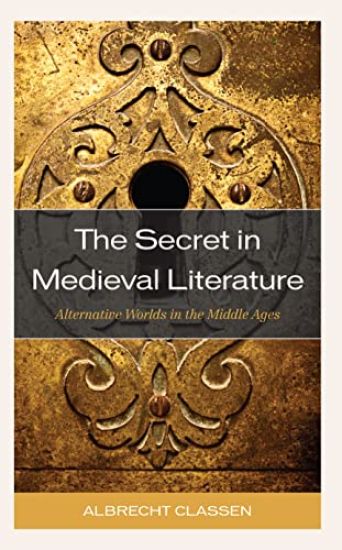
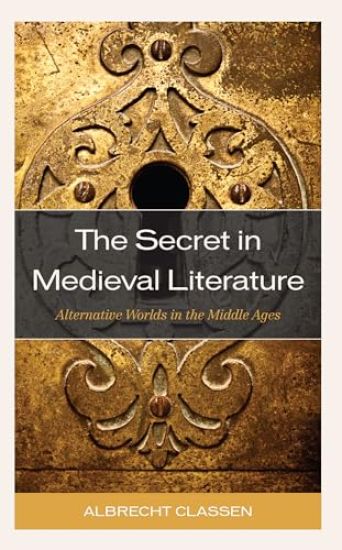
The Secret in Medieval Literature: Alternative Worlds in the Middle Ages explores the many strange phenomena, both in the Middle Ages and today, that do not find any good rational explanations. Those do not pertain to magic or to religion in the traditional sense of the word; they are secrets of an epistemological kind and tend to defy human rationality, without being marginal or irrelevant. At first sight, we might believe that we face elements from fairy tales, but the medieval cases discussed here go far beyond such a simplistic approach to the mysterious dimension of secrets. In fact, as this book argues, medieval poets commonly engaged with alternative forces and described their workings within the human context (both in the Latin West and in the East), without being able to come to terms with them critically. Those mysteries appear both in heroic epics and courtly romances, among other genres, and they figure more frequently than we might have assumed. On the one hand, we could conceive of those secrets as the product of literary liberties and imagination; on the other, those secrets prove to be rather serious agents intervening in the lives of the fictional protagonists. By the same token, our modern world is not all rationality and material conditions either. The study of secrets in the Middle Ages thus opens the pathway toward a new epistemology both for the people in the pre-modern age and us today.
The Secret in Medieval Literature

The Secret in Medieval Literature

Albrecht Classen

BLOOMSBURY PUBLISHING PLC
2024
nidottu
The Secret in Medieval Literature: Alternative Worlds in the Middle Ages explores the many strange phenomena, both in the Middle Ages and today, that do not find any good rational explanations. Those do not pertain to magic or to religion in the traditional sense of the word; they are secrets of an epistemological kind and tend to defy human rationality, without being marginal or irrelevant. At first sight, we might believe that we face elements from fairy tales, but the medieval cases discussed here go far beyond such a simplistic approach to the mysterious dimension of secrets. In fact, as this book argues, medieval poets commonly engaged with alternative forces and described their workings within the human context (both in the Latin West and in the East), without being able to come to terms with them critically. Those mysteries appear both in heroic epics and courtly romances, among other genres, and they figure more frequently than we might have assumed. On the one hand, we could conceive of those secrets as the product of literary liberties and imagination; on the other, those secrets prove to be rather serious agents intervening in the lives of the fictional protagonists. By the same token, our modern world is not all rationality and material conditions either. The study of secrets in the Middle Ages thus opens the pathway toward a new epistemology both for the people in the pre-modern age and us today.
Criticism of the Court and the Evil King in the Middle Ages

Criticism of the Court and the Evil King in the Middle Ages

Albrecht Classen

BLOOMSBURY PUBLISHING PLC
2024
sidottu
Criticism of the Court and the Evil King in the Middle Ages: Literary-Historical Analyses, identifies and discusses the discourse focused on the criticism of the court, specifically of the king, across medieval Europe. Tracing its development from the tenth through the fifteenth centuries, chapters examine Icelandic sagas, Old Spanish heroic epic poetry, courtly romances, early modern French and German prose novels, and late medieval short verse and prose narratives as well as the work of medieval critics such as John of Salisbury and Marsilius of Padua. Albrecht Classen explores how the writers used their craft creatively and covertly to voice harsh criticism of the ruling class and unearths a deep distrust of kings and other authority figures during the Middle Ages.
Charlemagne in Medieval German and Dutch Literature
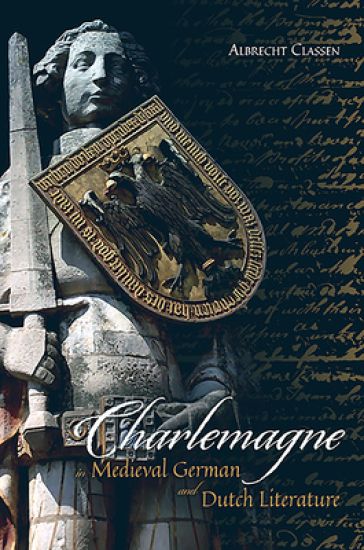
Comprehensive survey of the legend of Charlemagne in the medieval German-speaking world. The legend of the Frankish emperor Charlemagne is widespread through the literature of the European Middle Ages. This book offers a detailed and critical analysis of how this myth emerged and developed in medieval German and Dutch literatures, bringing to light the vast array of narratives either idealizing, if not glorifying, Charlemagne as a political and religious leader, or, at times, criticizing or even ridiculing him as a pompous and ineffectual ruler. The motif is traced from its earliest origins in chronicles, in the Kaiserchronik, through the Rolandslied and Der Stricker's Karl der Große, to his recasting as a saint in the Zürcher Buch vom Heiligen Karl.