Kirjojen hintavertailu. Mukana 11 342 296 kirjaa ja 12 kauppaa.

Kirjahaku

Etsi kirjoja tekijän nimen, kirjan nimen tai ISBN:n perusteella.

4 kirjaa tekijältä Alejandro L. Madrid

Tania León's Stride

Tania León's Stride

Alejandro L. Madrid

University of Illinois Press
2022
sidottu
Acclaimed composer, sought-after conductor, esteemed educator, tireless advocate for the arts--Tania León's achievements encompass but also stretch far beyond contemporary classical music. Alejandro L. Madrid draws on oral history, archival work, and ethnography to offer the first in-depth biography of the artist. Breaking from a chronological account, Madrid looks at León through the issues that have informed and defined moments in her life and her professional works. León's words become a starting ground--but also a counterpoint--to the accounts of the people in her orbit. What emerges is more than an extraordinary portrait of an artist's journey. It is a story of how a human being reacts to the challenges thrown at her by history itself, be it the Cuban revolution or the struggle for civil and individual rights. Nuanced and multifaceted, Tania León's Stride looks at the life, legacy, and milieu that created and sustained one of the most important figures in American classical music.

Tania León's Stride

Tania León's Stride

Alejandro L. Madrid

University of Illinois Press
2022
nidottu
Acclaimed composer, sought-after conductor, esteemed educator, tireless advocate for the arts--Tania León's achievements encompass but also stretch far beyond contemporary classical music. Alejandro L. Madrid draws on oral history, archival work, and ethnography to offer the first in-depth biography of the artist. Breaking from a chronological account, Madrid looks at León through the issues that have informed and defined moments in her life and her professional works. León's words become a starting ground--but also a counterpoint--to the accounts of the people in her orbit. What emerges is more than an extraordinary portrait of an artist's journey. It is a story of how a human being reacts to the challenges thrown at her by history itself, be it the Cuban revolution or the struggle for civil and individual rights. Nuanced and multifaceted, Tania León's Stride looks at the life, legacy, and milieu that created and sustained one of the most important figures in American classical music.
The Archive and the Aural City: Sound, Knowledge, and the Politics of Listening
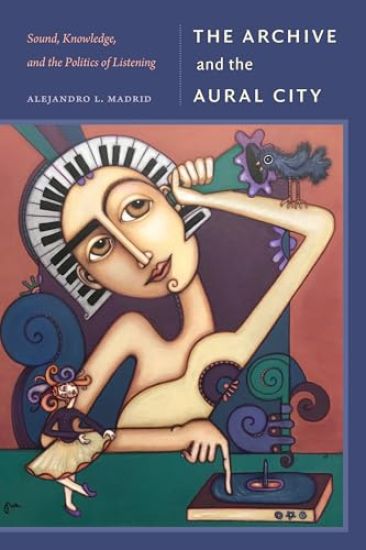
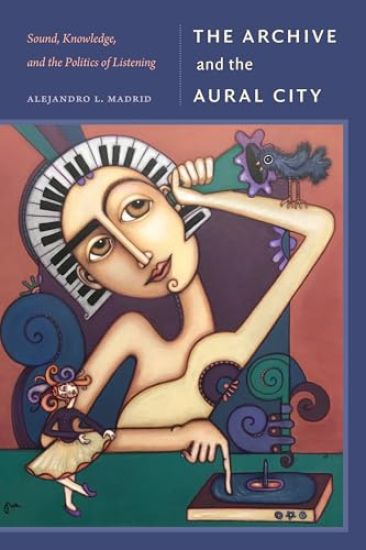
In The Archive and the Aural City, Alejandro L. Madrid examines the possibilities for retrieving sounds from the archive that were not meant to be heard. Drawing on ngel Rama's notion of the Lettered City, Madrid proposes a notion of the Aural City--a Latin American urban intellectual elite for whom sound and listening are central to the creation, recreation, and circulation of new types of knowledge. While many of these elites carry forward a nationalistic agenda, Madrid contends that the Aural City's archives and the ways they are listened to and conceived through sound and music can also help dismantle dominant frameworks of national or colonial culture and build more inclusive spaces for intellectual exchange and political mobilization. From national archives in Latin America and colonial institutions abroad to sound exhibits, instruments, and internet-based archival projects, Madrid demonstrates how the development of urban spaces is understood through sound. In this way, he expands understandings of the archive's social and sonic power.
The Archive and the Aural City: Sound, Knowledge, and the Politics of Listening
In The Archive and the Aural City, Alejandro L. Madrid examines the possibilities for retrieving sounds from the archive that were not meant to be heard. Drawing on ngel Rama's notion of the Lettered City, Madrid proposes a notion of the Aural City--a Latin American urban intellectual elite for whom sound and listening are central to the creation, recreation, and circulation of new types of knowledge. While many of these elites carry forward a nationalistic agenda, Madrid contends that the Aural City's archives and the ways they are listened to and conceived through sound and music can also help dismantle dominant frameworks of national or colonial culture and build more inclusive spaces for intellectual exchange and political mobilization. From national archives in Latin America and colonial institutions abroad to sound exhibits, instruments, and internet-based archival projects, Madrid demonstrates how the development of urban spaces is understood through sound. In this way, he expands understandings of the archive's social and sonic power.