One of the great allegorical masterpieces of world literature, Cancer Ward is both a deeply compassionate study of people facing terminal illness and a brilliant dissection of the 'cancerous' Soviet police state. Withdrawn from publication in Russia in 1964, it became, along with One Day in the Life of Ivan Denisovich, a work that awoke the conscience of the world. As Robert Service wrote of its appeal in the Independent, 'In waging his struggle against Soviet communism, Solzhenitsyn the novelist preferred the rapier to the cudgel'.
â??One word of truth shall outweigh the whole worldâ?? Aleksandr SolzhenitsynIn the first month of the First World War the Russian campaign against the Germans creaks into gear.
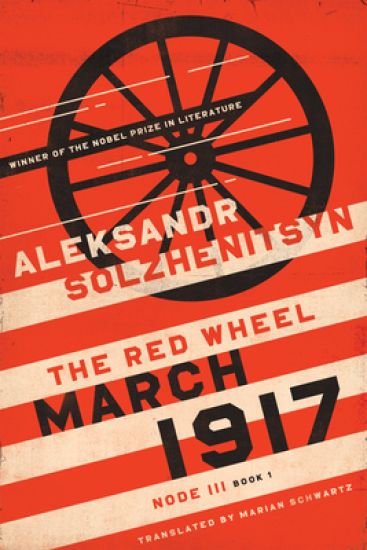
To commemorate the 100th anniversary of the Russian Revolution, the University of Notre Dame Press is proud to publish Nobel Prize–winner Aleksandr Solzhenitsyn's epic work March 1917, Node III, Book 1, of The Red Wheel. The Red Wheel is Solzhenitsyn's magnum opus about the Russian Revolution. Solzhenitsyn tells this story in the form of a meticulously researched historical novel, supplemented by newspaper headlines of the day, fragments of street action, cinematic screenplay, and historical overview. The first two nodes—August 1914 and November 1916—focus on Russia's crises and recovery, on revolutionary terrorism and its suppression, on the missed opportunity of Pyotr Stolypin's reforms, and how the surge of patriotism in August 1914 soured as Russia bled in World War I. March 1917—the third node—tells the story of the Russian Revolution itself, during which not only does the Imperial government melt in the face of the mob, but the leaders of the opposition prove utterly incapable of controlling the course of events. The action of Book 1 (of four) of March 1917 is set during March 8–12. The absorbing narrative tells the stories of more than fifty characters during the days when the Russian Empire begins to crumble. Bread riots in the capital, Petrograd, go unchecked at first, and the police are beaten and killed by mobs. Efforts to put down the violence using the army trigger a mutiny in the numerous reserve regiments housed in the city, who kill their officers and rampage. The anti-Tsarist bourgeois opposition, horrified by the violence, scrambles to declare that it is provisionally taking power, while socialists immediately create a Soviet alternative to undermine it. Meanwhile, Emperor Nikolai II is away at military headquarters and his wife Aleksandra is isolated outside Petrograd, caring for their sick children. Suddenly, the viability of the Russian state itself is called into question. The Red Wheel has been compared to Tolstoy's War and Peace, for each work aims to narrate the story of an era in a way that elevates its universal significance. In much the same way as Homer's Iliad became the representative account of the Greek world and therefore the basis for Greek civilization, these historical epics perform a parallel role for our modern world.
To commemorate the 100th anniversary of the Russian Revolution, the University of Notre Dame Press is proud to publish Nobel Prize–winner Aleksandr Solzhenitsyn's epic work March 1917, Node III, Book 1, of The Red Wheel. The Red Wheel is Solzhenitsyn's magnum opus about the Russian Revolution. Solzhenitsyn tells this story in the form of a meticulously researched historical novel, supplemented by newspaper headlines of the day, fragments of street action, cinematic screenplay, and historical overview. The first two nodes—August 1914 and November 1916—focus on Russia's crises and recovery, on revolutionary terrorism and its suppression, on the missed opportunity of Pyotr Stolypin's reforms, and how the surge of patriotism in August 1914 soured as Russia bled in World War I. March 1917—the third node—tells the story of the Russian Revolution itself, during which not only does the Imperial government melt in the face of the mob, but the leaders of the opposition prove utterly incapable of controlling the course of events. The action of Book 1 (of four) of March 1917 is set during March 8–12. The absorbing narrative tells the stories of more than fifty characters during the days when the Russian Empire begins to crumble. Bread riots in the capital, Petrograd, go unchecked at first, and the police are beaten and killed by mobs. Efforts to put down the violence using the army trigger a mutiny in the numerous reserve regiments housed in the city, who kill their officers and rampage. The anti-Tsarist bourgeois opposition, horrified by the violence, scrambles to declare that it is provisionally taking power, while socialists immediately create a Soviet alternative to undermine it. Meanwhile, Emperor Nikolai II is away at military headquarters and his wife Aleksandra is isolated outside Petrograd, caring for their sick children. Suddenly, the viability of the Russian state itself is called into question. The Red Wheel has been compared to Tolstoy's War and Peace, for each work aims to narrate the story of an era in a way that elevates its universal significance. In much the same way as Homer's Iliad became the representative account of the Greek world and therefore the basis for Greek civilization, these historical epics perform a parallel role for our modern world.
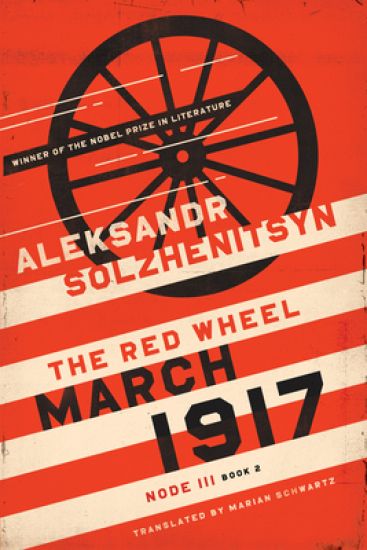
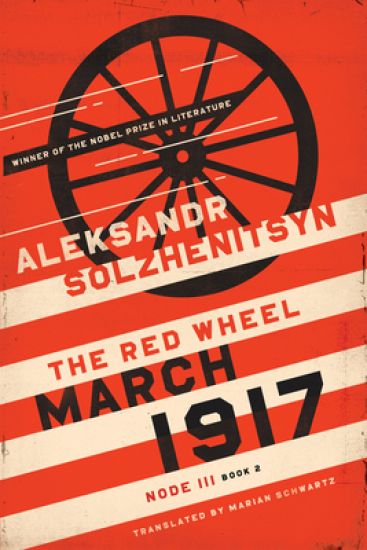
Aleksandr Solzhenitsyn's March 1917, Book 2, covers three days of the February Revolution when the nation unraveled, leading to the Bolshevik takeover eight months later. The Red Wheel is Nobel Prize–winner Aleksandr Solzhenitsyn's multivolume epic work about the Russian Revolution. He spent decades writing about just four of the most important periods, or "nodes." This is the first time that the monumental March 1917—the third node—has been translated into English. It tells the story of the Russian Revolution itself, during which the Imperial government melts in the face of the mob, and the giants of the opposition also prove incapable of controlling the course of events. The action of Book 2 (of four) of March 1917 is set during March 13–15, 1917, the Russian Revolution's turbulent second week. The revolution has already won inside the capital, Petrograd. News of the revolution flashes across all Russia through the telegraph system of the Ministry of Roads and Railways. But this is wartime, and the real power is with the army. At Emperor Nikolai II's order, the Supreme Command sends troops to suppress the revolution in Petrograd. Meanwhile, victory speeches ring out at Petrograd's Tauride Palace. Inside, two parallel power structures emerge: the Provisional Government and the Executive Committee of the Petrograd Soviet of Workers' and Soldiers' Deputies, which sends out its famous "Order No. 1," presaging the destruction of the army. The troops sent to suppress the Petrograd revolution are halted by the army's own top commanders. The Emperor is detained and abdicates, and his ministers are jailed and sent to the Peter and Paul Fortress. This sweeping, historical novel is a must-read for Solzhenitsyn's many fans, as well as those interested in twentieth-century history, Russian history and literature, and military history.
Aleksandr Solzhenitsyn's March 1917, Book 2, covers three days of the February Revolution when the nation unraveled, leading to the Bolshevik takeover eight months later. The Red Wheel is Nobel Prize–winner Aleksandr Solzhenitsyn's multivolume epic work about the Russian Revolution. He spent decades writing about just four of the most important periods, or "nodes." This is the first time that the monumental March 1917—the third node—has been translated into English. It tells the story of the Russian Revolution itself, during which the Imperial government melts in the face of the mob, and the giants of the opposition also prove incapable of controlling the course of events. The action of Book 2 (of four) of March 1917 is set during March 13–15, 1917, the Russian Revolution's turbulent second week. The revolution has already won inside the capital, Petrograd. News of the revolution flashes across all Russia through the telegraph system of the Ministry of Roads and Railways. But this is wartime, and the real power is with the army. At Emperor Nikolai II's order, the Supreme Command sends troops to suppress the revolution in Petrograd. Meanwhile, victory speeches ring out at Petrograd's Tauride Palace. Inside, two parallel power structures emerge: the Provisional Government and the Executive Committee of the Petrograd Soviet of Workers' and Soldiers' Deputies, which sends out its famous "Order No. 1," presaging the destruction of the army. The troops sent to suppress the Petrograd revolution are halted by the army's own top commanders. The Emperor is detained and abdicates, and his ministers are jailed and sent to the Peter and Paul Fortress. This sweeping, historical novel is a must-read for Solzhenitsyn's many fans, as well as those interested in twentieth-century history, Russian history and literature, and military history.
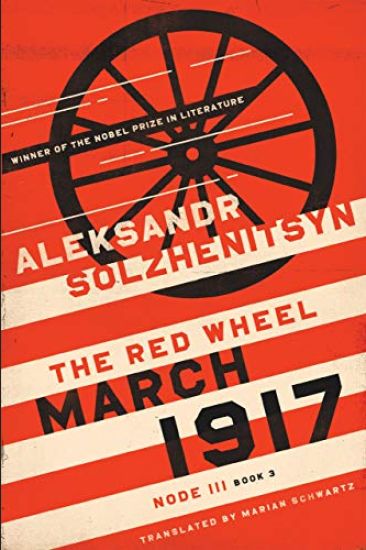
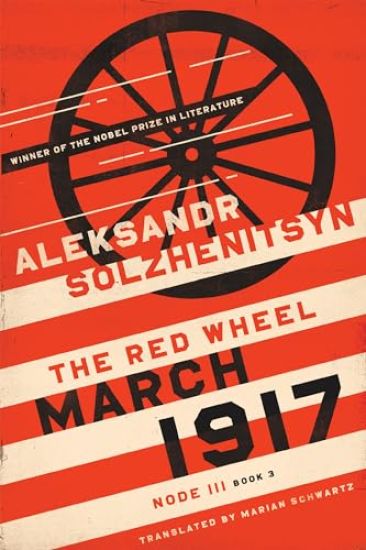
In March 1917, Book 3 the forces of revolutionary disintegration spread out from Petrograd all the way to the front lines of World War I, presaging Russia's collapse. One of the masterpieces of world literature, The Red Wheel is Nobel prize–winner Aleksandr Solzhenitsyn's multivolume epic work about the Russian Revolution told in the form of a historical novel. March 1917—the third node—tells the story, day by day, of the Russian Revolution itself. Until recently, the final two nodes have been unavailable in English. The publication of Book 1 of March 1917 (in 2017) and Book 2 (in 2019) has begun to rectify this situation. The action of Book 3 (out of four) is set during March 16–22, 1917. In Book 3, the Romanov dynasty ends and the revolution starts to roll out from Petrograd toward Moscow and the Russian provinces. The dethroned Emperor Nikolai II makes his farewell to the Army and is kept under guard with his family. In Petrograd, the Provisional Government and the Soviet of Workers' and Soldiers' Deputies continue to exercise power in parallel. The war hero Lavr Kornilov is appointed military chief of Petrograd. But the Soviet's "Order No. 1" reaches every soldier, undermining the officer corps and shaking the Army to its foundations. Many officers, including the head of the Baltic Fleet, the progressive Admiral Nepenin, are murdered. Black Sea Fleet Admiral Kolchak holds the revolution at bay; meanwhile, Grand Duke Nikolai Nikolaevich, the emperor's uncle, makes his way to military headquarters, naïvely thinking he will be allowed to take the Supreme Command.
In March 1917, Book 3 the forces of revolutionary disintegration spread out from Petrograd all the way to the front lines of World War I, presaging Russia's collapse. One of the masterpieces of world literature, The Red Wheel is Nobel prize–winner Aleksandr Solzhenitsyn's multivolume epic work about the Russian Revolution told in the form of a historical novel. March 1917—the third node—tells the story, day by day, of the Russian Revolution itself. Until recently, the final two nodes have been unavailable in English. The publication of Book 1 of March 1917 (in 2017) and Book 2 (in 2019) has begun to rectify this situation. The action of Book 3 (out of four) is set during March 16–22, 1917. In Book 3, the Romanov dynasty ends and the revolution starts to roll out from Petrograd toward Moscow and the Russian provinces. The dethroned Emperor Nikolai II makes his farewell to the Army and is kept under guard with his family. In Petrograd, the Provisional Government and the Soviet of Workers' and Soldiers' Deputies continue to exercise power in parallel. The war hero Lavr Kornilov is appointed military chief of Petrograd. But the Soviet's "Order No. 1" reaches every soldier, undermining the officer corps and shaking the Army to its foundations. Many officers, including the head of the Baltic Fleet, the progressive Admiral Nepenin, are murdered. Black Sea Fleet Admiral Kolchak holds the revolution at bay; meanwhile, Grand Duke Nikolai Nikolaevich, the emperor's uncle, makes his way to military headquarters, naïvely thinking he will be allowed to take the Supreme Command.
This collection brings together ten of Nobel Prize–winner Aleksandr Solzhenitsyn's most memorable and consequential speeches, delivered in the West and in Russia between 1972 and 1997. Following his exile from the USSR in 1974, Aleksandr Solzhenitsyn lived and traveled in the West for twenty years before the fall of Communism allowed him to return home to Russia. The majority of the speeches collected in this volume straddle this period of exile, contemplating the materialism prevalent worldwide—forcibly imposed in the socialist East, freely chosen in the capitalist West—and searching for humanity's possible paths forward. In beautiful yet haunting and prophetic prose, Solzhenitsyn explores the mysterious purpose of art, the two-edged nature of limitless freedom, the decline of faith in favor of legalistic secularism, and—perhaps most centrally—the power of literature, art, and culture to elevate the human spirit. These annotated speeches, including his timeless "Nobel Lecture" and "Harvard Address," have been rendered in English by skilled translators, including Solzhenitsyn's sons. The volume includes an introduction to the speeches, brief background information about each speech, and a timeline of the key dates in Solzhenitsyn's life.
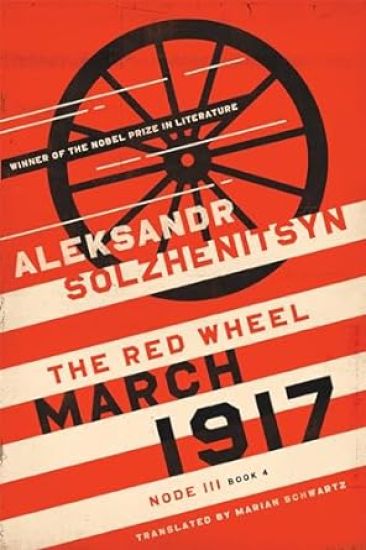
In March 1917, Book 4 the willing and unwilling participants of the Russian Revolution try to make sense of their next steps amidst unraveling chaos. One of the masterpieces of world literature, The Red Wheel is Nobel prize–winner Aleksandr Solzhenitsyn's multivolume epic work about the Russian Revolution told in the form of a historical novel. March 1917—the third node—chronicles the mayhem, day by day, of the Russian Revolution. Book 4 presents, for the first time in English, the conclusion of this four-volume revolutionary saga. The action of Book 4 is set during March 23–31, 1917. Book 4 portrays a cast of thousands in motion and agitation as every stratum of Russian society—the army on the front lines, the countryside, the Volga merchants, the Don Cossacks, the Orthodox Church—is racked by the confusing new reality. Soldiers start to fraternize across trenches with the enemy. The Grand Duke Nikolai Nikolaevich, the emperor's uncle, arrives at military headquarters to assume the supreme command but is promptly dismissed by the new Provisional Government. Even this government holds no power, for at every step it is cowed and hemmed in by a self-proclaimed and unaccountable Executive Committee acting in the name of the Soviets—councils of workers and soldiers. Yet the Soviets themselves are divided—on whether to call for an end to the war or for its continuation, on whether to topple the Provisional Government or to let it try to govern. Meanwhile, in Switzerland, Lenin quietly dictates his own terms to the German General Staff, setting the stage for his return to Russia.
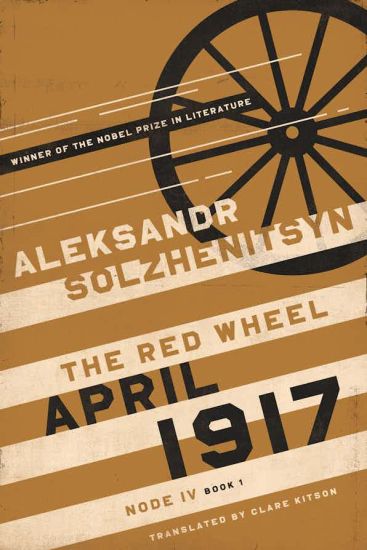
April 1917, Book 1, captures the division and helplessness of Russia's first Revolutionary rulers, paving the way for the victory of the ruthless Bolsheviks later that year. One of the masterpieces of world literature, The Red Wheel is Nobel prize–winner Aleksandr Solzhenitsyn's multivolume epic work about the Russian Revolution told in the form of a historical novel. April 1917—the fourth node—shows the intractable divisions that would lead Russia to catastrophic Communist dictatorship and civil war. If the first three nodes of The Red Wheel form its first act, "The Revolution," April 1917 opens its second act, "The Rule of the People." The action of Book 1 (of two) is set during April 11–May 5, 1917. Book 1 presents a shift toward a more radical revolution and an increase in political turmoil. The Provisional Government comes under fire for its "bourgeois" capitalism and continuing commitment to World War I. Bolshevik leader Vladimir Lenin returns from exile and delivers his April Theses in Petrograd, actively sowing seeds of division. He declares that the revolution is not complete and openly calls for civil war, outlining a radical plan to overthrow the Provisional Government and seize power for the Soviets. Amid the chaos and rising tide of Bolshevism, the elements of resistance, and decency, slowly begin to awaken.
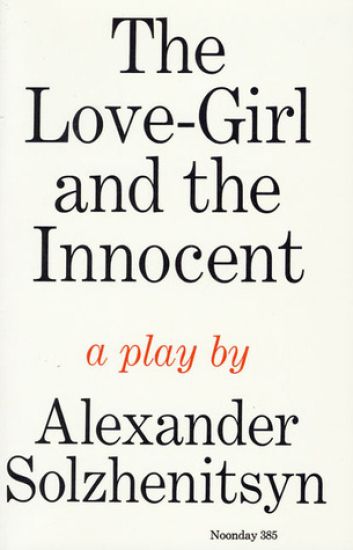
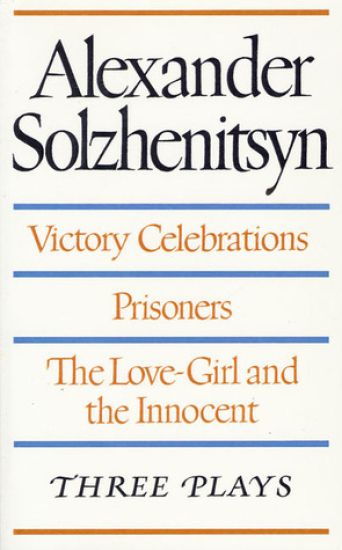
The action of this full-length play is set in 1945 in a Stalinist slave-labor camp similar to the one where the author himself served an eight-year term. It is basically a love story of two prisoners: Nemov, the "innocent," a new prisoner who is unwilling to compromise in order to survive, and Lyuba, a girl who tells him that in the labor camp integrity is a passport to death. He tries desperately to keep his honor and self-respect while she tries to convince him that he must compromise. The love story is told gradually and intermittently against the background of labor-camp life. The large number of characters on stage, working, arguing and fighting, emphasizes the cruel, unprivate world in which the pair have to live their lives. Finally the "innocent" realizes that if he will share Lyuba with one of the higher-ups, he will then have everything: extra food, a comfortable job and the woman he loves. All he has to do is make that one compromise. The Love-Girl and The Innocent was accepted for performance in 1962 by the Moscow Contemporary Theatre but was then banned. It has never been performed in Russia, as the author complained in his courageous letter to the Congress of Soviet Writers, reprinted in the Farrar, Straus and Giroux edition of Cancer Ward. Solzhenitsyn's works have been barred in the Soviet Union since 1966 and he was recently expelled from the Russian Writers' Union. The publication of Solzhenitsyn's play in England and America marks its first appearance in print in any language.
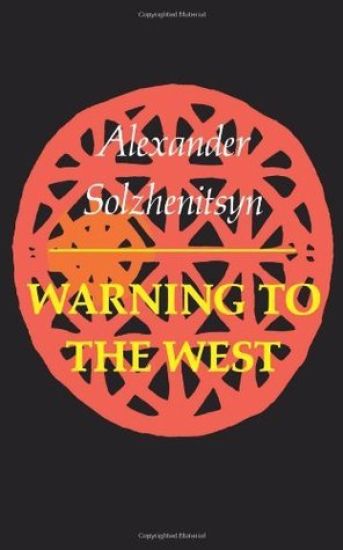
Alexander Solzhenitsyn's Warning to the West includes the texts of the Nobel Prize-winning author's three speeches in the United States in the summer of 1975, his first major public addresses since his expulsion from the Soviet Union in 1974: on June 30 and July 9 to trade-union leaders of the AFL-CIO in Washington, D.C., and in New York City, and on July 15 to the United States Congress; and also the texts of his BBC interview and radio speech, which sparked widespread public controversy when they were aired in London in March 1976. Solzhenitsyn's outspoken criticism of the West's growing weakness and complacency and his belief that Russia's growing strength will enable her to establish supremacy over the West without risk of a nucelar holocaust are expressed with the moral authority of a great novelist and historian. "Solzhenitsyn mounts a public indictment of the supine inattention of the West that rings like the blows of the hammer with which Luther nailed his manifesto to the doors at Wittenberg."--Times Literary Supplement
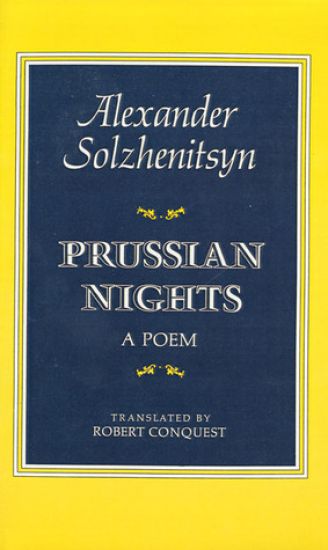
"The pictorial quality of the whole poem is an eye-opener. There is always a tendency, on the part of his detractors, to make of Solzhenitsyn something less than he is, but here is further evidence that he is something more than even his admirers thought." - Clive James, New Statesman
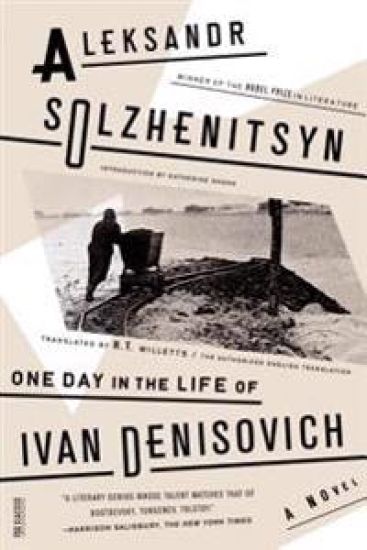
For the centenary of the Russian Revolution, a new edition of the Russian Nobel Prize-winning author's most accessible novel One Day in the Life of Ivan Denisovich is an undisputed classic of contemporary literature. First published (in censored form) in the Soviet journal Novy Mir in 1962, it is the story of labor-camp inmate Ivan Denisovich Shukhov as he struggles to maintain his dignity in the face of communist oppression. On every page of this graphic depiction of Ivan Denisovich's struggles, the pain of Aleksandr Solzhenitsyn's own decade-long experience in the gulag is apparent--which makes its ultimate tribute to one man's will to triumph over relentless dehumanization all the more moving. An unforgettable portrait of the entire world of Stalin's forced-work camps, One Day in the Life of Ivan Denisovich is one of the most extraordinary literary works to have emerged from the Soviet Union. The first of Solzhenitsyn's novels to be published, it forced both the Soviet Union and the West to confront the Soviet's human rights record, and the novel was specifically mentioned in the presentation speech when Solzhenitsyn was awarded the Nobel Prize in Literature in 1970. Above all, One Day in the Life of Ivan Denisovich establishes Solzhenitsyn's stature as "a literary genius whose talent matches that of Dostoevsky, Turgenev, Tolstoy" (Harrison Salisbury, The New York Times). This unexpurgated, widely acclaimed translation by H. T. Willetts is the only translation authorized by Solzhenitsyn himself.
The Russian Nobelist's major work, back in print for the centenary of World War I and the Russian Revolution In his monumental narrative of the outbreak of the First World War and the ill-fated Russian offensive into East Prussia, Aleksandr Solzhenitsyn has written "a dramatically new interpretation of Russian history" (Nina Krushcheva, The Nation). The assassination of the tsarist prime minister Pyotr Stolypin, a crucial event in the years leading up to the Revolution of 1917, is reconstructed from the alienating viewpoints of historical witnesses. The sole voice of reason among the advisers to Tsar Nikolai II, Stolypin died at the hands of the anarchist Mordko Bogrov, and with him Russia's last hope for reform perished. August 1914 is the first volume of Solzhenitsyn's epic, The Red Wheel; the second is November 1916. Each volume concentrates on a critical moment or "knot" in the history of the Russian Revolution.
In time for the centenary of the beginning of the Russian Revolution, a new edition of the Russian Nobelist's major work The month of November 1916 in Russia was outwardly quiet--the proverbial calm before the storm--but beneath the placid surface, society seethed fiercely. In Petrograd, as St. Petersburg was then known, luxury-store windows are still brightly lit; the Duma debates the monarchy, the course of war, and clashing paths to reform; the workers in the miserable munitions factories veer toward sedition. At the front, all is stalemate, while in the countryside sullen anxiety among hard-pressed farmers is rapidly replacing patriotism. In Zurich, Lenin, with the smallest of all revolutionary groups, plots his sinister logistical miracle. With masterly and moving empathy, through the eyes of both historical and fictional protagonists, Solzhenitsyn unforgettably transports us to that time and place--the last of pre-Soviet Russia. November 1916 is the second volume in Aleksandr Solzhenitsyn's multipart work, The Red Wheel. This volume concentrates on a historical turning point, or "knot," as the wheel rolls inexorably toward revolution.
The Russian Nobelist's semiautobiographical novel set in a Soviet cancer ward shortly after Stalin's death One of the great allegorical masterpieces of world literature, Aleksandr Solzhenitsyn's Cancer Ward is both a deeply compassionate study of people facing terminal illness and a brilliant dissection of the cancerous Soviet police state.Cancer Ward, which has been compared to the masterpiece of another Nobel Prize winner, The Magic Mountain by Thomas Mann, examines the relationship of a group of people in the cancer ward of a provincial Soviet hospital in 1955, two years after Stalin's death. While the experiences of the central character, Oleg Kostoglotov, closely reflect the author's own--Solzhenitsyn became a patient in a cancer ward in the mid-1950s, on his release from a labor camp, and later recovered--the patients, as a group, represent a remarkable cross section of contemporary Russian characters and attitudes, both under normal circumstances and then reexamined at the eleventh hour of illness. A seminal work from one of the most powerful voices in twentieth century literature, Cancer Ward offers an extraordinary portrait of life in the Soviet Union.