Kirjahaku
Etsi kirjoja tekijän nimen, kirjan nimen tai ISBN:n perusteella.
38 kirjaa tekijältä Alessandra Comini
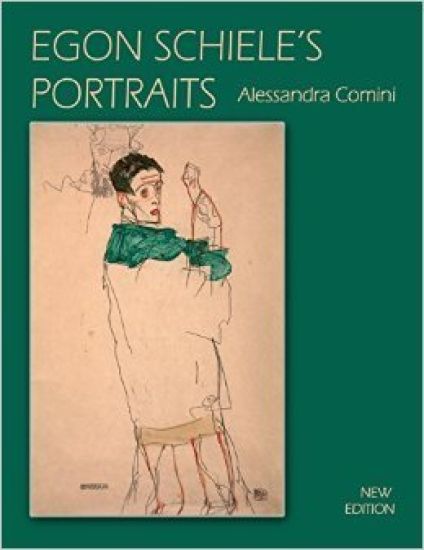


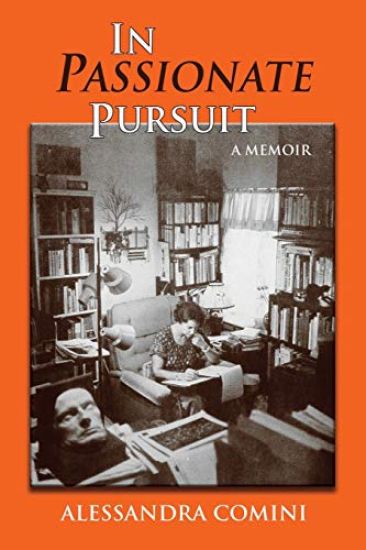
Overflowing with passion for her work as a scholar and teacher, Alessandra Comini reminisces and romps through six decades as an unconventional art historian in this illustrated memoir. The author of award-winning books on Egon Schiele, Gustav Klimt, and Ludwig van Beethoven, Comini draws on her lifelong daily journals and shares uniquely personal research-related anecdotes as she reflects on the formation and flowering of her distinguished career. Beginning with her own colorful background as a refugee from Franco's Spain, then Mussolini's Italy, she describes her music-loving family's sometimes humorous, sometimes painful, adjustment to World War II Texas. Her fortuitous experiences at Interlochen's National Music camp, Barnard College, Berkeley, and Columbia University led to what would ultimately be a turning point in both her life as well as in Schiele scholarship: the discovery, half a century after Schiele's incarceration in a provincial Austrian jail, of the actual cell in which he had been imprisoned. Throughout this book, Comini invites readers to join her in the same zestful pursuit of cultural history that has repeatedly earned her the honor of being voted "outstanding professor, " first by her students at Columbia University in the 1960s and 1970s, then later at Southern Methodist University in Dallas. Focusing on three major areas--nineteenth-and twentieth-century art ranging from Spain to Finland, revisionist work in the history of women artists past and present, and musical iconography--Comini's research and quests take the reader around the world and back. From the islands of Corfu, Corsica, and Madeira to Martinique, Rugen, and Tahiti, and from the cities of Lisbon,Istanbul, Barcelona, Rome, and Athens to Paris, Copenhagen, Oslo, Helsinki, and St. Petersburg, Comini pursues such diverse and distinctive personalities as Rosa Bonheur, Edvard Munch, Gustav Klimt, Vaslav Nijinsky, Egon Schiele, Isadora Duncan, Schopenhauer, and Kathe Kollwitz. For those who wonder what academics do besides teach and publish, Alessandra Comini's joyous, and occasionally heart-wrenching, memoir will inspire readers with its sincere and compelling account of an extraordinary life and career still passionately in progress.




A moving van filled with eleven Wassily Kandinsky paintings stolen from Munich's famous Lenbach House Museum during a violent neo-Nazi demonstration is hijacked in Slovakia. Two rival Kandinsky collectors appear to be involved: Igor Rasputin of Odessa, visiting in Munich, and Boris Zima of Moscow, whose agent Raisa Sokolova is keeping tabs on Rasputin. Puzzlingly, the museum adamantly declares there has been no theft, even though its night watchman has been found murdered. Also visiting Munich is retired art history professor Megan Crespi, slated to give a lecture she titles, curiously enough, "Double Kandinsky." In between visits to "mad" King Ludwig's fantasy castles, Megan comes into contact with possible suspects, ranging from Rasputin to Iris and Laszlo Togarassy, owners of Munich's new The Blue Rider gallery featuring Kandinsky's works, to Katrina Keller, associate director of the Lenbach. Manipulating events connected with the theft are a young, careless gambler who owns a building behind the Lenbach, two men from the Ukrainian island of Amiinyi-one a computer wizard, the other a science photographer-and their Munich engineer friend Alyksandr Miesel, neo-Nazi leader Walter Krankenhauer, and Detective Dieter L ser. Crespi's lecture, including results of state-of-the-art XRF technology, becomes the revelatory preamble to a thrilling denouement that cracks the Kandinsky conundrum. Includes a Readers Guide.
During a performance of Beethoven's Fidelio at the Vienna State Opera there is an explosion in the foyer just off the auditorium. Auguste Rodin's famous 1909 bronze bust of composer/conductor Gustav Mahler has been blown up and a hate-filled note has been left at the scene demanding that there be "no more Jews defiling our culture." Retired art historian/musicologist Megan Crespi, in Vienna to lecture, is at the performance with her former student, the renowned cellist Egga Streicher, and is asked by her friend, Chief of Police Erich Decker, to help in tracking down the culprit. Soon copy-cat vandalism of Jewish monuments around the city breaks out. Things come to a horrendous climax during a performance of Mahler's great Second Symphony, the "Resurrection" symphony, but is it the only surprise awaiting Megan Crespi's dangerous investigation? Includes Readers Guide.