Kirjojen hintavertailu. Mukana 11 244 527 kirjaa ja 12 kauppaa.

Kirjahaku

Etsi kirjoja tekijän nimen, kirjan nimen tai ISBN:n perusteella.

4 kirjaa tekijältä Alessandra Russo

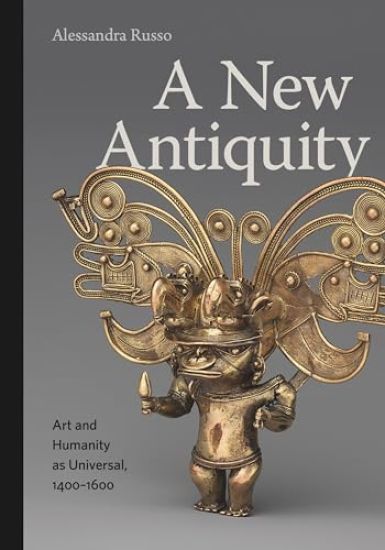
A New Antiquity

A New Antiquity

Alessandra Russo

Pennsylvania State University Press
2024
sidottu
We tend to think of sixteenth-century European artistic theory as separate from the artworks displayed in the non-European sections of museums. Alessandra Russo argues otherwise. Instead of considering the European experience of “New World” artifacts and materials through the lenses of “curiosity” and “exoticism,” Russo asks a different question: What impact have these works had on the way we currently think about—and theorize—the arts?Centering her study on a vast corpus of early modern textual and visual sources, Russo contends that the subtlety and inventiveness of the myriad of American, Asian, and African creations that were pillaged, exchanged, and often eventually destroyed in the context of Iberian colonization—including sculpture, painting, metalwork, mosaic, carving, architecture, and masonry—actually challenged and revolutionized sixteenth-century European definitions of what art is and what it means to be human. In this way, artifacts coming from outside Europe between 1400 and 1600 played a definitive role in what are considered distinctively European transformations: the redefinition of the frontier between the “mechanical” and the “liberal” arts and a new conception of the figure of the artist.Original and convincing, A New Antiquity is a pathbreaking study that disrupts existing conceptions of Renaissance art and early modern humanity. It will be required reading for art historians specializing in the Renaissance, scholars of Iberian and Latin American cultures and global studies, and anyone interested in anthropology and aesthetics.
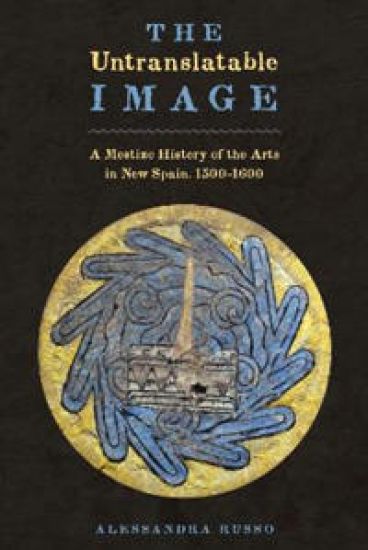
The Untranslatable Image

The Untranslatable Image

Alessandra Russo

UNIVERSITY OF TEXAS PRESS
2023
nidottu
Moving beyond the dominant model of syncretism, this extensively illustrated volume proposes a completely different approach to the field known as Latin American “colonial art,” positioning it as a constitutive part of Renaissance and early modern art history. From the first contacts between European conquerors and the peoples of the Americas, objects were exchanged and treasures pillaged, as if each side were seeking to appropriate tangible fragments of the “world” of the other. Soon, too, the collision between the arts of Renaissance Europe and pre-Hispanic America produced new objects and new images with the most diverse usages and forms. Scholars have used terms such as syncretism, fusion, juxtaposition, and hybridity in describing these new works of art, but none of them, asserts Alessandra Russo, adequately conveys the impact that the European artistic world had on the Mesoamerican artistic world or treats the ways in which pre-Hispanic traditions, expertise, and techniques-as well as the creation of post-Conquest images-transformed the course of Western art. This innovative study focuses on three sets of paradigmatic images created in New Spain between the sixteenth and seventeenth centuries-feather mosaics, geographical maps, and graffiti-to propose that the singularity of these creations arises not from a syncretic impulse, but rather from a complex process of “untranslatability.” Foregrounding the distances and differences between incomparable theories and practices of images, Russo demonstrates how the constant effort to understand, translate, adapt, decode, transform, actualize, and condense Mesoamerican and European aesthetics, traditions, knowledge, techniques, and concepts constituted an exceptional engine of unprecedented visual and verbal creativity in the early modern transatlantic world.
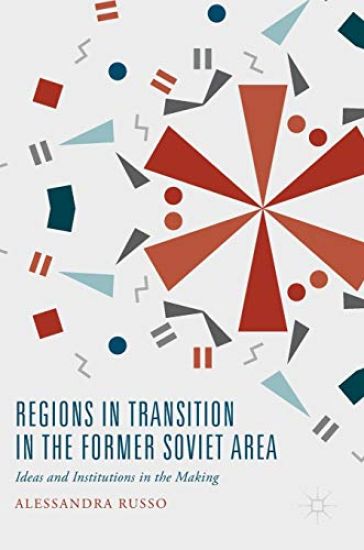
Regions in Transition in the Former Soviet Area

Regions in Transition in the Former Soviet Area

Alessandra Russo

Springer International Publishing AG
2017
sidottu
This book aims to understand the “texture” of the post-Soviet region, where waves of de-integration and re-integration have been resonating at different times and through diverse manifestations over the last quarter of century. The post-Soviet states have been evolving in an embryonic system of states in their close neighbourhood, whose boundaries and rules of interactions are still in the making. However, one can already detect specific traits of regional governance, one of these being the presence of overlapping organisations and institutions. It includes reflections on relations between state formation and region formation and a tentative conceptualisation of a post-colonial form of regionalism. The focus on small states, featuring different behaviours vis-à-vis regional organisations and regional imaginaries in their transitional and still unsettled state identities and foreign policy narratives, constitutes a further element of originality. This innovative volume is crucial reading for scholars and researchers of International Relations with a special interest in either the Former Soviet Space or Comparative Regionalism.
Regions in Transition in the Former Soviet Area

Regions in Transition in the Former Soviet Area

Alessandra Russo

Springer International Publishing AG
2018
nidottu
This book aims to understand the “texture” of the post-Soviet region, where waves of de-integration and re-integration have been resonating at different times and through diverse manifestations over the last quarter of century. The post-Soviet states have been evolving in an embryonic system of states in their close neighbourhood, whose boundaries and rules of interactions are still in the making. However, one can already detect specific traits of regional governance, one of these being the presence of overlapping organisations and institutions. It includes reflections on relations between state formation and region formation and a tentative conceptualisation of a post-colonial form of regionalism. The focus on small states, featuring different behaviours vis-à-vis regional organisations and regional imaginaries in their transitional and still unsettled state identities and foreign policy narratives, constitutes a further element of originality. This innovative volume is crucial reading for scholars and researchers of International Relations with a special interest in either the Former Soviet Space or Comparative Regionalism.