Kirjojen hintavertailu. Mukana 12 320 764 kirjaa ja 12 kauppaa.

Kirjahaku

Etsi kirjoja tekijän nimen, kirjan nimen tai ISBN:n perusteella.

13 kirjaa tekijältä Alessandro Ferrara

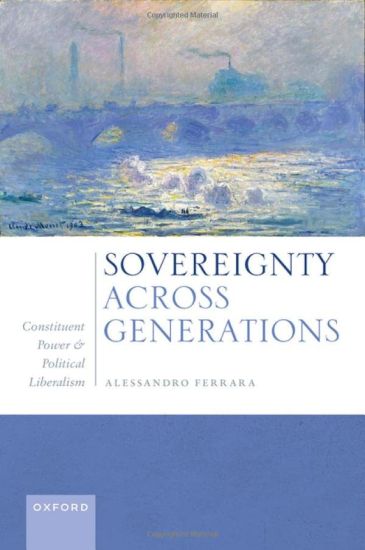
Sovereignty Across Generations

Sovereignty Across Generations

Alessandro Ferrara

Oxford University Press
2023
sidottu
Every cohort of voters may dream of being 'the people' under the sway of serial visions of sovereignty; or understand itself, more modestly, as co-author of a constitutional project in a cross-generational sequence rooted in the past and extending into the future. Sovereignty Across Generations offers a theory of democratic sovereignty and constituent power grounded in John Rawls's political liberalism. Neither exegetic nor abstractly analytic, this book assumes that 'political liberalism' is broader than Political Liberalism. In answering the question 'How is it possible for there to exist over time a just and stable society of free and equal citizens, who remain profoundly divided by reasonable religious, philosophical, and moral doctrines?', the paradigm implicit in Political Liberalism enables us to address facets of that question that Rawls sidelined in the context of his time. Following populist threats to democracy, which were still latent in 1993, this book responds to the urgency of clarifying the proper relation of 'the people' (as transgenerational author of the constitution) to its pro-tempore living segment in its capacity as electorate and as co-author of the constitution. An explanation of that relation brings 'constituent power' into the picture and unfolds in seven steps that form the conceptual backbone of this book. By taking new steps in updating and revisiting political liberalism, this book reconstructs Rawls's implicit view of constituent power beyond the pages dedicated to it in Political Liberalism and brings that view into conversation with major constitutional theories of the twentieth century. This book is a must read for all those interested in the fields of politics, philosophy, and constitutional law.

The Force of the Example

The Force of the Example

Alessandro Ferrara

Columbia University Press
2008
sidottu
During the twentieth century, the view that assertions and norms are valid insofar as they respond to principles independent of all local and temporal contexts came under attack from two perspectives: the partiality of translation and the intersubjective constitution of the self, understood as responsive to recognition. Defenses of universalism have by and large taken the form of a thinning out of substantive universalism into various forms of proceduralism. Alessandro Ferrara instead launches an entirely different strategy for transcending the particularity of context without contradicting our pluralistic intuitions: a strategy centered on the exemplary universalism of judgment. Whereas exemplarity has long been thought to belong to the domain of aesthetics, this book explores the other uses to which it can be put in our philosophical predicament, especially in the field of politics. After defining exemplarity and describing how something unique can possess universal significance, Ferrara addresses the force exerted by exemplarity, the nature of the judgment that discloses exemplarity, and the way in which the force of the example can bridge the difference between various contexts. Drawing not only on Kant's Critique of the Power of Judgment but also on the work of Hannah Arendt, John Rawls, Ronald Dworkin, and Jurgen Habermas, Ferrara outlines a view of exemplary validity that is applicable to today's central philosophical issues, including public reason, human rights, radical evil, sovereignty, republicanism and liberalism, and religion in the public sphere.
Reflective Authenticity

Reflective Authenticity

Alessandro Ferrara

Routledge
1998
sidottu
Reflective Authenticity: Rethinking the Project of Modernity is a challenging consideration of what remains of ambitious Enlightenment ideas such as democracy, freedom and universality in the wake of relativist, postmodern thought. Do clashes over gender, race and culture mean that universal notions such as justice or rights no longer apply outside our own communities? Do our actions lose their authenticity if we act on principles that transcend the confines of our particular communities ? Alessandro Ferrara proposes a path out of this impasse via the notion of reflective authenticity. Drawing on Aristotle, Kants concept of reflective judgement and Heideggers theory of reflexive self-grounding, Reflective Authenticity: Rethinking the Project of Modernity takes a fresh look at the state of Critical Theory today and the sustainability of postmodern politics.
Reflective Authenticity

Reflective Authenticity

Alessandro Ferrara

Routledge
1998
nidottu
Reflective Authenticity: Rethinking the Project of Modernity is a challenging consideration of what remains of ambitious Enlightenment ideas such as democracy, freedom and universality in the wake of relativist, postmodern thought. Do clashes over gender, race and culture mean that universal notions such as justice or rights no longer apply outside our own communities? Do our actions lose their authenticity if we act on principles that transcend the confines of our particular communities ? Alessandro Ferrara proposes a path out of this impasse via the notion of reflective authenticity. Drawing on Aristotle, Kants concept of reflective judgement and Heideggers theory of reflexive self-grounding, Reflective Authenticity: Rethinking the Project of Modernity takes a fresh look at the state of Critical Theory today and the sustainability of postmodern politics.
Cost-Benefit Analysis of Multi-Level Government
This book provides an original theoretical framework for assessing public investment policies co-financed by Union (Federal) governments. This framework is applied to two important case studies: the EU Cohesion Policy and the US Federal Investment Policies.Cost-Benefit Analysis of Multi-Level Government sheds light on a number of outstanding issues of economic theory by extending the theory of shadow prices, and provides guidance to real-world decision makers. In particular, the following questions are addressed: In which circumstances is intervention by higher level government in Member States through investment policies justified? Is there a welfare economics rationale to underpin interregional equity? What is the relationship between interregional and interpersonal income distribution? How can social exclusion be included in cost-benefit tests? How can a higher level of government allocate financial resources to investment policies before it bargains over the related programming documents with lower levels of government? In these circumstances, how can optimal matching rates be derived under binding or non binding budgetary constraints? How can such an analytical framework provide guidance for real-world decision makers?Guidelines such as the Impact Assessment Guidelines (European Commission), the Green Book (British Treasury), and Guidelines and Discount Rates for Benefit-Cost Analysis of Federal Programs (Executive Office of the US President) are also analyzed.The book will be of interest to policy makers, postgraduate students and researchers in cost-benefit analysis, welfare economics, public choice, public finance, multi-level government economics, and income distribution issues.
Cost-Benefit Analysis of Multi-Level Government
This book provides an original theoretical framework for assessing public investment policies co-financed by Union (Federal) governments. This framework is applied to two important case studies: the EU Cohesion Policy and the US Federal Investment Policies.Cost-Benefit Analysis of Multi-Level Government sheds light on a number of outstanding issues of economic theory by extending the theory of shadow prices, and provides guidance to real-world decision makers. In particular, the following questions are addressed: In which circumstances is intervention by higher level government in Member States through investment policies justified? Is there a welfare economics rationale to underpin interregional equity? What is the relationship between interregional and interpersonal income distribution? How can social exclusion be included in cost-benefit tests? How can a higher level of government allocate financial resources to investment policies before it bargains over the related programming documents with lower levels of government? In these circumstances, how can optimal matching rates be derived under binding or non binding budgetary constraints? How can such an analytical framework provide guidance for real-world decision makers?Guidelines such as the Impact Assessment Guidelines (European Commission), the Green Book (British Treasury), and Guidelines and Discount Rates for Benefit-Cost Analysis of Federal Programs (Executive Office of the US President) are also analyzed.The book will be of interest to policy makers, postgraduate students and researchers in cost-benefit analysis, welfare economics, public choice, public finance, multi-level government economics, and income distribution issues.
Justice and Judgement

Justice and Judgement

Alessandro Ferrara

SAGE Publications Ltd
1999
sidottu
Justice and Judgement is a comprehensive introduction to theories of judgement in contemporary political and moral philosophy. The book offers a critical examination of judgement in the recent works of Rawls, Habermas, Ackerman, Michelman and Dworkin, including an historical overview of the judgement model in contemporary political philosophy; the function of the constitution; and deliberative democracy. The book concludes with a discussion of universalism and contemporary liberalism and the judgement view of justice.
Justice and Judgement

Justice and Judgement

Alessandro Ferrara

SAGE Publications Ltd
1999
nidottu
Justice and Judgement is a comprehensive introduction to theories of judgement in contemporary political and moral philosophy. The book offers a critical examination of judgement in the recent works of Rawls, Habermas, Ackerman, Michelman and Dworkin, including an historical overview of the judgement model in contemporary political philosophy; the function of the constitution; and deliberative democracy. The book concludes with a discussion of universalism and contemporary liberalism and the judgement view of justice.
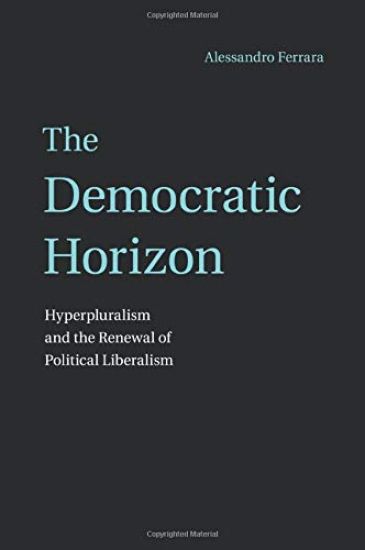
The Democratic Horizon

The Democratic Horizon

Alessandro Ferrara

Cambridge University Press
2014
sidottu
Alessandro Ferrara explains what he terms 'the democratic horizon' - the idea that democracy is no longer simply one form of government among others, but is instead almost universally regarded as the only legitimate form of government, the horizon to which most of us look. Professor Ferrara reviews the challenges under which democracies must operate, focusing on hyperpluralism, and impresses a new twist onto the framework of political liberalism. He shows that distinguishing real democracies from imitations can be difficult, responding to this predicament by enriching readers' understanding of the spirit of democracy; clearing readers' views of pluralism from residues of ethnocentrism; and conceiving multiple versions of democratic culture, rooted in the diversity of civilizational contexts.
The Democratic Horizon

The Democratic Horizon

Alessandro Ferrara

Cambridge University Press
2015
pokkari
Alessandro Ferrara explains what he terms 'the democratic horizon' - the idea that democracy is no longer simply one form of government among others, but is instead almost universally regarded as the only legitimate form of government, the horizon to which most of us look. Professor Ferrara reviews the challenges under which democracies must operate, focusing on hyperpluralism, and impresses a new twist onto the framework of political liberalism. He shows that distinguishing real democracies from imitations can be difficult, responding to this predicament by enriching readers' understanding of the spirit of democracy; clearing readers' views of pluralism from residues of ethnocentrism; and conceiving multiple versions of democratic culture, rooted in the diversity of civilizational contexts.
Rousseau and Critical Theory

Rousseau and Critical Theory

Alessandro Ferrara

BRILL
2017
nidottu
In Rousseau and Critical Theory, Alessandro Ferrara argues that among the modern philosophers who have shaped the world we inhabit, Rousseau is the one to whom we owe the idea that identity can be a source of normativity (moral and political) and that an identity's potential for playing such a role rests on its capacity for being authentic. This normative idea of authenticity brings unity to Rousseau's reflections on the negative effects of the social order, on the just political order, on education, and more generally, on ethics. It is also shown to contain important teachings for contemporary Critical Theory, contemporary views of self-constitution (Korsgaard, Frankfurt and Larmore), and contemporary political philosophy.
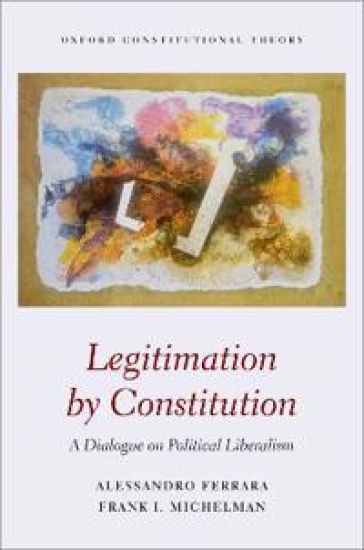
Legitimation by Constitution

Legitimation by Constitution

Frank Michelman; Alessandro Ferrara

Oxford University Press
2021
sidottu
"Legitimation by Constitution" is the phrase, coined by distinguished authors Frank Michelman and Alessandro Ferrara, for a key idea in Rawlsian political liberalism of a reliance on a dualist form of democracy-a subjection of ground-level lawmaking to the constraints of a higher-law constitution that most citizens could find acceptable as a framework for their politics-as a response to the problem of maintaining a liberally just, stable, and oppression-free democratic government in conditions of pluralist visionary conflict. Legitimation by Constitution recalls, collects, and combines a series of exchanges over the years between Michelman and Ferrara, inspired by Rawls' encapsulation of this conception in his proposed liberal principle of legitimacy. From a shared standpoint of sympathetic identification with the political-liberal statement of the problem, for which legitimation by constitution is proposed as a solution, these exchanges consider the perceived difficulties arguably standing in the way of this proposal's fulfillment on terms consistent with political liberalism's defining ideas about political justification. The authors discuss the mysteries of a democratic constituent power; the tensions between government-by-the-people and government-by-consent; the challenges posed to concretization by judicial authorities of national constitutional law; and the magnification of these tensions and challenges under the lenses of ambition towards transnational legal ordering. These discussions engage with other leading contemporary theorists of liberal-democratic constitutionalism including Bruce Ackerman, Ronald Dworkin, and Jürgen Habermas.