Kirjojen hintavertailu. Mukana 11 342 296 kirjaa ja 12 kauppaa.

Kirjahaku

Etsi kirjoja tekijän nimen, kirjan nimen tai ISBN:n perusteella.

15 kirjaa tekijältä Alessandro Stanziani

Empires of Labor

Empires of Labor

Alessandro Stanziani

Cambridge University Press
2025
pokkari
From the seventeenth century to the First World War, both free and unfree labor were essential for building an empire. This ambitious study examines the relationship between capitalism and coercion across the British, French and Russian empires throughout centuries of economic transformation. Overturning conventional explanations of serfdom, slavery, indentured migration and wage labor, Alessandro Stanziani demonstrates the dominance of aristocratic capitalism across Europe and Eurasia until the end of the nineteenth century. He links the Industrial Revolution, the Great Divergence and the Great Transformation into a single narrative in which the coercion and emancipation of labor are crucial steps. Stanziani argues that, if the modern state is now beset with labor inequalities and tensions surrounding mobility, it is not because Western values have been hijacked but because they were built on empire, labor and coercion.

Empires of Labor

Empires of Labor

Alessandro Stanziani

Cambridge University Press
2025
sidottu
From the seventeenth century to the First World War, both free and unfree labor were essential for building an empire. This ambitious study examines the relationship between capitalism and coercion across the British, French and Russian empires throughout centuries of economic transformation. Overturning conventional explanations of serfdom, slavery, indentured migration and wage labor, Alessandro Stanziani demonstrates the dominance of aristocratic capitalism across Europe and Eurasia until the end of the nineteenth century. He links the Industrial Revolution, the Great Divergence and the Great Transformation into a single narrative in which the coercion and emancipation of labor are crucial steps. Stanziani argues that, if the modern state is now beset with labor inequalities and tensions surrounding mobility, it is not because Western values have been hijacked but because they were built on empire, labor and coercion.
Rules of Exchange

Rules of Exchange

Alessandro Stanziani

Cambridge University Press
2012
sidottu
The control of competition is designed, at best, to reconcile socioeconomic stability with innovation, and at worst, to keep competitors out of the market. In this respect, the nineteenth century was no more liberal than the eighteenth century. Even during the presumed liberal nineteenth century, legal regulation played a major role in the economy, and the industrial revolution was based on market institutions and organisations formed during the second half of the seventeenth century. If indeed there is a break in the history of capitalism, it should be situated at the turn of the nineteenth and twentieth centuries, with the irruption of mass production, consumption and the welfare state, which introduced new forms of regulation. This book provides a new intellectual, economic and legal history of capitalism from the eighteenth century to the early twentieth century. It analyzes the interaction between economic practices and legal constructions in France and compares the French case with other Western countries during this period, such as the United Kingdom, the United States, Germany and Italy.
Rules of Exchange

Rules of Exchange

Alessandro Stanziani

Cambridge University Press
2014
pokkari
The control of competition is designed, at best, to reconcile socioeconomic stability with innovation, and at worst, to keep competitors out of the market. In this respect, the nineteenth century was no more liberal than the eighteenth century. Even during the presumed liberal nineteenth century, legal regulation played a major role in the economy, and the industrial revolution was based on market institutions and organisations formed during the second half of the seventeenth century. If indeed there is a break in the history of capitalism, it should be situated at the turn of the nineteenth and twentieth centuries, with the irruption of mass production, consumption and the welfare state, which introduced new forms of regulation. This book provides a new intellectual, economic and legal history of capitalism from the eighteenth century to the early twentieth century. It analyzes the interaction between economic practices and legal constructions in France and compares the French case with other Western countries during this period, such as the United Kingdom, the United States, Germany and Italy.
Tensions of Social History

Tensions of Social History

Alessandro Stanziani

BLOOMSBURY PUBLISHING PLC
2023
sidottu
This book seeks to overcome the tension between ‘western’ and ‘non-western’ categories and tools in the study of global history, showing how most western approaches to the social sciences and history have developed through transnational and colonial interactions.Offering a transnational and global history of the main tools we have to understand the word and its transformations over the last three centuries, Tensions of Social History explores the construction of archives and historical memory, the making of statistics and their use in politics, the identification of social actors, and the emergence of key social theories. Providing key insights into how to write history and develop social sciences in the global era while avoiding eurocentrism and cultural exceptionalism, this ambitious book shows how global history is made of encounters rather than confrontations between civilizations.
Tensions of Social History

Tensions of Social History

Alessandro Stanziani

BLOOMSBURY PUBLISHING PLC
2024
nidottu
This book seeks to overcome the tension between ‘western’ and ‘non-western’ categories and tools in the study of global history, showing how most western approaches to the social sciences and history have developed through transnational and colonial interactions.Offering a transnational and global history of the main tools we have to understand the word and its transformations over the last three centuries, Tensions of Social History explores the construction of archives and historical memory, the making of statistics and their use in politics, the identification of social actors, and the emergence of key social theories. Providing key insights into how to write history and develop social sciences in the global era while avoiding eurocentrism and cultural exceptionalism, this ambitious book shows how global history is made of encounters rather than confrontations between civilizations.
After Oriental Despotism

After Oriental Despotism

Alessandro Stanziani

Bloomsbury Academic
2014
sidottu
The concepts of economic backwardness, Asiatic despotism and orientalism have strongly influenced perceptions of modernization, democracy and economic growth over the last three centuries. This book provides an original view of Russian and Asian history that views both in a global perspective. Via this analysis, Alessandro Stanziani opens new dimensions in the study of state formation, the global slave trade, warfare and European and Asian growth. After Oriental Despotism questions conventional oppositions between Europe and Asia. By revisiting the history of Eurasia in this context, the book offers a serious challenge to existing ideas about the aims and goals of economic growth.
After Oriental Despotism

After Oriental Despotism

Alessandro Stanziani

Bloomsbury Academic
2014
nidottu
The concepts of economic backwardness, Asiatic despotism and orientalism have strongly influenced perceptions of modernization, democracy and economic growth over the last three centuries. This book provides an original view of Russian and Asian history that views both in a global perspective. Via this analysis, Alessandro Stanziani opens new dimensions in the study of state formation, the global slave trade, warfare and European and Asian growth. After Oriental Despotism questions conventional oppositions between Europe and Asia. By revisiting the history of Eurasia in this context, the book offers a serious challenge to existing ideas about the aims and goals of economic growth.
Bondage

Bondage

Alessandro Stanziani

Berghahn Books
2014
sidottu
For the first time, this book provides the global history of labor in Central Eurasia, Russia, Europe, and the Indian Ocean between the sixteenth and the twentieth centuries. It contests common views on free and unfree labor, and compares the latter to many Western countries where wage conditions resembled those of domestic servants. This gave rise to extreme forms of dependency in the colonies, not only under slavery, but also afterwards in form of indentured labor in the Indian Ocean and obligatory labor in Africa. Stanziani shows that unfree labor and forms of economic coercion were perfectly compatible with market development and capitalism, proven by the consistent economic growth that took place all over Eurasia between the seventeenth and the nineteenth centuries. This growth was labor intensive: commercial expansion, transformations in agriculture, and the first industrial revolution required more labor, not less. Finally, Stanziani demonstrates that this world did not collapse after the French Revolution or the British industrial revolution, as is commonly assumed, but instead between 1870 and 1914, with the second industrial revolution and the rise of the welfare state.
Bondage

Bondage

Alessandro Stanziani

Berghahn Books
2015
pokkari
For the first time, this book provides the global history of labor in Central Eurasia, Russia, Europe, and the Indian Ocean between the sixteenth and the twentieth centuries. It contests common views on free and unfree labor, and compares the latter to many Western countries where wage conditions resembled those of domestic servants. This gave rise to extreme forms of dependency in the colonies, not only under slavery, but also afterwards in form of indentured labor in the Indian Ocean and obligatory labor in Africa. Stanziani shows that unfree labor and forms of economic coercion were perfectly compatible with market development and capitalism, proven by the consistent economic growth that took place all over Eurasia between the seventeenth and the nineteenth centuries. This growth was labor intensive: commercial expansion, transformations in agriculture, and the first industrial revolution required more labor, not less. Finally, Stanziani demonstrates that this world did not collapse after the French Revolution or the British industrial revolution, as is commonly assumed, but instead between 1870 and 1914, with the second industrial revolution and the rise of the welfare state.
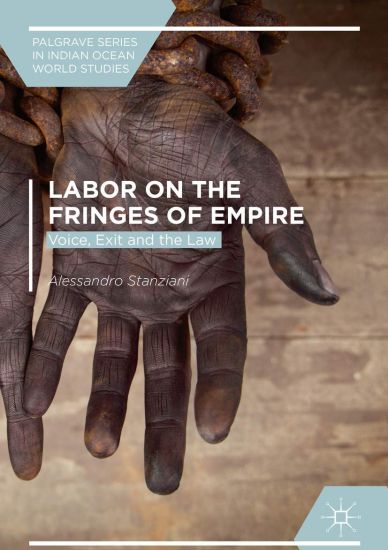
Labor on the Fringes of Empire

Labor on the Fringes of Empire

Alessandro Stanziani

Springer International Publishing AG
2018
sidottu
After the abolition of slavery in the Indian Ocean and Africa, the world of labor remained unequal, exploitative, and violent, straddling a fine line between freedom and unfreedom. This book explains why. Unseating the Atlantic paradigm of bondage and drawing from a rich array of colonial, estate, plantation and judicial archives, Alessandro Stanziani investigates the evolution of labor relationships on the Indian subcontinent, the Indian Ocean and Africa, with case studies on Assam, the Mascarene Islands and the French Congo. He finds surprising relationships between African and Indian abolition movements and European labor practices, inviting readers to think in terms of trans-oceanic connections rather than simple oppositions. Above all, he considers how the meaning and practices of freedom in the colonial world differed profoundly from those in the mainland. Arguing for a multi-centered view of imperial dynamics, Labor on the Fringes of Empire is a pioneering global historyof nineteenth-century labor.
Labor on the Fringes of Empire

Labor on the Fringes of Empire

Alessandro Stanziani

Springer International Publishing AG
2019
nidottu
After the abolition of slavery in the Indian Ocean and Africa, the world of labor remained unequal, exploitative, and violent, straddling a fine line between freedom and unfreedom. This book explains why. Unseating the Atlantic paradigm of bondage and drawing from a rich array of colonial, estate, plantation and judicial archives, Alessandro Stanziani investigates the evolution of labor relationships on the Indian subcontinent, the Indian Ocean and Africa, with case studies on Assam, the Mascarene Islands and the French Congo. He finds surprising relationships between African and Indian abolition movements and European labor practices, inviting readers to think in terms of trans-oceanic connections rather than simple oppositions. Above all, he considers how the meaning and practices of freedom in the colonial world differed profoundly from those in the mainland. Arguing for a multi-centered view of imperial dynamics, Labor on the Fringes of Empire is a pioneering global historyof nineteenth-century labor.
Eurocentrism and the Politics of Global History

Eurocentrism and the Politics of Global History

Alessandro Stanziani

Birkhauser Verlag AG
2018
sidottu
Global history locates national histories in the context of broader processes, in which the West is not necessarily synonymous with progress. And yet it often suffers from the same Eurocentrism that plagues national history, accepting Western categories and values uncritically and largely ignoring non-English historiographies. Alessandro Stanziani examines these tensions and asks what global history is and ought to be. Drawing upon a wide array of sources, he historicizes global history writing from the sixteenth century onward, tracing the forces of revolution, globalization, totalitarianism, colonization, decolonization and the Cold War. By considering global history in the context of a longue durée, multipolar perspective, this book assesses the strengths and limits of the field, and clarifies what is at stake.