Kirjojen hintavertailu. Mukana 12 056 289 kirjaa ja 12 kauppaa.

Kirjahaku

Etsi kirjoja tekijän nimen, kirjan nimen tai ISBN:n perusteella.

5 kirjaa tekijältä Alessandro Vercelli

Crisis and Sustainability

Crisis and Sustainability

Alessandro Vercelli

Palgrave Macmillan
2016
sidottu
This book offers a novel interpretation of the Great Recession and the ensuing Euro Crisis as a consequence of the evolution of capitalism since the 1970s. Chapters argue that the neoliberal development trajectory pursued in recent decades is unsustainable, and posit that neither sound macroeconomics nor empirical data support the unqualified faith in free markets that inspired it. The book begins by providing a broad critical perspective on key concepts such as freedom, free market, free trade, globalisation and financialisation, before going on to analyse the long and deep recent crisis as a result of the neoliberal policy strategy adopted since the early 1980s. The alternative narrative outlined in the book provides insights into the policy strategy required to achieve a sustainable development trajectory.
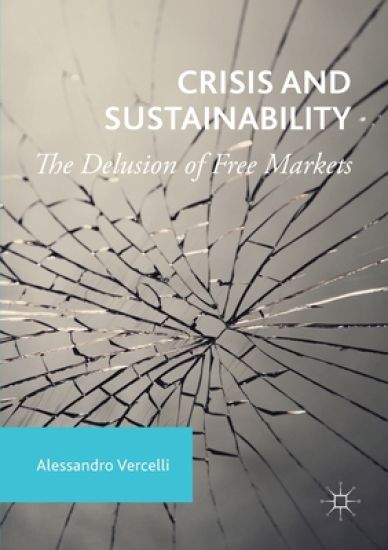
Crisis and Sustainability

Crisis and Sustainability

Alessandro Vercelli

Palgrave Macmillan
2019
nidottu
This book offers a novel interpretation of the Great Recession and the ensuing Euro Crisis as a consequence of the evolution of capitalism since the 1970s. Chapters argue that the neoliberal development trajectory pursued in recent decades is unsustainable, and posit that neither sound macroeconomics nor empirical data support the unqualified faith in free markets that inspired it. The book begins by providing a broad critical perspective on key concepts such as freedom, free market, free trade, globalisation and financialisation, before going on to analyse the long and deep recent crisis as a result of the neoliberal policy strategy adopted since the early 1980s. The alternative narrative outlined in the book provides insights into the policy strategy required to achieve a sustainable development trajectory.
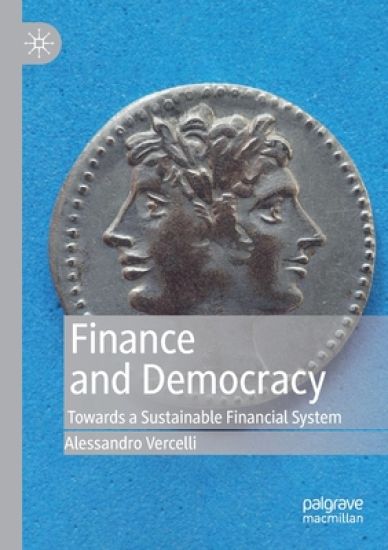
Finance and Democracy

Finance and Democracy

Alessandro Vercelli

Springer Nature Switzerland AG
2019
sidottu
This book is an extension of the author's last book (Crisis and Sustainability: The Delusion of Free Markets, Palgrave Macmillan, 2017) and sheds light on the evolution of the financial system after the 2007/08 crisis and on changes and developments in the regulatory framework that have taken place concurrently over the last ten years. The book’s central theme addresses the neoliberal philosophy of financial regulation and, in particular, the role of self-regulating markets in the finance sector and how this has affected incentives and behaviour within the finance sector. The author contends that neoliberal maxims have led us to believe that market-based finance is superior to, and safer than, a more rules-based regulatory regime for the sector, and then explains that experience suggests otherwise. The huge expansion of ‘financialization’ in the developed economies over the last two decades has greatly magnified the risks emanating from the impact of highly leveraged, risk averse, under-regulated finance on other sectors of these economies. The author concludes that financial institutions need to be encouraged to operate within a more socially responsible matrix that facilitates and promotes long-term economic growth coupled with social stability.
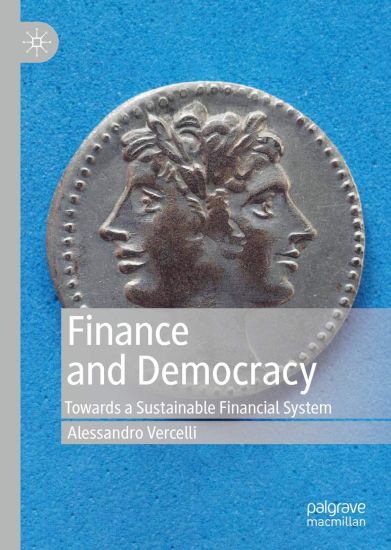
Finance and Democracy

Finance and Democracy

Alessandro Vercelli

Springer Nature Switzerland AG
2020
nidottu
This book is an extension of the author's last book (Crisis and Sustainability: The Delusion of Free Markets, Palgrave Macmillan, 2017) and sheds light on the evolution of the financial system after the 2007/08 crisis and on changes and developments in the regulatory framework that have taken place concurrently over the last ten years. The book’s central theme addresses the neoliberal philosophy of financial regulation and, in particular, the role of self-regulating markets in the finance sector and how this has affected incentives and behaviour within the finance sector. The author contends that neoliberal maxims have led us to believe that market-based finance is superior to, and safer than, a more rules-based regulatory regime for the sector, and then explains that experience suggests otherwise. The huge expansion of ‘financialization’ in the developed economies over the last two decades has greatly magnified the risks emanating from the impact of highly leveraged, risk averse, under-regulated finance on other sectors of these economies. The author concludes that financial institutions need to be encouraged to operate within a more socially responsible matrix that facilitates and promotes long-term economic growth coupled with social stability.
Pluralism and Complexity

Pluralism and Complexity

Alessandro Vercelli

Cambridge University Press
2026
sidottu
Pluralism in economics is the view that modern approaches to studying economic phenomena are too restrictive. It is an important issue within the development of the discipline as many approaches that were once deemed to be outside the mainstream have now become part of the consensus, e.g. game theory, behavioural economics, and information economics. Pluralism and Complexity explores the philosophical background to pluralism and shows how this can be applied to modern economics. It examines key moments like the Keynesian Revolution and the New Classical counter-revolution to show how different 'epistemic visions' arise from fundamentally different ways of handling and simplifying complexity. Examining the history of aggregate economic analysis, this book argues that the propagation of a dogmatic view of science by political and self-interested elites creates a severe deficit of pluralism in macroeconomic research and offers suggestions for reversing this dangerous trend in economics and beyond.