Kirjojen hintavertailu. Mukana 12 363 183 kirjaa ja 12 kauppaa.

Kirjahaku

Etsi kirjoja tekijän nimen, kirjan nimen tai ISBN:n perusteella.

15 kirjaa tekijältä Alex Rosenberg

Blunt Instrument

Blunt Instrument

Alex Rosenberg

MIT PRESS LTD
2025
sidottu
Why economic theory with no track-record of predictive success is still an indispensable tool for protecting civilized life. Economic theory has never gotten any better at prediction. Its explanations are always after the fact. The mathematical models economists have devoted themselves to for more than a century can t be improved to enhance their empirical relevance. But from this research program that never paid off, a very useful tool has emerged game theory. It s just what civilized society needs to protect itself from the rapaciousness that condemns all markets to fail. In Blunt Instrument, Alex Rosenberg helps explain to outsiders exactly what they need to make sense of the economic theory, and why despite its failures, it s still indispensable. Economic theory is something we all should understand because the economy affects us all, and it is economic theorists who shape that economy for good or ill. No less an economist than John Maynard Keynes expressed the point in a memorable quotation: Practical men, who believe themselves to be quite exempt from any intellectual influence, are usually the slaves of some defunct economist. This book draws back the curtain from the math and the graphs that deliver microeconomic and macroeconomic models. It demystifies the formidable looking equations, explaining the reasoning behind the math so that outsiders can decide on the theory s importance to their own thinking about the economy. Finally, it shows how game theory the study of strategic choice emerged from the outlandish idealizations of economic theory. Most importantly, it illuminates how game theory both mitigates the failures of real world economies and improves the design of important human institutions.
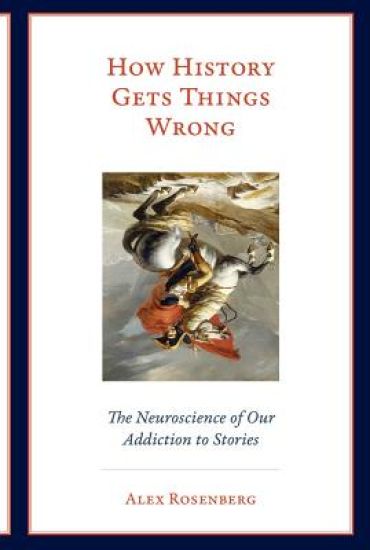
How History Gets Things Wrong

How History Gets Things Wrong

Alex Rosenberg

MIT Press
2019
pokkari
Why we learn the wrong things from narrative history, and how our love for stories is hard-wired.To understand something, you need to know its history. Right? Wrong, says Alex Rosenberg in How History Gets Things Wrong. Feeling especially well-informed after reading a book of popular history on the best-seller list? Don't. Narrative history is always, always wrong. It's not just incomplete or inaccurate but deeply wrong, as wrong as Ptolemaic astronomy. We no longer believe that the earth is the center of the universe. Why do we still believe in historical narrative? Our attachment to history as a vehicle for understanding has a long Darwinian pedigree and a genetic basis. Our love of stories is hard-wired. Neuroscience reveals that human evolution shaped a tool useful for survival into a defective theory of human nature. Stories historians tell, Rosenberg continues, are not only wrong but harmful. Israel and Palestine, for example, have dueling narratives of dispossession that prevent one side from compromising with the other. Henry Kissinger applied lessons drawn from the Congress of Vienna to American foreign policy with disastrous results. Human evolution improved primate mind reading-the ability to anticipate the behavior of others, whether predators, prey, or cooperators-to get us to the top of the African food chain. Now, however, this hard-wired capacity makes us think we can understand history-what the Kaiser was thinking in 1914, why Hitler declared war on the United States-by uncovering the narratives of what happened and why. In fact, Rosenberg argues, we will only understand history if we don't make it into a story.
The Atheist's Guide to Reality

The Atheist's Guide to Reality

Alex Rosenberg

WW Norton Co
2013
nidottu
We can’t avoid the persistent questions about the meaning of life—and the nature of reality. But science is the only means of answering them. So declares philosopher Alex Rosenberg in this bracing, surprisingly sanguine take on a world without god. The science that makes us nonbelievers, he demonstrates, tells us the nature of reality, the purpose of everything, the difference between right and wrong, how the mind works, even the direction of human history.
Philosophy of Science

Philosophy of Science

Alex Rosenberg

Routledge
2011
sidottu
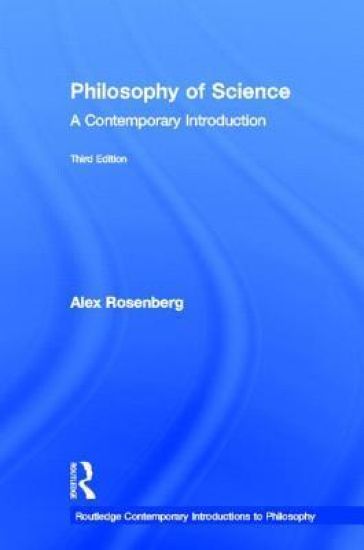
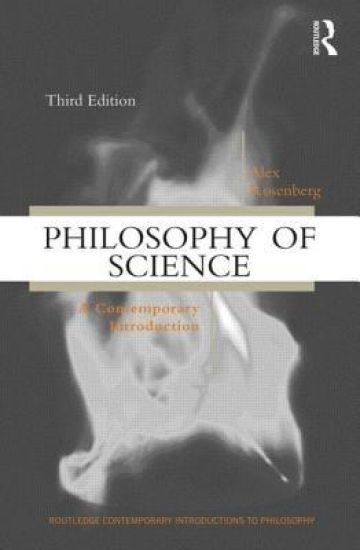
Any serious student attempting to better understand the nature, methods and justification of science will value Alex Rosenberg’s updated and substantially revised Third Edition of Philosophy of Science: A Contemporary Introduction. Weaving together lucid explanations and clear analyses, the volume is a much-used, thematically oriented introduction to the field.New features of the Third Edition include more coverage of the history of the philosophy of science, more fully developed material on the metaphysics of causal and physical necessity, more background on the contrast between empiricism and rationalism in science, and new material on the structure of theoretical science (with expanded coverage of Newtonian and Darwinian theories and models) and the realism/antirealism controversy. Rosenberg also divides the Third Edition into fifteen chapters, aligning each chapter with a week in a standard semester-long course. Updated Discussion Questions, Glossary, Bibliography and Suggested Readings lists at the end of each chapter will make the Third Edition indispensable, either as a comprehensive stand-alone text or alongside the many wide-ranging collections of articles and book excerpts currently available.Read our interview with Alex Rosenberg, What exactly is philosophy of science – and why does it matter? here: www.routledge.com/u/alexrosenberg
Philosophy of Science

Philosophy of Science

Alex Rosenberg

Routledge
2011
nidottu
Any serious student attempting to better understand the nature, methods and justification of science will value Alex Rosenberg’s updated and substantially revised Third Edition of Philosophy of Science: A Contemporary Introduction. Weaving together lucid explanations and clear analyses, the volume is a much-used, thematically oriented introduction to the field.New features of the Third Edition include more coverage of the history of the philosophy of science, more fully developed material on the metaphysics of causal and physical necessity, more background on the contrast between empiricism and rationalism in science, and new material on the structure of theoretical science (with expanded coverage of Newtonian and Darwinian theories and models) and the realism/antirealism controversy. Rosenberg also divides the Third Edition into fifteen chapters, aligning each chapter with a week in a standard semester-long course. Updated Discussion Questions, Glossary, Bibliography and Suggested Readings lists at the end of each chapter will make the Third Edition indispensable, either as a comprehensive stand-alone text or alongside the many wide-ranging collections of articles and book excerpts currently available.Read our interview with Alex Rosenberg, What exactly is philosophy of science – and why does it matter? here: www.routledge.com/u/alexrosenberg
Reduction and Mechanism

Reduction and Mechanism

Alex Rosenberg

Cambridge University Press
2020
pokkari
Reductionism is a widely endorsed methodology among biologists, a metaphysical theory advanced to vindicate the biologist's methodology, and an epistemic thesis those opposed to reductionism have been eager to refute. While the methodology has gone from strength to strength in its history of achievements, the metaphysical thesis grounding it remained controversial despite its significant changes over the last 75 years of the philosophy of science. Meanwhile, antireductionism about biology, and especially Darwinian natural selection, became orthodoxy in philosophy of mind, philosophy of science, and philosophy of biology. This Element expounds the debate about reductionism in biology, from the work of the post-positivists to the end of the century debates about supervenience, multiple realizability, and explanatory exclusion. It shows how the more widely accepted 21st century doctrine of 'mechanism' - reductionism with a human face - inherits both the strengths and the challenges of the view it has largely supplanted.
The Girl From Krakow

The Girl From Krakow

Alex Rosenberg

Lake Union Publishing
2015
pokkari
It’s 1935. Rita Feuerstahl comes to the university in Krakow intent on enjoying her freedom. But life has other things in store—marriage, a love affair, a child, all in the shadows of the oncoming war. When the war arrives, Rita is armed with a secret so enormous that it could cost the Allies everything, even as it gives her the will to live. She must find a way both to keep her secret and to survive amid the chaos of Europe at war. Living by her wits among the Germans as their conquests turn to defeat, she seeks a way to prevent the inevitable doom of Nazism from making her one of its last victims. Can her passion and resolve outlast the most powerful evil that Europe has ever seen? In an epic saga that spans from Paris in the ’30s and Spain’s Civil War to Moscow, Warsaw, and the heart of Nazi Germany, The Girl from Krakow follows one woman’s battle for survival as entire nations are torn apart, never to be the same.
Intrigues of Jennie Lee, The

Intrigues of Jennie Lee, The

Alex Rosenberg

John Hunt Publishing
2020
nidottu
A gripping and evocative story of love, politics, betrayal and bravery, which reimagines events of the interwar years. Jennie Lee was elected to parliament aged just twenty-four, five years too young even to vote in 1929 Britain. From the Labour backbenches, she hurled barbs and bolts of thunder at the likes of Winston Churchill, Lady Astor, even her own party’s Prime Minister, Ramsay McDonald. The novel intertwines real events with a personal story involving Elizabeth Bowes-Lyons, the future Queen Mother; the womanizing fascist Oswald Mosley; the Great War prime minister Lloyd-George; and the radical Labour MP Aneurin Bevan. A series of political and intimate intrigues turn history into thriller when Jennie has the chance to radically change the course of history for Britain, Europe and the world. '...marvellous in so many ways… An excellent take on the twisted, dangerous politics of 1930s Britain and a rattling good read.' C.J. Sansom, author of Dominion and the Shardlake mysteries
In the Shadows of Enigma: A Novel

In the Shadows of Enigma: A Novel

Alex Rosenberg

John Hunt Publishing
2021
nidottu
In this standalone sequel to The Girl From Krakow, the greatest undisclosed secret of the Second World War haunts the lives of four people across three continents and fifteen years. The only Second World War secret not revealed soon thereafter was that the Allies had broken the German Enigma codes. This secret was kept for 30 years after the war. In the Shadows of Enigma is a 15 year-long narrative of how knowing the secret changed the lives of four people: Rita Feuerstahl, who learned that the German Enigma had been deciphered by the Poles just before she escaped a Polish ghetto, Gil Romero, her prewar lover whom Rita marries after the war, Stefan Sajac, the infant son Rita had smuggled out of the ghetto and lost track of, and Otto Schulke, the German Gestapo detective who apprehended Rita during the war and suspected that she knew the secret of the Enigma’s decoding.
Philosophy of Biology

Philosophy of Biology

Alex Rosenberg; Daniel W. McShea

Routledge
2007
sidottu
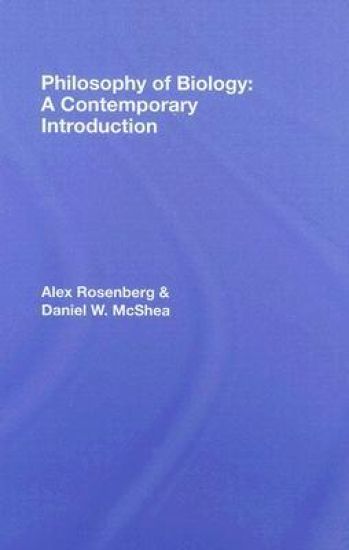
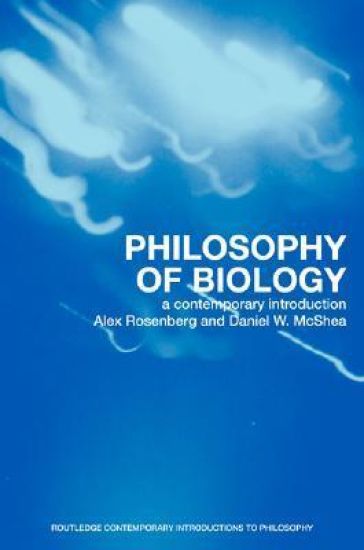
Is life a purely physical process? What is human nature? Which of our traits is essential to us? In this volume, Daniel McShea and Alex Rosenberg – a biologist and a philosopher, respectively – join forces to create a new gateway to the philosophy of biology; making the major issues accessible and relevant to biologists and philosophers alike.Exploring concepts such as supervenience; the controversies about genocentrism and genetic determinism; and the debate about major transitions central to contemporary thinking about macroevolution; the authors lay out the broad terms in which we should assess the impact of biology on human capacities, social institutions and ethical values.
Philosophy of Biology

Philosophy of Biology

Alex Rosenberg; Daniel W. McShea

Routledge
2007
nidottu
Is life a purely physical process? What is human nature? Which of our traits is essential to us? In this volume, Daniel McShea and Alex Rosenberg – a biologist and a philosopher, respectively – join forces to create a new gateway to the philosophy of biology; making the major issues accessible and relevant to biologists and philosophers alike.Exploring concepts such as supervenience; the controversies about genocentrism and genetic determinism; and the debate about major transitions central to contemporary thinking about macroevolution; the authors lay out the broad terms in which we should assess the impact of biology on human capacities, social institutions and ethical values.
Philosophy of Science

Philosophy of Science

Alex Rosenberg; Lee McIntyre

Routledge
2019
sidottu
Any serious student attempting to better understand the nature, methods, and justification of science will value Alex Rosenberg and Lee McIntyre’s updated and substantially revised fourth edition of Philosophy of Science: A Contemporary Introduction. Weaving lucid explanations with clear analyses, the volume is a much- used, thematically oriented introduction to the field.The fourth edition has been thoroughly rewritten based on instructor and student feedback, to improve readability and accessibility, without sacrificing depth. It retains, however, all of the logically structured, extensive coverage of earlier editions, which a review in the journal Teaching Philosophy called “the industry standard” and “essential reading.”Key Features of the Fourth Edition:Revised and rewritten for readability based on feedback from student and instructor surveys.Updated text on the problem of underdetermination, social science, and the realism/antirealism debate.Improved continuity between chapters.Revised and updated Study Questions and annotated Suggested Readings at the end of each chapter.Updated Bibliography.For a list of relevant online primary sources, please visit: www.routledge.com/9781138331518.
Philosophy of Science

Philosophy of Science

Alex Rosenberg; Lee McIntyre

Routledge
2019
nidottu
Any serious student attempting to better understand the nature, methods, and justification of science will value Alex Rosenberg and Lee McIntyre’s updated and substantially revised fourth edition of Philosophy of Science: A Contemporary Introduction. Weaving lucid explanations with clear analyses, the volume is a much- used, thematically oriented introduction to the field.The fourth edition has been thoroughly rewritten based on instructor and student feedback, to improve readability and accessibility, without sacrificing depth. It retains, however, all of the logically structured, extensive coverage of earlier editions, which a review in the journal Teaching Philosophy called “the industry standard” and “essential reading.”Key Features of the Fourth Edition:Revised and rewritten for readability based on feedback from student and instructor surveys.Updated text on the problem of underdetermination, social science, and the realism/antirealism debate.Improved continuity between chapters.Revised and updated Study Questions and annotated Suggested Readings at the end of each chapter.Updated Bibliography.For a list of relevant online primary sources, please visit: www.routledge.com/9781138331518.