Kirjojen hintavertailu. Mukana 12 390 323 kirjaa ja 12 kauppaa.

Kirjahaku

Etsi kirjoja tekijän nimen, kirjan nimen tai ISBN:n perusteella.

9 kirjaa tekijältä Alexa Weik von Mossner

Affective Ecologies

Affective Ecologies

Alexa Weik Von Mossner

Ohio State University Press
2017
sidottu
Affective Ecologies: Empathy, Emotion, and Environmental Narrative explores our emotional engagement with environmental narrative. Focusing on the American cultural context, Alexa Weik von Mossner develops an ecocritical approach that draws on the insights of affective science and cognitive narratology. This approach helps to clarify how we interact with environmental narratives in ways that are both biologically universal and culturally specific. In doing so, it pays particular attention to the thesis that our minds are both embodied (in a physical body) and embedded (in a physical environment), not only when we interact with the real world but also in our engagement with imaginary worlds. How do we experience the virtual environments we encounter in literature and film on the sensory and emotional level? How do environmental narratives invite us to care for human and nonhuman others who are put at risk? And how do we feel about the speculative futures presented to us in ecotopian and ecodystopian texts? Weik von Mossner explores these central questions that are important to anyone with an interest in the emotional appeal and persuasive power of environmental narratives.
Affective Ecologies

Affective Ecologies

Alexa Weik Von Mossner

Ohio State University Press
2017
pokkari
Affective Ecologies: Empathy, Emotion, and Environmental Narrative explores our emotional engagement with environmental narrative. Focusing on the American cultural context, Alexa Weik von Mossner develops an ecocritical approach that draws on the insights of affective science and cognitive narratology. This approach helps to clarify how we interact with environmental narratives in ways that are both biologically universal and culturally specific. In doing so, it pays particular attention to the thesis that our minds are both embodied (in a physical body) and embedded (in a physical environment), not only when we interact with the real world but also in our engagement with imaginary worlds. How do we experience the virtual environments we encounter in literature and film on the sensory and emotional level? How do environmental narratives invite us to care for human and nonhuman others who are put at risk? And how do we feel about the speculative futures presented to us in ecotopian and ecodystopian texts? Weik von Mossner explores these central questions that are important to anyone with an interest in the emotional appeal and persuasive power of environmental narratives.
Growing Hope

Growing Hope

Alexa Weik von Mossner

Cambridge University Press
2025
sidottu
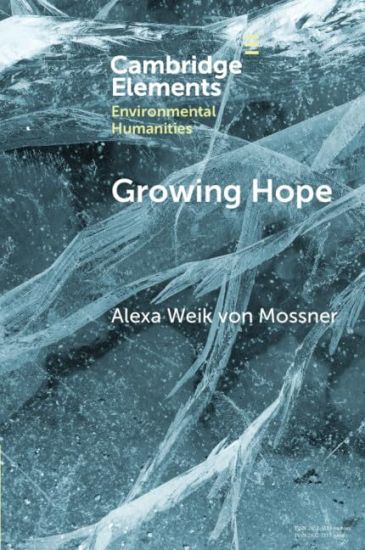
Growing Hope takes a closer look at how such narratives can carry the promise of a better future in the face of grim realities. It brings together two kinds of narratives that are rarely considered in conjunction: stories about urban community gardening and stories about vegan food justice. It shows that there is much common ground between these movements and that the stories told by them are worth exploring as part of a larger narrative about creating a better and more equitable future. In the United States, this is especially true for the stories told by and about people of color and their historically marginalized communities. Employing an econarratological approach informed by critical food studies, environmental justice ecocriticism, and transmedia studies, Growing Hope explores a selection of narratives about people who fight against food injustice and the ideologies sustaining it: stories about defiant gardening and culinary self-empowerment.
Growing Hope

Growing Hope

Alexa Weik von Mossner

Cambridge University Press
2025
pokkari
Growing Hope takes a closer look at how such narratives can carry the promise of a better future in the face of grim realities. It brings together two kinds of narratives that are rarely considered in conjunction: stories about urban community gardening and stories about vegan food justice. It shows that there is much common ground between these movements and that the stories told by them are worth exploring as part of a larger narrative about creating a better and more equitable future. In the United States, this is especially true for the stories told by and about people of color and their historically marginalized communities. Employing an econarratological approach informed by critical food studies, environmental justice ecocriticism, and transmedia studies, Growing Hope explores a selection of narratives about people who fight against food injustice and the ideologies sustaining it: stories about defiant gardening and culinary self-empowerment.
Cosmopolitan Minds

Cosmopolitan Minds

Alexa Weik von Mossner

University of Texas Press
2015
nidottu
During World War II and the early Cold War period, factors such as race, gender, sexual orientation, or class made a number of American writers feel marginalized in U.S. society. Cosmopolitan Minds focuses on a core of transnational writers-Kay Boyle, Pearl S. Buck, William Gardner Smith, Richard Wright, and Paul Bowles-who found themselves prompted to seek experiences outside of their home country, experiences that profoundly changed their self-understanding and creative imagination as they encountered alternative points of views and cultural practices in Europe, Asia, and Africa.Alexa Weik von Mossner offers a new perspective on the affective underpinnings of critical and reflexive cosmopolitanism by drawing on theories of emotion and literary imagination from cognitive psychology, philosophy, and cognitive literary studies. She analyzes how physical dislocation, and the sometimes violent shifts in understanding that result from our affective encounters with others, led Boyle, Buck, Smith, Wright, and Bowles to develop new, cosmopolitan solidarities across national, ethnic, and religious boundaries. She also shows how, in their literary texts, these writers employed strategic empathy to provoke strong emotions such as love, sympathy, compassion, fear, anger, guilt, shame, and disgust in their readers in order to challenge their parochial worldviews and practices. Reading these texts as emotionally powerful indictments of institutionalized racism and national violence inside and outside of the United States, Weik von Mossner demonstrates that our emotional engagements with others-real and imagined-are crucially important for the development of transnational and cosmopolitan imaginations.
Fragile

Fragile

Alexa Weik Von Mossner

Elzwhere Press
2023
sidottu
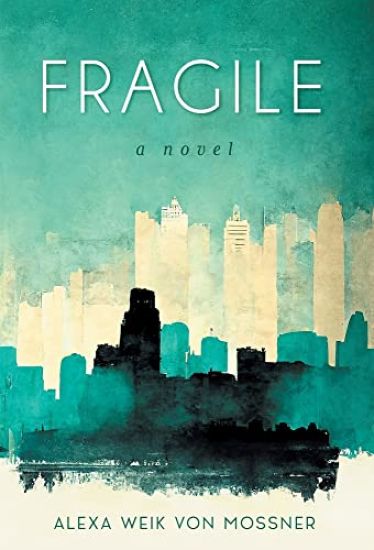
If you found love in a world on the brink of collapse, would you risk everything for it?In a not-so-distant future, the planet has been ravaged by climate change, causing a world-wide scarcity of pharmaceuticals, food, and other essentials for survival. New York City is a metropolis divided. Sheltered by enormous seawalls, Manhattan is green, clean, and thriving while the exposed eastern boroughs have been given up to the rising Atlantic.Shavir Tayard, barista and committed community farmer by day, rescuer of animals by night, is on an dog liberation raid in the evacuation zone of Brooklyn when she sustains an injury that changes her relationship with the cute regular at her coffee shop-and her life.Jake Alvaro is a troubled Homeland Security agent tasked with securing medical drugs for New York in a world running out of everything. His worldview of whose lives are worth saving, and who must be sacrificed is challenged when Shavir takes him across the East River to the people he was told to ignore. Soon, he begins to question the fragile truths he built his life upon.A man responsible for keeping New York City alive falls for an underground animal activist from the wrong side of the East River in this compelling fiction debut about love, loss, and resilience after eco-catastrophe.
Fragile

Fragile

Alexa Weik Von Mossner

Elzwhere Press
2023
pokkari
If you found love in a world on the brink of collapse, would you risk everything for it?In a not-so-distant future, the planet has been ravaged by climate change, causing a world-wide scarcity of pharmaceuticals, food, and other essentials for survival. New York City is a metropolis divided. Sheltered by enormous seawalls, Manhattan is green, clean, and thriving while the exposed eastern boroughs have been given up to the rising Atlantic.Shavir Tayard, barista and committed community farmer by day, rescuer of animals by night, is on an dog liberation raid in the evacuation zone of Brooklyn when she sustains an injury that changes her relationship with the cute regular at her coffee shop-and her life.Jake Alvaro is a troubled Homeland Security agent tasked with securing medical drugs for New York in a world running out of everything. His worldview of whose lives are worth saving, and who must be sacrificed is challenged when Shavir takes him across the East River to the people he was told to ignore. Soon, he begins to question the fragile truths he built his life upon.A man responsible for keeping New York City alive falls for an underground animal activist from the wrong side of the East River in this compelling fiction debut about love, loss, and resilience after eco-catastrophe.
Literature as a Lens for Climate Change

Literature as a Lens for Climate Change

Alexa Weik von Mossner; Suzanne Keen

LEXINGTON BOOKS
2022
sidottu
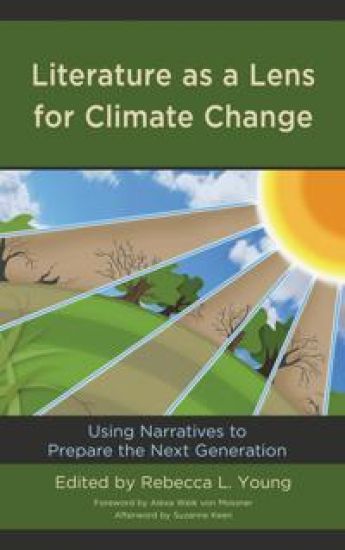
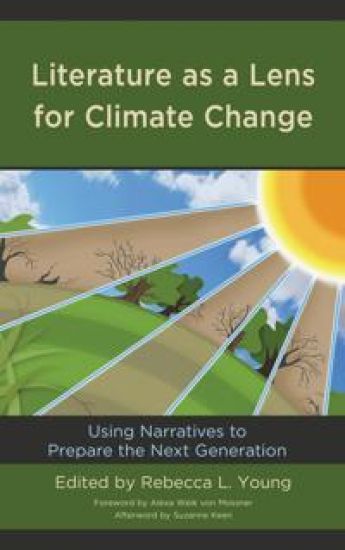
Each chapter in this collection offers a practical approach for using literature to engage and empower students to confront aspects of climate crises. Educators from different backgrounds and parts of the world share their experience using novels, short stories, drama, poetry, and nonfiction to help students understand the causes and consequences of climate change as well as how they can contribute to potential solutions.
Literature as a Lens for Climate Change

Literature as a Lens for Climate Change

Alexa Weik von Mossner; Suzanne Keen

BLOOMSBURY PUBLISHING PLC
2024
nidottu
Each chapter in this collection offers a practical approach for using literature to engage and empower students to confront aspects of climate crises. Educators from different backgrounds and parts of the world share their experience using novels, short stories, drama, poetry, and nonfiction to help students understand the causes and consequences of climate change as well as how they can contribute to potential solutions.