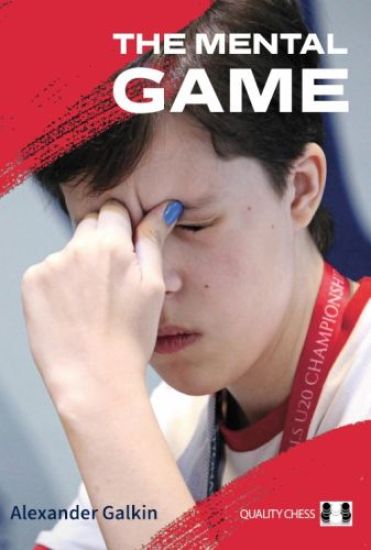
We all have an intuitive feeling of the stress, pressure and frustration on the path to winning a World Championship in sport, but rarely will you get as unfiltered and raw an insight into the struggle to succeed as in The Mental Game. Aleksandra Maltsevskaya won the 2018 World Junior Championship and 2022 European Rapid Championship. This book reveals the inside story of an 18-month period in which she worked with Grandmaster Alexander Galkin. A year later, Maltsevskaya became World Junior Champion. Galkin holds nothing back in revealing the highs, lows, jubilations and frustrations that were experienced in their collaboration, all while providing expert insights that will benefit chess players and coaches alike. The book contains a wealth of bonus material, including all eleven annotated games from Maltsevskaya’s World Championship victory.
Most chess games end in the middlegame. Therefore, to achieve good results, you have to play well at this stage of the game. This middlegame textbook by Grandmaster Alexander Galkin, who was named Children's Trainer of the Year in 2016 by the Russian Chess Federation, and Woman International Master Anastasia Travkina, provides a large volume of practical knowledge. The vast majority of middlegame tactics and positional textbooks contain a selection of positions and exercises where the student is asked to find a tactic, carry out an attack against the enemy king or choose the right positional approach based on certain "rules". However, there is not much focus on the mistake by one of the players that led to the critical position where the combination, decisive attack or positional improvement became possible.In this book, aimed at strong tournament players (1900-2300 Elo or fast improving juniors) the authors introduce a wider approach to developing middlegame tactical and positional skills that a formidable chess player needs. Specifically, they present 111 positions from games of grandmasters played in 2019, including super-GMs such as Magnus Carlsen, Fabiano Caruana, Ding Liren, Anish Giri, Ian Nepomniachtchi, Daniil Dubov, Wesley So, Hikaru Nakamura, Levon Aronian, and Wang Hao, in which they first explain the mistake made by one of the players in underestimating their opponent's counterplay, then they analyze how the game progressed where punishment for the mistake is meted out. After that, they return to the starting position to demonstrate the correct or a more promising continuation. Therefore, the text is structured so that each challenge contains the starting diagram twice - before the moves in the actual game, and then, on the page overleaf, before the solution.There are numerous elements that a chess player should keep in mind in the middlegame and the authors have designed this book to address specific middle-game thematic mistakes: unsound sacrifices, creating imaginary threats, imaginary defense against threats, pawn-grabbing, give check or attack material - which is best?, wrong evaluation of changes to the pawn structure, lack of vigilance in decision-making, replacing strategy with tactics and taking wrong positional decisions.Studying these key fragments from grandmaster games will help a player to develop their middlegame approach. Firstly, the student analyzes why a move or series of moves by one of the players was erroneous. What counterplay by the opponent did the player making the mistake underestimate? Secondly, armed with this answer, the student can review the position to try and figure out the better move. If the student is working with a coach, then the coach should first set up the position on the board, demonstrate the erroneous move played, and ask the student to find the refutation to that bad move. After the refutation is found by the student, the coach should once again set up the critical position and ask the student to find the strongest continuation for the initial player. This may be one or more moves, depending on the position. Naturally, in the case of self-study the student can change their approach, either trying to figure out the refutation to the error by covering up the subsequent text, or simply studying the moves in the game before trying to find the better continuation, which is detailed overleaf together with the starting diagram.
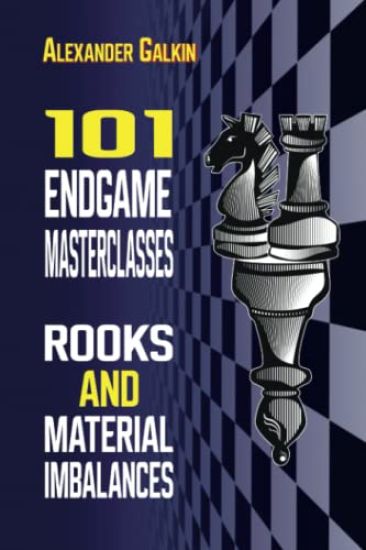
This book aims to give you a wealth of self-study knowledge about handling different types of endings that occur frequently but on which there is not much literature analyzing recent games. Imbalanced material endgames involving rooks are a key focus of the book, covering three-fifths of the material, and all endings in the book feature at least one rook. The vast majority of games are taken from the last few years, including many from 2021-2022. Like the author's previous endgame book published with Elk and Ruby, 101 Endgame Crimes and Punishments (2020), this one is aimed at strong tournament players (1900-2300 Elo) and fast improving juniors.Specifically, this book covers the following endings: rook vs. minor piece (chapter 1), rook vs. a pair of minor pieces (chapter 2), rook and minor piece vs. rook and minor piece, rook and minor piece vs. rook, rook and minor piece vs. two minor pieces, rook and minor piece vs. a pair of rooks, and rook and minor piece vs. queen (all in chapter 3). The material arrangement principles applied for this book are largely consistent with those adopted for the author's books published earlier. He has selected examples only from games played over the board and in which at least one of the players is a grandmaster. Six of the included games were played by world champion Magnus Carlsen. Other examples come from games by top players such as former world champions Garry Kasparov, Vladimir Kramnik and Vishy Anand, as well as Ian Nepomniachtchi, Ding Liren, Hikaru Nakamura, Sam Shankland, Jan-Krzysztof Duda, Judit Polgar, Gata Kamsky, Daniil Dubov and others. Eight of the 101 examples in this book come from the author's own games.Endgame positions have been selected so that a person studying the book can see the critical moments of play, such as a single or a series of errors that led to a loss or when one of the sides missed a winning move. Before playing through the correct continuation the reader is advised to try and work it out from the initial diagram.