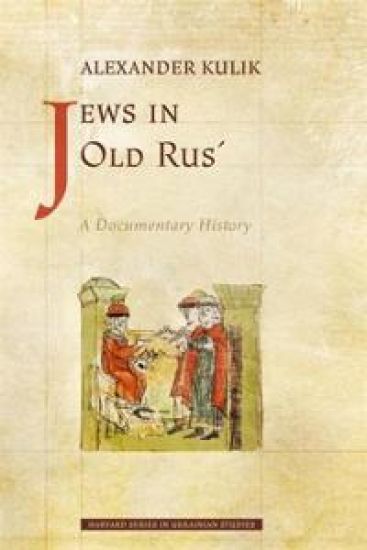
For the first time, this collection makes available a selection of documents on the history of Jews in old Rus’ that provide unique insight into Slavic–Jewish relations, offering both the original texts in Latin, Hebrew, Church Slavonic, and Arabic, and their English translations.Adding nuance to our understanding of the difficult relations Rus’ had with Khazaria, Jews in Old Rus’ also realigns the position of East European Jews within the larger diaspora of European Jews. This collection meticulously presents legal rulings, religious and liturgical customs, practices regarding food and garments, linguistic acculturation, and the political loyalties of Jews in old Rus’.
This work provides the key to one of the most enigmatic Jewish Hellenistic texts preserved in Greek and Slavonic. Despite the fact that 3 Baruch is one of the major early Jewish apocalypses, it has been relatively neglected in modern scholarship, probably since 3 Baruch is one of the most difficult works to comprehend and classify. Its content differs significantly from that of other writings of the same genre, as the book preserves syncretistic ideas and tendencies which are combined in unique ways. The worldview, the message, and the very textual structure of 3 Baruch are enigmatic in many respects. The present study demonstrates that the textual history of 3 Baruch, implicit meanings and structural links in its text, as well as conceptions behind the text, are partly reconstructable. Moreover, 3 Baruch, properly read, significantly enriches our understanding of the history of the motifs found in early Jewish lore, at times providing missing links between different stages of their development, and preserves important evidence on the roots of Jewish mysticism, proto-Gnostic and proto-Christian traditions. The study contains the introduction, synoptic translation, textual notes, and detailed commentaries.
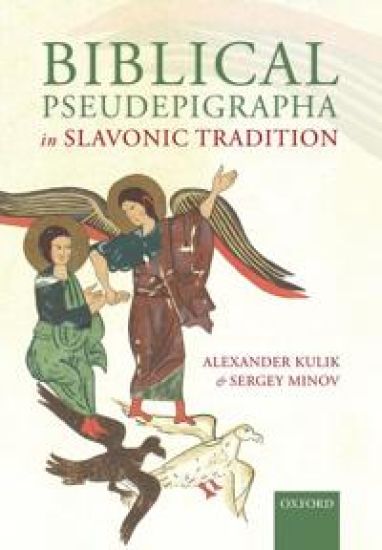
Early Slavonic writings have preserved a unique corpus of compositions that develop biblical themes. These extracanonical, parabiblical narratives are known as pseudepigrapha, and they preserve many ancient traditions neglected by the canonical scriptures. They feature tales of paradise and hell, angels and Satan, the antediluvian fathers and biblical patriarchs, kings, and prophets. These writings address diverse questions ranging from artistically presented questions of theology and morals to esoteric subjects such as cosmology, demonology, messianic expectations, and eschatology. Although these Slavonic texts themselves date from a relatively late period, they are translations or reworkings of far earlier texts and traditions, many of them arguably going back to late biblical or early postbiblical times. The material in these works can contribute significantly to a better understanding of the roots of postbiblical mysticism, rabbinic Judaism and early Christianity, ancient and medieval dualistic movements, as well as the beginnings of the Slavonic literary tradition. The volume provides a collection of the minor biblical pseudepigrapha preserved solely in Slavonic; at the same time, it is also the first collection of Slavonic pseudepigrapha translated into a western European language. It includes the original texts, their translations, and commentaries focusing on the history of motifs and based on the study of parallel material in ancient and medieval Jewish and Christian literature. The aim of the volume is to to bridge the gap between the textual study of this corpus and its contextualization in early Jewish, early Christian, rabbinic, Byzantine, and other traditions, as well as to introduce these texts into the interdisciplinary discussion of the intercultural transmission of ideas and motifs.