Kirjojen hintavertailu. Mukana 11 244 527 kirjaa ja 12 kauppaa.

Kirjahaku

Etsi kirjoja tekijän nimen, kirjan nimen tai ISBN:n perusteella.

2 kirjaa tekijältä Alexandra Garbarini

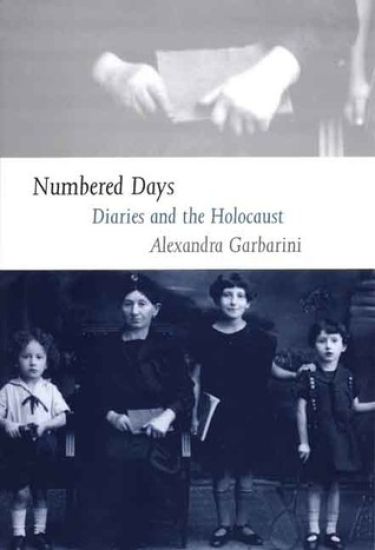
Numbered Days

Numbered Days

Alexandra Garbarini

Yale University Press
2006
sidottu
As the Nazis swept across Europe during World War II, Jewish victims wrote diaries in which they grappled with the terror unfolding around them. Some wrote simply to process the contradictory bits of news they received; some wrote so that their children, already safe in another country, might one day understand what had happened to their parents; and some wrote to furnish unknown readers in the outside world with evidence against the Nazi regime.Were these diarists resisters, or did the process of writing make the ravages of the Holocaust even more difficult to bear? Drawing on an astonishing array of unpublished and published diaries from all over German-occupied Europe, historian Alexandra Garbarini explores the multiple roles that diary writing played in the lives of these ordinary women and men. A story of hope and hopelessness, Numbered Days offers a powerful examination of the complex interplay of writing and mourning. And in these heartbreaking diaries, we see the first glimpses of a question that would haunt the twentieth century: Can such unimaginable horror be represented at all?

Jewish Responses to Persecution

Jewish Responses to Persecution

Alexandra Garbarini

AltaMira Press,U.S.
2011
sidottu
Jewish Responses to Persecution: Volume II, 1938–1940 is the second volume of the five-volume set within the series "Documenting Life and Destruction: Holocaust Sources in Context." This volume brings together in an accessible historical narrative a broad range of documents—including diaries, letters, speeches, newspaper articles, reports, Jewish identity cards, and personal photographs—from Jews in Nazi-dominated Europe and beyond Europe's borders. The volume skillfully illuminates the daily lives of a diverse range of Jews who suffered under Nazism, their coping strategies, and their efforts to assess the implications for the present and future of the persecution they faced during this period. Volume II begins with Kristallnacht in 1938 and continues through the Jewish flight out of Germany, the onset of World War II, the forced relocation of the Jews of Europe to the East, and the formation of Jewish ghettos, particularly in Poland. The twelve chapters, divided into four parts, track the trajectory of German expansion and anti-Jewish policies chronologically, attesting to a clear progression of persecution over time and space. At the same time, they reflect the vast differences in the responses of Jewish communities, groups, and individuals within and beyond the Germans' grasp, differences that resulted both from the unevenness of the Reich's policy toward Jews as well as the varied backgrounds, traditions, expectations, and life histories of Jews affected by German policy. This volume raises essential questions, such as: What was the spectrum of Jewish perceptions and actions under Nazi domination? How did Jews affected directly, or others standing on the outside, view the situation? In what ways were Jews able to influence their own fate under persecution? What role did Jewish tradition play in how the present and future were interpreted? The answers inherent in the documents are often varied or inconclusive; nonetheless these sources add considerably to our understanding of the Holocaust.