Kirjojen hintavertailu. Mukana 12 016 292 kirjaa ja 12 kauppaa.

Kirjahaku

Etsi kirjoja tekijän nimen, kirjan nimen tai ISBN:n perusteella.

10 kirjaa tekijältä Alexandra Loske

The Royal Pavilion, Brighton

The Royal Pavilion, Brighton

Alexandra Loske

YALE UNIVERSITY PRESS
2025
sidottu
The first in-depth study since the 1980s of the Royal Pavilion in Brighton, a building that is often considered the most impressive architectural expression of the Romantic imagination and that has become a hallmark of Regency style Created between 1787 and 1823 by George IV, the Royal Pavilion in Brighton is perhaps the most daring and enchanting example of a building that expresses the European fascination with what in the early nineteenth century was considered the “Orient,” in particular China and India. The building, with its Indian-inspired exterior, was the work of the renowned architect John Nash, who with the contributions of several other gifted and inventive architects, artists and designers, created a building that draws you in, takes you on a journey and plays with your senses. Featuring new photography, this lavishly illustrated book will provide a fresh look at the sumptuous Chinoiserie interiors of the Royal Pavilion and their enduring appeal. Drawing on recent research, conservation projects, and the unprecedented loan exhibition, A Prince’s Treasure: From Buckingham Palace to the Royal Pavilion (2019–22), this book will celebrate the colours and sensual beauty of these interiors while situating the Royal Pavilion in the context of the time of its creation and development under royal ownership, from its beginning in the wake of the French Revolution, through its transformation and extension during and just after the Napoleonic Wars, to its fate and legacy in the early Victorian era.
The Artist's Palette

The Artist's Palette

Alexandra Loske

THAMES HUDSON LTD
2024
sidottu
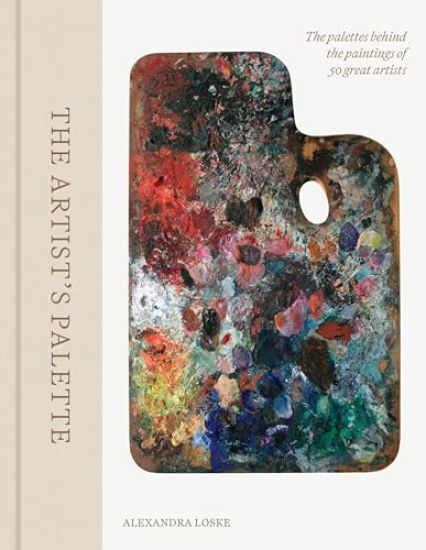
The paint-loaded palettes of fifty world-renowned artists are displayed alongside the paintings the artists created using those hues, and the colours and brushstrokes employed are analysed to uncover surprising new stories about each artist and their work. Presented broadly chronologically, the artists featured in this revelatory book range from those working in the 17th century to the present day, including Artemisia Gentileschi, Paul Cézanne, Berthe Morisot, Vincent Van Gogh, Wassily Kandinsky, Georgia O’Keeffe and Bridget Riley. Each artist’s palette – whether photographed or visible in self-portraits – is paired with one or more works by the artist that reflect the colours of the paint remaining on the palette. Colour expert and art historian Alexandra Loske skilfully analyses each artist’s colour palette and brushstrokes to reveal not only exactly how they used colour in their work but also to tell the story of their journey with colour and the influence of their approach on the wider culture to which they belonged. For example, Georges Seurat meticulously arranged the paints on his palette in prismatic order, isolating the colours and pairing each with a blot of white paint. His pointillist technique was equally apparent on his palette and his canvas. Kerry James Marshall uses blots of zinc white and smears of pale pink on the surfaces of symbolically oversized white palettes held by black artists in his portraits, raising provocative questions about the role of colour in the story of black history and white western art. The Artist’s Palette will appeal to an art history audience, a wider audience eager to learn more about the use of colour by the great artists and amateur painters looking for inspiration in the creation of their own work.
The Artist's Palette

The Artist's Palette

Alexandra Loske

PRINCETON UNIVERSITY PRESS
2024
sidottu
A beautifully illustrated look at the paints and palettes used by many of the world's greatest artists from the sixteenth century to today What can the palette an artist used or depicted tell us about their artistic process, preferences, and finished works? From traditional wooden boards to paint pots, ceramic plates, and studio walls, these deceptively simple yet potent tools provide vital evidence. The Artist's Palette presents fifty unique palettes alongside paintings by the celebrated artists who used them, gathering expert analysis of color, brushstroke, and technique to offer new histories of these artists and their work. Alexandra Loske pairs each artist's color palette with one or more of their paintings, revealing how the artist used paints and pigments. While Georges Seurat meticulously arranged the paints on his palette in prismatic order, a pointillist technique reflected on his canvases, Kerry James Marshall uses blots of zinc white and smears of pale pink on the surfaces of symbolically oversized white palettes held by the Black artists in his portraits, raising provocative questions about the role of color in Black history and Western art. Through these and other compelling accounts, Loske shows how, behind every great painting, there is a palette that tells its story. Featuring a wealth of original photographs of palettes, paints, and pigments of all kinds, The Artist's Palette takes readers into the studios of artists from Artemisia Gentileschi, Rembrandt, Paul C zanne, Vincent van Gogh and John Singer Sargent to Egon Schiele, Georgia O'Keeffe, Helen Frankenthaler, Lucian Freud, and Keith Haring, revealing how the materials and tools they used hide secrets and are often reflections of the life and times of the artist who once held, prepared, and used them.
Tate: Colour: A Visual History
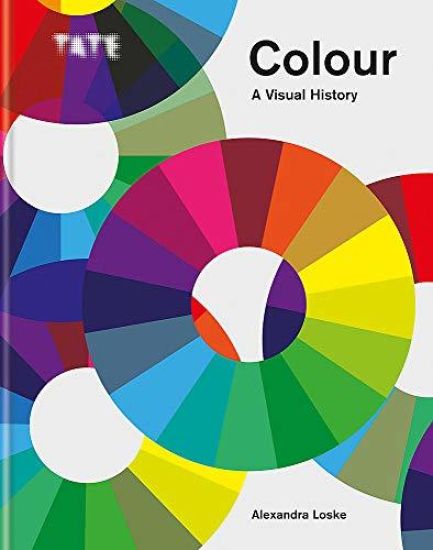
Discover the story of colour through the significant scientific discoveries and key artist's works over 400 years. From Isaac Newton's investigations through to Olafur Eliasson's experiential creations, this stunning book documents the fascinating story of colour with an extraordinary collection of original colour material that includes charts, wheels, artists' palettes, swatches and schemes."In 1704, the scientist Isaac Newton published Opticks, the result of many years of researching light and colour. By splitting white light, Newton identified the visible range of colours, or the rainbow spectrum. In Opticks, he built a colour system around his findings, and he visualised this system in a circular shape, making it one of the first printed colour wheels.The influence of Newton and his followers, combined with the invention of many new pigments as well as watercolours in moist cake form, had made painting with colour an exciting occupation not just for serious artists but also for a much wider audience. The colour revolution had begun."ContentsIntroduction1. Unravelling the Rainbow: The Eighteenth-Century Colour Revolution2. Romantic Ideas & New Technologies: The Early Nineteenth Century3. Industrialism to Impressionism: The Later Nineteenth Century4. Colour for Colour's Sake: Colour into the Future:GlossaryBibliographyIndex
111 Places in Brighton & Lewes That You Shouldn't Miss
Brighton has transformed itself several times since the Middle Ages: once a small fishing village, it became the most fashionable seaside resort in the 18th century, a thriving tourist destination in the railway age and a liberal, multicultural university city in the 20th century. 200 years ago the party-loving King George IV built himself the playground of all royal playgrounds here: an oriental fantasy of a palace with onion-shaped domes and an exotic faux-Chinese interior, the Royal Pavilion. Today Brighton, together with its surroundings, is culturally one of the most exciting places in Britain, boasting an impressive coast, lined with chalk cliffs and the rolling South Downs as a backdrop. Just 10 kilometres east of Brighton is the picturesque county town of Lewes, with a stunning array of historic buildings, including an 11th-century Norman castle. The people of Lewes are known for their revolutionary spirit, and host the biggest bonfire celebration in the country every year on 5 November.
111 Places in Brighton & Lewes That You Shouldn't Miss
Brighton has transformed itself several times since the Middle Ages: once a small fishing village, it became the most fashionable seaside resort in the 18th century, a thriving tourist destination in the railway age and a liberal, multicultural university city in the 20th century. 200 years ago the party-loving King George IV built himself the playground of all royal playgrounds here: an oriental fantasy of a palace with onion-shaped domes and an exotic faux-Chinese interior, the Royal Pavilion. Today Brighton, together with its surroundings, is culturally one of the most exciting places in Britain, boasting an impressive coast, lined with chalk cliffs and the rolling South Downs as a backdrop. Just 10 kilometres east of Brighton is the picturesque county town of Lewes, with a stunning array of historic buildings, including an 11th-century Norman castle. The people of Lewes are known for their revolutionary spirit, and host the biggest bonfire celebration in the country every year on 5 November.
The Book of Colour Concepts. 45th Ed.

The Book of Colour Concepts. 45th Ed.

Alexandra Loske

TASCHEN GMBH
2025
sidottu
The earliest forms of human creativity – in carvings, markings, and cave paintings – bear witness to humanity’s engagement with color. Almost as old as these examples is the desire to assign structure, order, and meaning to this universal yet elusive concept, and it is this fascination that unites the works compiled in this expansive edition.Gathering over 40 rare books and manuscripts from a wealth of institutions, including the most distinguished color collections worldwide, The Book of Colour Concepts takes the reader on a chromatic odyssey across four centuries and over 350 images of luscious wheels and globes, painstakingly collated charts, and meticulous diagrams, many of them newly photographed exclusively for this edition.Seminal works of color theory, such as Isaac Newton’s Opticks and Johann Wolfgang von Goethe’s hugely significant Zur Farbenlehre, are shown alongside rare and unfamiliar contributions, including the theosophical color systems of Charles Webster Leadbeater and Annie Besant, the comprehensive color ‘dictionary’ of Aloys John Maerz and Morris Rea Paul, and the patchwork combinations of the Japanese costume designer and artist Sanzo Wada.This volume also brings many intriguing and often overlooked works by women into the spotlight, including the radically inventive color “blots” of the English flower painter Mary Gartside.The color systems that make up this edition are contextualized by an introductory essay from Alexandra Loske, while authoritative texts on the works reproduced set out each concept in further detail. Illuminating the history of color in all its shapes and forms, The Book of Colour Concepts offers a chromatic chronology unparalleled in scope.