Kirjojen hintavertailu. Mukana 12 034 415 kirjaa ja 12 kauppaa.

Kirjahaku

Etsi kirjoja tekijän nimen, kirjan nimen tai ISBN:n perusteella.

4 kirjaa tekijältä Alexandra Minna Stern

Eugenic Nation

Eugenic Nation

Alexandra Minna Stern

University of California Press
2015
pokkari
First edition, Winner of the Arthur J. Viseltear Prize, American Public Health Association With an emphasis on the American West, Eugenic Nation explores the long and unsettled history of eugenics in the United States. This expanded second edition includes shocking details demonstrating that eugenics continues to inform institutional and reproductive injustice. Alexandra Minna Stern draws on recently uncovered historical records to reveal patterns of racial bias in California's sterilization program and documents compelling individual experiences. With the addition of radically new and relevant research, this edition connects the eugenic past to the genomic present with attention to the ethical and social implications of emerging genetic technologies.
Proud Boys and the White Ethnostate

Proud Boys and the White Ethnostate

Alexandra Minna Stern

Beacon Press
2020
nidottu
What is the alt-right? What do they believe, and how did they take center stage in the American social and political consciousness? From a loose movement that lurked in the shadows in the early 2000s, the alt-right has achieved a level of visibility that has allowed it to expand significantly throughout America's cultural, political, and digital landscapes. Racist, sexist, and homophobic beliefs that were previously unspeakable have become commonplace, normalized, and accepted--endangering American democracy and society as a whole. Yet in order to dismantle the destructive movement that has invaded our public consciousness, we must first understand the core beliefs that drive the alt-right. To help guide us through the contemporary moment, historian Alexandra Minna Stern excavates the alt-right memes and tropes that have erupted online and explores the alt-right's central texts, narratives, constructs, and insider language. She digs to the root of the alt-right's motivations: their deep-seated fear of an oncoming "white genocide" that can only be remedied through swift and aggressive action to reclaim white power. As the group makes concerted efforts to cast off the vestiges of neo-Nazism and normalize their appearance and their beliefs, the alt-right and their ideas can be hard to recognize. Through careful analysis, Stern brings awareness to the underlying concepts that guide the alt-right and animate its overlapping forms of racism, xenophobia, transphobia, and anti-egalitarianism. She explains the key ideas of "red-pilling," strategic trolling, gender essentialism, and the alt-right's ultimate fantasy: a future where minorities have been removed and "cleansed" from the body politic and a white ethnostate is established in the United States. By unearthing the hidden mechanisms that power white nationalism, Stern reveals just how pervasive this movement truly is.
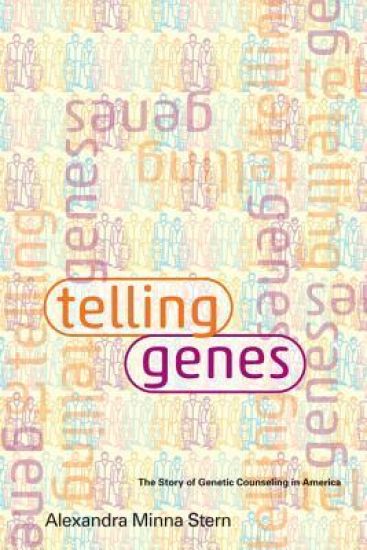
Telling Genes

Telling Genes

Alexandra Minna Stern

Johns Hopkins University Press
2012
sidottu
For sixty years genetic counselors have served as the messengers of important information about the risks, realities, and perceptions of genetic conditions. More than 2,500 certified genetic counselors in the United States work in clinics, community and teaching hospitals, public health departments, private biotech companies, and universities. "Telling Genes" considers the purpose of genetic counseling for twenty-first century families and society and places the field into its historical context. Genetic counselors educate physicians, scientific researchers, and prospective parents about the role of genetics in inherited disease. They are responsible for reliably translating test results and technical data for a diverse clientele, using scientific acumen and human empathy to help people make informed decisions about genomic medicine. Alexandra Minna Stern traces the development of genetic counseling from the eugenics movement of the early twentieth century to the current era of human genomics. Drawing from archival records, patient files, and oral histories, Stern presents the fascinating story of the growth of genetic counseling practices, principles, and professionals.
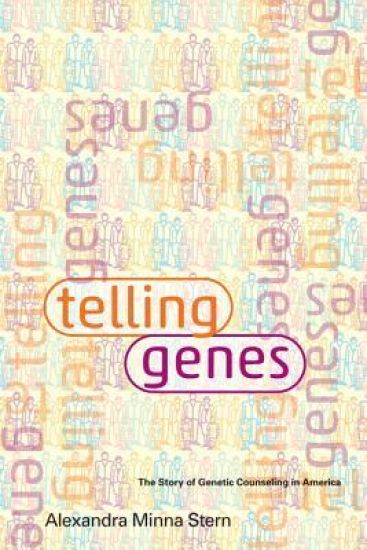
Telling Genes

Telling Genes

Alexandra Minna Stern

Johns Hopkins University Press
2012
pokkari
For sixty years genetic counselors have served as the messengers of important information about the risks, realities, and perceptions of genetic conditions. More than 2,500 certified genetic counselors in the United States work in clinics, community and teaching hospitals, public health departments, private biotech companies, and universities. "Telling Genes" considers the purpose of genetic counseling for twenty-first century families and society and places the field into its historical context. Genetic counselors educate physicians, scientific researchers, and prospective parents about the role of genetics in inherited disease. They are responsible for reliably translating test results and technical data for a diverse clientele, using scientific acumen and human empathy to help people make informed decisions about genomic medicine. Alexandra Minna Stern traces the development of genetic counseling from the eugenics movement of the early twentieth century to the current era of human genomics. Drawing from archival records, patient files, and oral histories, Stern presents the fascinating story of the growth of genetic counseling practices, principles, and professionals.