Kirjojen hintavertailu. Mukana 12 016 292 kirjaa ja 12 kauppaa.

Kirjahaku

Etsi kirjoja tekijän nimen, kirjan nimen tai ISBN:n perusteella.

6 kirjaa tekijältä Alexandra Natapoff

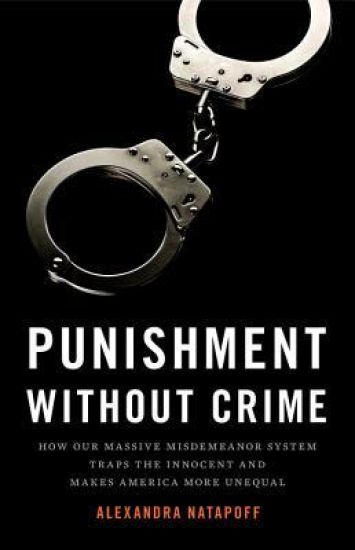
Punishment Without Crime

Punishment Without Crime

Alexandra Natapoff

Basic Books
2019
sidottu
Punishment Without Crime provides a sweeping and revelatory new account of America's broken criminal justice system from the perspective of the paradigmatic American crime-the lowly misdemeanor. While felony trials grab headlines, the petty offense system is far more representative of criminal justice as most Americans actually encounter it. Petty offenses make up 80 percent of state and local criminal dockets; over 13 million misdemeanor cases are filed every year, four times the number of felony cases. Misdemeanors are one of the largest and most unappreciated causes of our criminal system's size and its harshness-and a crucial source of American inequality.Misdemeanor cases are by definition "minor," but their impact is not. Each year, the petty offense process sweeps millions of people from arrest to a guilty plea or conviction. In effect, police get to decide who will be convicted of minor crimes, simply by arresting them for offenses like driving on a suspended licenses, marijuana possession, disorderly conduct, and loitering. In thousands of low-level courts around the country, prosecutors do little vetting, most defendants lack lawyers, legal rules and evidence are often ignored, and judges process cases in minutes or even seconds. The consequences are serious and lasting: stigmatizing criminal records, burdensome fines, jail for those who can't afford to pay bail or fees, and collateral effects including loss of jobs, housing, and benefits. Punishment Without Crime offers an urgent new explanation for America's racial and economic inequalities, showing starkly how misdemeanor arrests and prosecutions brand vast numbers of disadvantaged Americans as criminals and punish them accordingly. For the first time, prize-winning legal scholar Alexandra Natapoff illuminates the full scale, scope, and workings of the misdemeanor process, drawing on never-before-compiled data as well as revealing narrative examples. The misdemeanor system, she reveals, targets and stigmatizes racial minorities as "criminals," exacerbates economic inequality by funding its own operation through fines and fees, and produces wrongful convictions on a massive scale. For too long, misdemeanors have been ignored as petty. Reckoning with the misdemeanor machine is crucial to understanding America's punitive and unfair criminal justice system and our widening economic and racial divides.
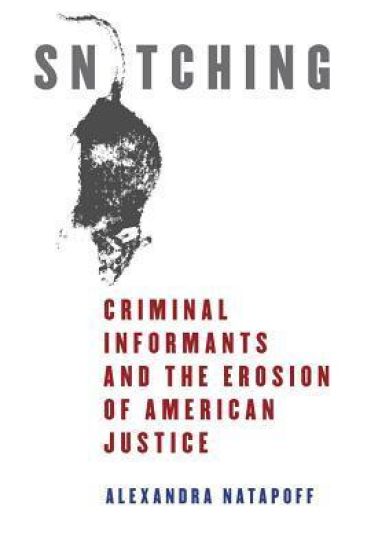
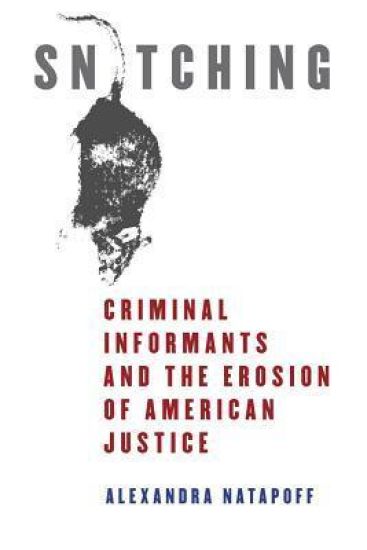
Snitching

Snitching

Alexandra Natapoff

New York University Press
2009
sidottu
2010 Honorable Mention, Silver Gavel Award, American Bar Association Uncovers the powerful and problematic practice of snitching to reveal disturbing truths about how American justice works Albert Burrell spent thirteen years on death row for a murder he did not commit. Atlanta police killed 92-year-old Kathryn Johnston during a misguided raid on her home. After being released by Chicago prosecutors, Darryl Moore—drug dealer, hit man, and rapist—returned home to rape an eleven-year-old girl. Such tragedies are consequences of snitching—police and prosecutors offering deals to criminal offenders in exchange for information. Although it is nearly invisible to the public, criminal snitching has invaded the American legal system in risky and sometimes shocking ways. Snitching is the first comprehensive analysis of this powerful and problematic practice, in which informant deals generate unreliable evidence, allow criminals to escape punishment, endanger the innocent, compromise the integrity of police work, and exacerbate tension between police and poor urban residents. Driven by dozens of real-life stories and debacles, the book exposes the social destruction that snitching can cause in high-crime African American neighborhoods, and how using criminal informants renders our entire penal process more secretive and less fair. Natapoff also uncovers the far-reaching legal, political, and cultural significance of snitching: from the war on drugs to hip hop music, from the FBI’s mishandling of its murderous mafia informants to the new surge in white collar and terrorism informing. She explains how existing law functions and proposes new reforms. By delving into the secretive world of criminal informants, Snitching reveals deep and often disturbing truths about the way American justice really works.
Snitching

Snitching

Alexandra Natapoff

New York University Press
2011
pokkari
2010 Honorable Mention, Silver Gavel Award, American Bar Association Uncovers the powerful and problematic practice of snitching to reveal disturbing truths about how American justice works Albert Burrell spent thirteen years on death row for a murder he did not commit. Atlanta police killed 92-year-old Kathryn Johnston during a misguided raid on her home. After being released by Chicago prosecutors, Darryl Moore—drug dealer, hit man, and rapist—returned home to rape an eleven-year-old girl. Such tragedies are consequences of snitching—police and prosecutors offering deals to criminal offenders in exchange for information. Although it is nearly invisible to the public, criminal snitching has invaded the American legal system in risky and sometimes shocking ways. Snitching is the first comprehensive analysis of this powerful and problematic practice, in which informant deals generate unreliable evidence, allow criminals to escape punishment, endanger the innocent, compromise the integrity of police work, and exacerbate tension between police and poor urban residents. Driven by dozens of real-life stories and debacles, the book exposes the social destruction that snitching can cause in high-crime African American neighborhoods, and how using criminal informants renders our entire penal process more secretive and less fair. Natapoff also uncovers the far-reaching legal, political, and cultural significance of snitching: from the war on drugs to hip hop music, from the FBI’s mishandling of its murderous mafia informants to the new surge in white collar and terrorism informing. She explains how existing law functions and proposes new reforms. By delving into the secretive world of criminal informants, Snitching reveals deep and often disturbing truths about the way American justice really works.
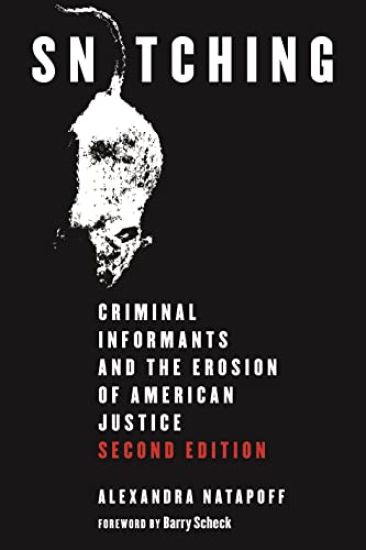
Snitching

Snitching

Alexandra Natapoff

NEW YORK UNIVERSITY PRESS
2022
sidottu
Reveals the secretive, inaccurate, and often violent ways that the American criminal system really works Curtis Flowers spent twenty-three years on death row for a murder he did not commit. Atlanta police killed 92-year-old Kathryn Johnston during a misguided raid on her home. Rachel Hoffman was murdered at age twenty-three while working for Florida police. Such tragedies are consequences of snitching. Although it is nearly invisible to the public, the massive informant market shapes the American legal system in risky and sometimes shocking ways. Police rely on criminal suspects to obtain warrants, to perform surveillance, and to justify arrests. Prosecutors negotiate with defendants for information and cooperation, offering to drop charges or lighten sentences in exchange. In this book, Alexandra Natapoff provides a comprehensive analysis of this powerful and problematic practice. She shows how informant deals generate unreliable evidence, allow serious criminals to escape punishment, endanger the innocent, and exacerbate distrust between police and poor communities of color. First published over ten years ago, Snitching has become known as the "informant bible," a leading text for advocates, attorneys, journalists, and scholars. This influential book has helped free the innocent, it has fueled reform at the state and federal level, and it is frequently featured in high-profile media coverage of snitching debacles. This updated edition contains a decade worth of new stories, new data, new legislation and legal developments, much of it generated by the book itself and by Natapoff's own work. In clear, accessible language, the book exposes the social destruction that snitching can cause in heavily-policed Black neighborhoods, and how using criminal informants renders our entire penal process more secretive and less fair. By delving into the secretive world of criminal informants, Snitching reveals deep and often disturbing truths about the way American justice really works.
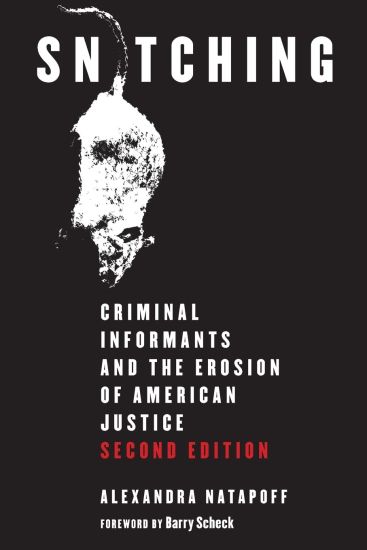
Snitching

Snitching

Alexandra Natapoff

NEW YORK UNIVERSITY PRESS
2022
pokkari
Reveals the secretive, inaccurate, and often violent ways that the American criminal system really works Curtis Flowers spent twenty-three years on death row for a murder he did not commit. Atlanta police killed 92-year-old Kathryn Johnston during a misguided raid on her home. Rachel Hoffman was murdered at age twenty-three while working for Florida police. Such tragedies are consequences of snitching. Although it is nearly invisible to the public, the massive informant market shapes the American legal system in risky and sometimes shocking ways. Police rely on criminal suspects to obtain warrants, to perform surveillance, and to justify arrests. Prosecutors negotiate with defendants for information and cooperation, offering to drop charges or lighten sentences in exchange. In this book, Alexandra Natapoff provides a comprehensive analysis of this powerful and problematic practice. She shows how informant deals generate unreliable evidence, allow serious criminals to escape punishment, endanger the innocent, and exacerbate distrust between police and poor communities of color. First published over ten years ago, Snitching has become known as the "informant bible," a leading text for advocates, attorneys, journalists, and scholars. This influential book has helped free the innocent, it has fueled reform at the state and federal level, and it is frequently featured in high-profile media coverage of snitching debacles. This updated edition contains a decade worth of new stories, new data, new legislation and legal developments, much of it generated by the book itself and by Natapoff's own work. In clear, accessible language, the book exposes the social destruction that snitching can cause in heavily-policed Black neighborhoods, and how using criminal informants renders our entire penal process more secretive and less fair. By delving into the secretive world of criminal informants, Snitching reveals deep and often disturbing truths about the way American justice really works.
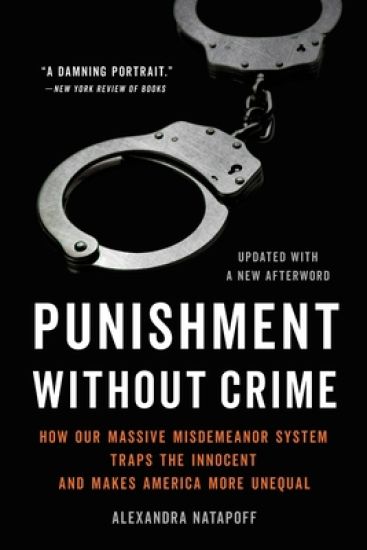
Punishment Without Crime

Punishment Without Crime

Alexandra Natapoff

BASIC BOOKS
2023
pokkari
From a prize-winning Harvard legal scholar, "a damning portrait" (New York Review of Books) of the misdemeanor machine that unjustly brands millions of Americans as criminals Punishment Without Crime offers an urgent new perspective on inequality and injustice in America by examining the paradigmatic American offense: the lowly misdemeanor. Based on extensive original research, legal scholar Alexandra Natapoff reveals the inner workings of a massive petty offense system that produces over thirteen million criminal cases each year, over 80 percent of the national total. People arrested for minor crimes are swept through courts where defendants often lack lawyers, judges process cases in mere minutes, and nearly everyone pleads guilty. This misdemeanor machine starts punishing people long before they are convicted, it punishes the innocent, and it punishes conduct that never should have been a crime. As a result, vast numbers of Americans-most of them poor and disproportionately people of color-are stigmatized as criminals, impoverished through fines and fees, and stripped of driver's licenses, jobs, and housing. And as the nation learned from the police killings of Eric Garner, George Floyd, and too many others, misdemeanor enforcement can be lethal. Now updated with a new afterword, Punishment Without Crime shows how America's sprawling misdemeanor system makes our entire country less safe, less fair, and less equal.