Kirjojen hintavertailu. Mukana 11 342 296 kirjaa ja 12 kauppaa.

Kirjahaku

Etsi kirjoja tekijän nimen, kirjan nimen tai ISBN:n perusteella.

8 kirjaa tekijältä Alexandra Walsham

Providence in Early Modern England

Providence in Early Modern England

Alexandra Walsham

Oxford University Press
2001
nidottu
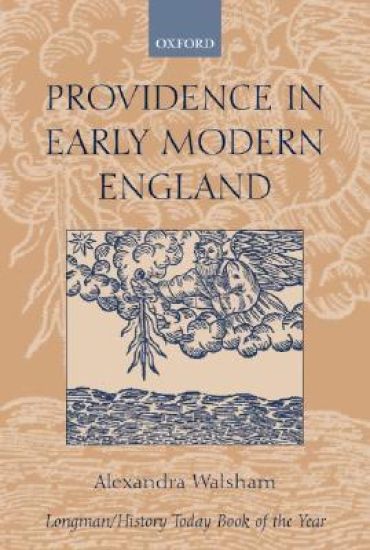
Providence in Early Modern England is the most extensive study to date of the sixteenth- and seventeenth-century belief that God actively intervened in human affairs to punish, reward, warn, try, and chastise. Providentialism has often been seen as a distinctive hallmark of puritan piety. However, Dr Walsham argues that it was a cluster of assumptions which penetrated every sector of English society, cutting across the boundaries created by status and creed, education and wealth. She explores a range of dramatic events and puzzling phenomena in which contemporaries detected the divine finger at work: tragic accidents and sudden deaths, strange sights and mysterious portents, monstrous births and popular prophets, terrible disasters and raging epidemics. She shows how providence helped forge a powerful myth of Protestant nationhood and a lively sense of confessional identity and how, simultaneously, it exacerbated the political and ecclesiastical tensions which culminated in the outbreak of the civil wars in 1642. Framed as a contribution to the continuing debate about the impact, character, and broader repercussions of the English Reformation, this book seeks to deflect attention away from the negative and iconoclastic aspects of the advent of Protestantism towards the undercurrents of continuity that eased the enormous upheavals of the era. It highlights some of the ways in which people adjusted to the religious and cultural revolution as a permanent fact. Based on a detailed analysis of sermons and tracts published by Protestant ministers, and ballads and pamphlets reporting 'true and wonderful newes', it also sheds light on the role of literacy and print in a society in which oral and visual modes of communication continued to thrive.
Generations

Generations

Alexandra Walsham

Oxford University Press
2023
sidottu
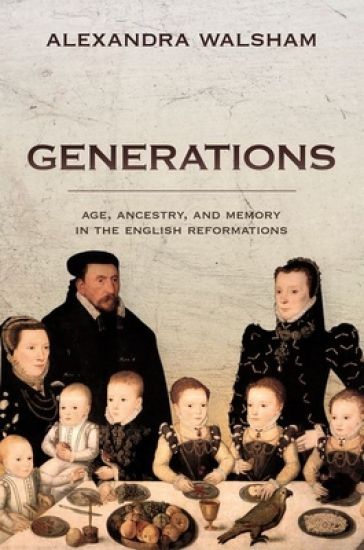
This book examines England's plural and protracted Reformations through the novel prism of the generations. Approaching generation as a biological unit and a social cohort, it demonstrates that the tumultuous religious developments that stretched across the sixteenth and seventeenth centuries not merely transformed the generations but were also forged by them. It provides compelling new insights into how people experienced and navigated the profound challenges that the Reformations posed in everyday life. Alexandra Walsham investigates how age and ancestry were implicated in the theological and cultural upheavals of the era and how these in turn reconfigured the nexus between memory, history, and time. Generations explores the manifold ways in which the Reformations shaped the horizontal relationships that men, women, and children formed with their siblings, kin, and peers, as well as the vertical ones that tied them to their dead ancestors and their future heirs. It highlights the vital part that families bound by blood and by faith played in the making of current events and in recording the past for posterity. Drawing on previously untapped archival evidence, in tandem with a rich array of printed texts, visual images, and material objects, this study offers poignant glimpses of individual lives and casts fascinating light on how families were both torn apart and brought closer together by the English Reformations.
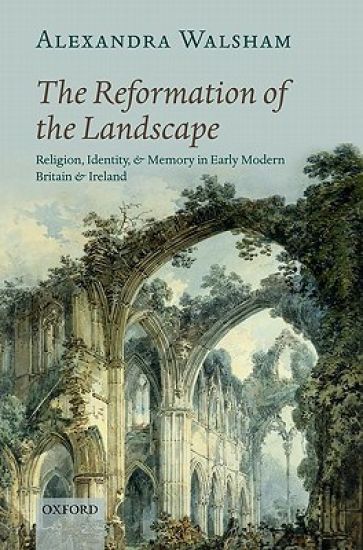
The Reformation of the Landscape

The Reformation of the Landscape

Alexandra Walsham

Oxford University Press
2011
sidottu
The Reformation of the Landscape is a richly detailed and original study of the relationship between the landscape of Britain and Ireland and the tumultuous religious changes of the sixteenth and seventeenth centuries. It explores how the profound theological and liturgical transformations that marked the era between 1500 and 1750 both shaped, and were in turn shaped by, the places and spaces within the physical environment in which they occurred. Moving beyond churches, cathedrals, and monasteries, it investigates how the Protestant and Catholic Reformations affected perceptions and practices associated with trees, woods, springs, rocks, mountain peaks, prehistoric monuments, and other distinctive topographical features of the British Isles. Drawing on extensive research and embracing insights from a range of disciplines, Alexandra Walsham examines the origins, immediate consequences, and later repercussions of these movements of religious renewal, together with the complex but decisive modifications of belief and behaviour to which they gave rise. It demonstrates how ecclesiastical developments intersected with other intellectual and cultural trends, including the growth of antiquarianism and the spread of the artistic and architectural Renaissance, the emergence of empirical science and shifting fashions within the spheres of medicine and healing. Set within a chronological framework that stretches backwards towards the early Middle Ages and forwards into the nineteenth century, the book assesses the critical part played by the landscape in forging confessional identities and in reconfiguring collective and social memory. It illuminates the ways in which the visible world was understood and employed by the diverse religious communities that occupied the British Isles, and shows how it became a battleground in which bitter struggles about the significance of the Christian and pagan past were waged.
The Reformation of the Landscape

The Reformation of the Landscape

Alexandra Walsham

Oxford University Press
2012
nidottu
The Reformation of the Landscape is a richly detailed and original study of the relationship between the landscape of Britain and Ireland and the tumultuous religious changes of the sixteenth and seventeenth centuries. It explores how the profound theological and liturgical transformations that marked the era between 1500 and 1750 both shaped, and were in turn shaped by, the places and spaces within the physical environment in which they occurred. Moving beyond churches, cathedrals, and monasteries, it investigates how the Protestant and Catholic Reformations affected perceptions and practices associated with trees, woods, springs, rocks, mountain peaks, prehistoric monuments, and other distinctive topographical features of the British Isles. Drawing on extensive research and embracing insights from a range of disciplines, Alexandra Walsham examines the origins, immediate consequences, and later repercussions of these movements of religious renewal, together with the complex but decisive modifications of belief and behaviour to which they gave rise. It demonstrates how ecclesiastical developments intersected with other intellectual and cultural trends, including the growth of antiquarianism and the spread of the artistic and architectural Renaissance, the emergence of empirical science and shifting fashions within the spheres of medicine and healing. Set within a chronological framework that stretches backwards towards the early Middle Ages and forwards into the nineteenth century, the book assesses the critical part played by the landscape in forging confessional identities and in reconfiguring collective and social memory. It illuminates the ways in which the visible world was understood and employed by the diverse religious communities that occupied the British Isles, and shows how it became a battleground in which bitter struggles about the significance of the Christian and pagan past were waged.
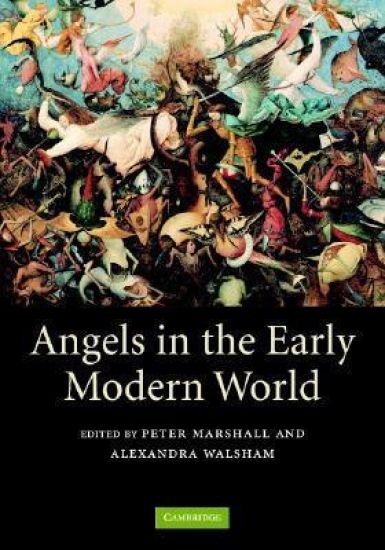
Angels in the Early Modern World

Angels in the Early Modern World

Alexandra Walsham

Cambridge University Press
2006
sidottu
Belief in the importance of angels was as widespread and intense in the early modern era as it had been in the middle ages. This volume is the first to consider how ideas about the nature, existence and activities of angels negotiated the religious, intellectual and cultural upheavals of the sixteenth and seventeenth centuries. The contributors explore the fate and fortunes of these heavenly protectors and messengers against the backdrop of the Renaissance and Reformation and in the context of scientific change. Ranging from the British Isles and continental Europe to New England and Latin America, they consider how angels were implicated in the processes of Protestant and Catholic renewal, their relationship with witchcraft and magic, and their representation in literature and art. Based on original research, the essays offer genuinely fresh insight into the moments and movements that defined the early modern world.
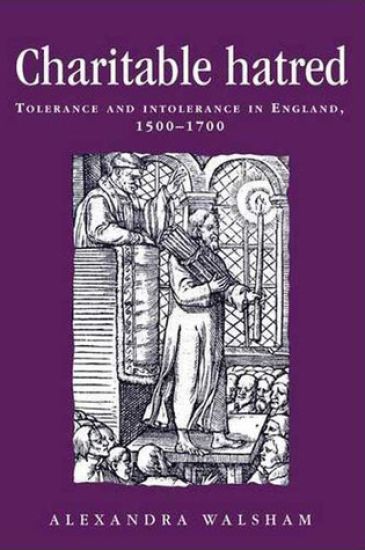
Charitable Hatred

Charitable Hatred

Alexandra Walsham

Manchester University Press
2008
nidottu
Charitable hatred offers a challenging new perspective on religious tolerance and intolerance in early modern England. Setting aside traditional models charting a linear progress from persecution to toleration, it emphasises instead the complex interplay between these two impulses in the sixteenth and seventeenth centuries. The book examines the intellectual assumptions that underpinned attitudes towards religious minorities and the institutional structures and legal mechanisms by which they were both repressed and accommodated. It also explores the social realities of prejudice and forbearance, hostility and harmony at the level of the neighbourhood and parish. Simultaneously, it surveys the range of ways in which dissenting churches and groups responded and adapted to official and popular intolerance, investigating how the experience of suffering helped to forge sectarian identities. In analysing the consequences of the advancing pluralism of English society in the wake of the Reformation, this study illuminates the cultural processes that shaped and complicated the conditions of coexistence before and after the Act of Toleration of 1689.
Catholic Reformation in Protestant Britain

Catholic Reformation in Protestant Britain

Alexandra Walsham

Ashgate Publishing Limited
2014
sidottu
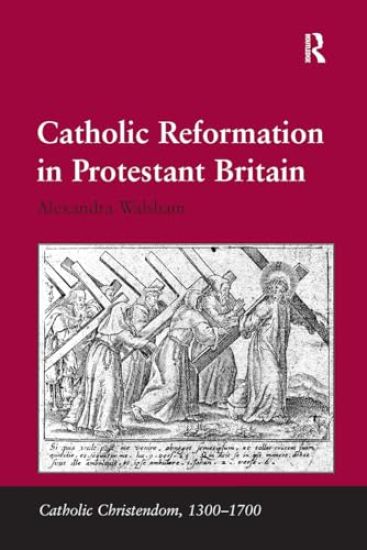
The survival and revival of Roman Catholicism in post-Reformation Britain remains the subject of lively debate. This volume examines key aspects of the evolution and experience of the Catholic communities of these Protestant kingdoms during the sixteenth and seventeenth centuries. Rejecting an earlier preoccupation with recusants and martyrs, it highlights the importance of those who exhibited varying degrees of conformity with the ecclesiastical establishment and explores the moral and political dilemmas that confronted the clergy and laity. It reassesses the significance of the Counter Reformation mission as an evangelical enterprise; analyses its communication strategies and its impact on popular piety; and illuminates how Catholic ritual life creatively adapted itself to a climate of repression. Reacting sharply against the insularity of many previous accounts, this book investigates developments in the British Isles in relation to wider international initiatives for the renewal of the Catholic faith in Europe and for its plantation overseas. It emphasises the reciprocal interaction between Catholicism and anti-Catholicism throughout the period and casts fresh light on the nature of interconfessional relations in a pluralistic society. It argues that persecution and suffering paradoxically both constrained and facilitated the resurgence of the Church of Rome. They presented challenges and fostered internal frictions, but they also catalysed the process of religious identity formation and imbued English, Welsh and Scottish Catholicism with peculiar dynamism. Prefaced by an extensive new historiographical overview, this collection brings together a selection of Alexandra Walsham's essays written over the last fifteen years, fully revised and updated to reflect recent research in this flourishing field. Collectively these make a major contribution to our understanding of minority Catholicism and the Counter Reformation in the era after the Council of Trent.
Catholic Reformation in Protestant Britain

Catholic Reformation in Protestant Britain

Alexandra Walsham

TAYLOR FRANCIS LTD
2024
nidottu
The survival and revival of Roman Catholicism in post-Reformation Britain remains the subject of lively debate. This volume examines key aspects of the evolution and experience of the Catholic communities of these Protestant kingdoms during the sixteenth and seventeenth centuries. Rejecting an earlier preoccupation with recusants and martyrs, it highlights the importance of those who exhibited varying degrees of conformity with the ecclesiastical establishment and explores the moral and political dilemmas that confronted the clergy and laity. It reassesses the significance of the Counter Reformation mission as an evangelical enterprise; analyses its communication strategies and its impact on popular piety; and illuminates how Catholic ritual life creatively adapted itself to a climate of repression. Reacting sharply against the insularity of many previous accounts, this book investigates developments in the British Isles in relation to wider international initiatives for the renewal of the Catholic faith in Europe and for its plantation overseas. It emphasises the reciprocal interaction between Catholicism and anti-Catholicism throughout the period and casts fresh light on the nature of interconfessional relations in a pluralistic society. It argues that persecution and suffering paradoxically both constrained and facilitated the resurgence of the Church of Rome. They presented challenges and fostered internal frictions, but they also catalysed the process of religious identity formation and imbued English, Welsh and Scottish Catholicism with peculiar dynamism. Prefaced by an extensive new historiographical overview, this collection brings together a selection of Alexandra Walsham's essays written over the last fifteen years, fully revised and updated to reflect recent research in this flourishing field. Collectively these make a major contribution to our understanding of minority Catholicism and the Counter Reformation in the era after the Council of Trent.