Kirjojen hintavertailu. Mukana 11 717 486 kirjaa ja 12 kauppaa.

Kirjahaku

Etsi kirjoja tekijän nimen, kirjan nimen tai ISBN:n perusteella.

4 kirjaa tekijältä Alexei V Nesteruk

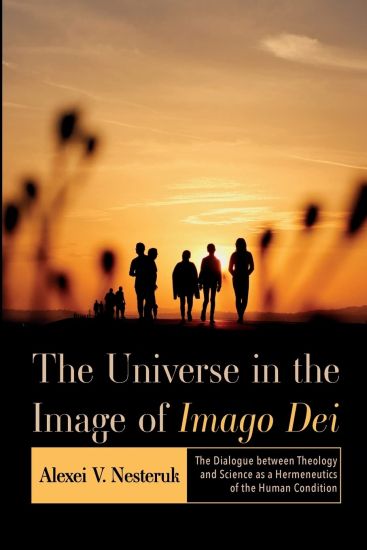
The Universe in the Image of Imago Dei

The Universe in the Image of Imago Dei

Alexei V Nesteruk

Pickwick Publications
2022
pokkari
Cosmology, anthropology, and Christology are deeply interrelated. This implies that one cannot talk about the structure of the world without human presence in it, as well as it is impossible to produce any reasonable understanding of humanity without positioning it in the universe. In the same fashion, in order to comprehend where the human capacity of predicating the universe comes from, one needs to appeal to humanity's Divine Image, that is, to its archetype in the incarnate Christ. Whereas Christians traditionally believe that the human phenomenon is unique as created in the Divine Image, such scientific disciplines as evolutionary biology, palaeoanthropology, the sciences of artificial intelligence, psychology, and others, challenge the vision of humanity as a unique formation thus challenging the doctrine of Imago Dei. All these disciplines place humans in a mediocre position in the world accompanied by the feeling of anxiety, insecurity, and non-attunement to the universe. Theology needs to respond to these challenges by incorporating into its scope the data from the sciences in order to neutralize such anxieties. The resulting dialogue of theology with science provides a hermeneutics of the human condition with no objective to change the latter. Then the sense of the universe is disclosed from within the Divine Image reflecting the predicaments of the human created condition.
The Universe in the Image of Imago Dei

The Universe in the Image of Imago Dei

Alexei V Nesteruk

Pickwick Publications
2022
sidottu
Cosmology, anthropology, and Christology are deeply interrelated. This implies that one cannot talk about the structure of the world without human presence in it, as well as it is impossible to produce any reasonable understanding of humanity without positioning it in the universe. In the same fashion, in order to comprehend where the human capacity of predicating the universe comes from, one needs to appeal to humanity's Divine Image, that is, to its archetype in the incarnate Christ. Whereas Christians traditionally believe that the human phenomenon is unique as created in the Divine Image, such scientific disciplines as evolutionary biology, palaeoanthropology, the sciences of artificial intelligence, psychology, and others, challenge the vision of humanity as a unique formation thus challenging the doctrine of Imago Dei. All these disciplines place humans in a mediocre position in the world accompanied by the feeling of anxiety, insecurity, and non-attunement to the universe. Theology needs to respond to these challenges by incorporating into its scope the data from the sciences in order to neutralize such anxieties. The resulting dialogue of theology with science provides a hermeneutics of the human condition with no objective to change the latter. Then the sense of the universe is disclosed from within the Divine Image reflecting the predicaments of the human created condition.
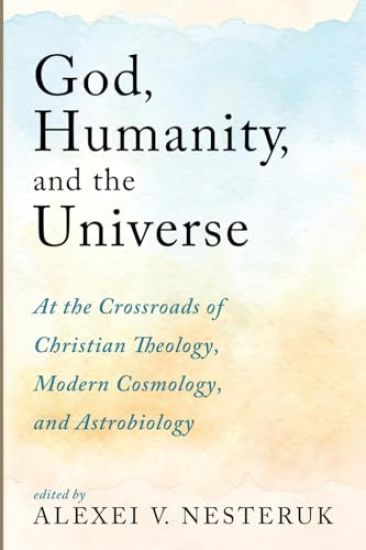
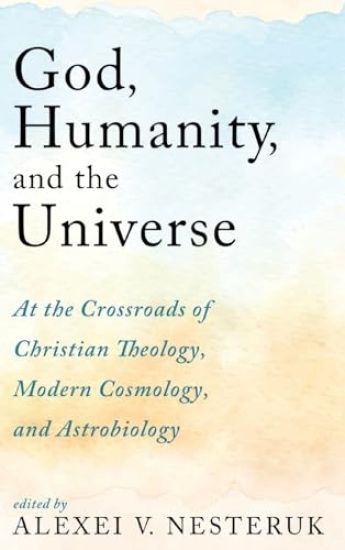
God, Humanity, and the Universe

God, Humanity, and the Universe

Alexei V Nesteruk

Pickwick Publications
2023
sidottu
The main objective of this book on cosmology and theology is to reassess the current approach to research in the field of interaction, mediation, and dialogue between modern cosmology and Christian theology (Eastern Orthodox theology in particular). This project was part of wide-ranging cross-disciplinary research undertaken by scientists, philosophers, and theologians across the world within the framework of Science & Orthodoxy around the World, run by the National Hellenic Research Foundation (Athens) from 2019 to 2023. The project and this publication contribute to the large-scale academic activity in the field of science and religion (or science and theology) with a particular accent on the contribution of Eastern Orthodox theology to this dialogue, as well as to the venues of advancement of this theology given the recent breakthroughs in cosmology, physics, and philosophy. The book also underlines the importance of expressing cosmological ideas theologically, symbolically, and scientifically in the wide context of culture and humanity's sociopolitical and environmental predicaments.