
Kirjahaku
Etsi kirjoja tekijän nimen, kirjan nimen tai ISBN:n perusteella.
107 kirjaa tekijältä Alfred Adler

Dieses Buch ist mit einem detaillierten und dynamischen Inhaltsverzeichnis versehen und wurde sorgf ltig korrekturgelesen. Alfred Adler (1870-1937) war ein sterreichischer Arzt und Psychotherapeut. Adlers Lehre hatte eine gro e, eigenst ndige Wirkung auf die Entwicklung der Psychologie und Psychotherapie im 20. Jahrhundert. Inhalt: - Die Theorie der Organminderwertigkeit und ihre Bedeutung f r Philosophie und Psychologie - Der Aggressionstrieb im Leben und in der Neurose - Das Z rtlichkeitsbed rfnis des Kindes - ber neurotische Disposition - Der psychische Hermaphroditismus im Leben und in der Neurose - Zur Kritik der Freudschen Sexualtheorie des Seelenlebens - I. Die Rolle der Sexualit t in der Neurose - II. "Verdr ngung" und "m nnlicher Protest"; ihre Rolle und Bedeutung f r die neurotische Dynamik - Organdialekt - Der nerv se Charakter - Ein Beitrag zur Psychologie der rztlichen Berufswahl - Der Arzt als Erzieher - Trotz und Gehorsam - Zur Erziehung der Eltern - Theoretische Grundlegung - Erziehungsberatungsstellen


Adler untersuchte bereits in seinen frÃ"hen Schriften die große Bedeutung von sozialen EinflÃ"ssen auf die Persönlichkeitsentwicklung von Menschen. Dies veranlasste ihn, auch nach seiner Trennung von Freud zahlreiche Erziehungsfragen zu thematisieren und in seinen Veröffentlichungen zu behandeln. Der Band 4 der Alfred Adler Studienausgabe enthält die bedeutendsten dieser Schriften.Die kommentierten und mit editorischen Vorbemerkungen versehenen Texte Adlers behandeln unter anderem: die pädagogische Bedeutung der Beziehungserfahrungen von Kinder in den ersten Lebensjahren; pädagogische EinflÃ"sse auf die Entwicklung von SelbstwertgefÃ"hl und Selbstwertregulation; die Bedeutung emotionaler Faktoren fÃ"r die Ausbildung von kognitiven Fähigkeiten und das Zustandekommen schulischer Leistungen; die Entfaltung von GemeinschaftsgefÃ"hl als Gegenbewegung zum Streben nach Macht und Ãberlegenheit; Möglichkeiten der Prophylaxe von Entwicklungs- und Erziehungsschwierigkeiten und deren Bearbeitung in Prozessen der Erziehungsberatung. Adler war Ã"berzeugt, dass die nachhaltige Verbesserung erzieherischer Gegebenheiten an den Erfolg von weitreichenden ReformbemÃ"hungen gebunden ist, die der Dynamik unbewusster Prozesse Rechnung tragen. Deshalb verdeutlichen die vorliegenden Schriften auch Adlers Bedeutung fÃ"r die Entstehung tiefenpsychologischer Ansätze in der Pädagogik sowie die Schwerpunkte seines Einflusses auf die Reformpädagogik des frÃ"hen 20. Jahrhunderts. Diese beziehen sich vor allem auf die Bereiche der Familienerziehung, der Schulpädagogik, der Ausbildung von Pädagogen und der Konzeptualisierung sowie Institutionalisierung von Erziehungsberatung und sind bis heute von Relevanz. Zahlreiche Fallbeispiele lassen Adlers Theorie und seine Art des Arbeitens lebendig werden.

Reveals Adler's theories and contributions to the practice of psychology
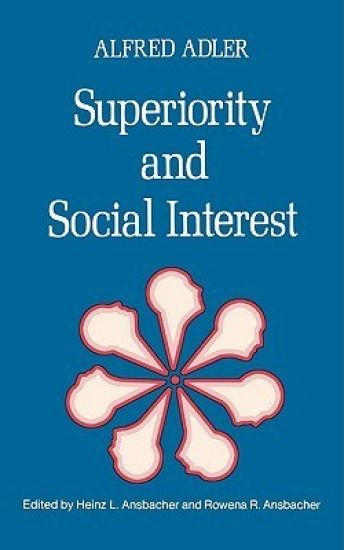
Two key ideas in Alfred Adler's thinking are reflected in these twenty-one papers: the individual's striving toward some kind of individually conceived superiority, perfection, or success and the healthy person's need to connect that striving with social interest--concern for the common good. The selections provide a survey of the wide range of Adler's theories and clinical experience and they include a long essay on religion and individual psychology and Adler's account of his differences with Freud. Each selection is given in its entirety, and the volume contains a biographical essay on Adler by his earliest important co-worker, Carl Furtm ller, and an extensive bibliography of Adler's writings.

Cooperation Between the Sexes: Writings on Women and Men, Love and Marriage, and Sexuality
Alfred Adler
W. W. Norton Company
1982
nidottu
In this volume, a major psychoanalytic thinker presents a theory of personality through his explorations of one of humankind's most basic attributes: sexuality. In addition, these writings reflect Adler's theoretical dissatisfaction with what he felt were the deterministic beliefs of Sigmund Freud. And having presented them, he precipitated one of the most dramatic schisms in psychoanalytic psychology.

Alfred Alder's 1924 work was penned as the science of individual psychology was gaining increasing credibility and recognition. The volume covers the range of psychological issues understood at the time, whilst recognising the inevitable developments in the field as scientific knowledge and experimentation grew.

First Published in 1999. This is Volume II of twenty-one of the Individual Differences Psychology series. Written in 1921, this study outlines a comparative Individualistic Psychology and Psychotherapy.

This set includes a fascinating range of subjects relating to the areas of individual psychology, personality and character. An unusual feature of this set are titles covering the areas of eugenics and handreading.

Originally published in 1929 the individual psychological interpretation of this autobiography was first presented by Alfred Adler to a group of psychiatrists and pedagogues in Vienna. The story of the development of a neurosis is told in this book. A young girl relates the fascinating story of her unhappy life, the psychologist comments on her remarks and leads the reader to an understanding of the blunders and mistakes which have made her life so full of suffering. Publication of this book in its day was intended to bring the growing interest in Adler’s Individual Psychology to a wider audience. Today it can be read and enjoyed in its historical context.

First published in 1930 this book was written under the leadership and inspiration of Alfred Adler. He and a group of physicians and educators organized 28 child guidance clinics in Vienna, Berlin and Munich in the years prior to publication. Conducted according to the tenets of Individual Psychology, these clinics revealed many new and stimulating problems that they felt were as applicable to conditions in America and England at the time as in the experimental countries. The book was designed as an organized and connected account of the problems, accomplishments and failures encountered in the daily work, reported from actual experience by the experts in charge. Adler edited the volume and assigned each subject to the specialist in that field. The result was designed to be of value to the welfare worker, the physician, and the forward-looking parent of the time. Today it can be read and enjoyed in its historical context.

Originally published in 1928 this book was an attempt to acquaint the general public with the fundamentals of Individual Psychology. At the same time it is a demonstration of the practical application of these principles to the conduct of everyday relationships, and the organization of our personal life. Based upon a years’ lectures to audiences at the People’s Institute in Vienna, the purpose of the book was to point out how the mistaken behaviour of the individual affects harmony of our social and communal life; to teach the individual to recognize their own mistakes; and finally, to show them how they may effect a harmonious adjustment to the communal life. Adler felt that mistakes in business or in science were costly and deplorable, but mistakes in the conduct of life are usually dangerous to life itself. This book is dedicated by the author in his preface ‘to the task of illuminating man’s progress toward a better understanding of human nature.’

Originally published in 1930 The Science of Living looks at Individual Psychology as a science. Adler discusses the various elements of Individual Psychology and its application to everyday life: including the inferiority complex, the superiority complex and other social aspects, such as, love and marriage, sex and sexuality, children and their education. This is an important book in the history of psychoanalysis and Adlerian therapy.

Originally published in 1929 the individual psychological interpretation of this autobiography was first presented by Alfred Adler to a group of psychiatrists and pedagogues in Vienna. The story of the development of a neurosis is told in this book. A young girl relates the fascinating story of her unhappy life, the psychologist comments on her remarks and leads the reader to an understanding of the blunders and mistakes which have made her life so full of suffering. Publication of this book in its day was intended to bring the growing interest in Adler’s Individual Psychology to a wider audience. Today it can be read and enjoyed in its historical context.

First published in 1930 this book was written under the leadership and inspiration of Alfred Adler. He and a group of physicians and educators organized 28 child guidance clinics in Vienna, Berlin and Munich in the years prior to publication. Conducted according to the tenets of Individual Psychology, these clinics revealed many new and stimulating problems that they felt were as applicable to conditions in America and England at the time as in the experimental countries. The book was designed as an organized and connected account of the problems, accomplishments and failures encountered in the daily work, reported from actual experience by the experts in charge. Adler edited the volume and assigned each subject to the specialist in that field. The result was designed to be of value to the welfare worker, the physician, and the forward-looking parent of the time. Today it can be read and enjoyed in its historical context.

This book discusses the various elements of Individual Psychology and its application to everyday life: including the inferiority complex, the superiority complex and other social aspects, such as, love and marriage, sex and sexuality, children and their education.

Originally published in 1928 this book was an attempt to acquaint the general public with the fundamentals of Individual Psychology. At the same time it is a demonstration of the practical application of these principles to the conduct of everyday relationships, and the organization of our personal life. Based upon a years’ lectures to audiences at the People’s Institute in Vienna, the purpose of the book was to point out how the mistaken behaviour of the individual affects harmony of our social and communal life; to teach the individual to recognize their own mistakes; and finally, to show them how they may effect a harmonious adjustment to the communal life. Adler felt that mistakes in business or in science were costly and deplorable, but mistakes in the conduct of life are usually dangerous to life itself. This book is dedicated by the author in his preface ‘to the task of illuminating man’s progress toward a better understanding of human nature.’

First Published in 1999. This is Volume II of twenty-one of the Individual Differences Psychology series. Written in 1921, this study outlines a comparative Individualistic Psychology and Psychotherapy.