Kirjojen hintavertailu. Mukana 11 342 296 kirjaa ja 12 kauppaa.

Kirjahaku

Etsi kirjoja tekijän nimen, kirjan nimen tai ISBN:n perusteella.

265 kirjaa tekijältä Alfred Russel Wallace

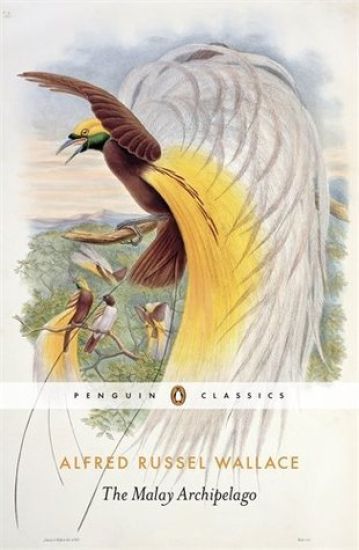
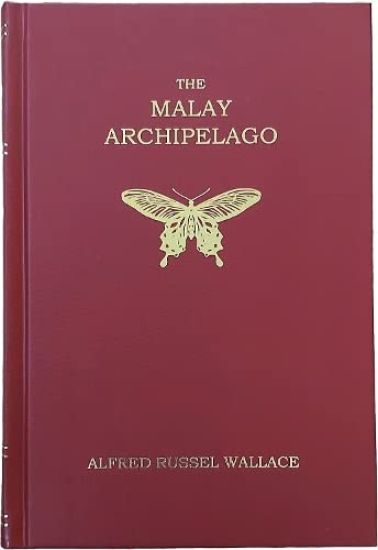
The Malay Archipelago

The Malay Archipelago

Alfred Russel Wallace

Penguin Classics
2014
pokkari
Of all the extraordinary Victorian travelogues, The Malay Archipelago has a fair claim to be the greatest - both as a beautiful, alarming, vivid and gripping account of some eight years' travel across the entire Malay world - from Singapore to the western edges of New Guinea - and as the record of a great mind. As Wallace, often under conditions of terrible hardship and sickness, battles through jungles, lives with headhunters, and collects beetles, butterflies and birds-of-paradise, he makes discoveries about the workings of biology that have shaped our view of the world ever since.
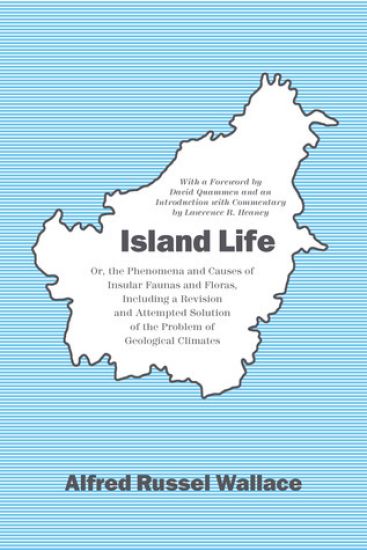
Island Life

Island Life

Alfred Russel Wallace

University of Chicago Press
2013
nidottu
Alfred Russel Wallace is best known as the codiscoverer, with Charles Darwin, of natural selection, but he was also history's foremost tropical naturalist and the father of biogeography, the modern study of the geographical basis of biological diversity. "Island Life" has long been considered one of his most important works. In it he extends studies on the influence of the glacial epochs on organismal distribution patterns and the characteristics of island biogeography, a topic as vibrant and actively studied today as it was in 1880. The book includes history's first theory of continental glaciation based on a combination of geographical and astronomical causes, a discussion of island classification, and a survey of worldwide island faunas and floras. The year 2013 will mark the centennial of Wallace's death and will see a host of symposia and reflections on Wallace's contributions to evolution and natural history. This reissue of the first edition of "Island Life", with a foreword by David Quammen and an extensive introduction by Lawrence R. Heaney, who has spent over three decades studying island biogeography in Southeast Asia, makes this essential and foundational reference available and accessible once again.
The Malay Archipelago

The Malay Archipelago

Alfred Russel Wallace

THE NATURAL HISTORY MUSEUM
2023
sidottu
The Malay Archipelago is a vivid, momentous and far-reaching account of Alfred Russel Wallace's eight-year exploration of South East Asia in the 1850s and 60s. Wallace's travels led him to conceive of evolution through natural selection independently of Charles Darwin, and their theories were jointly proposed in a paper to the Linnean Society in 1858. During his travels he accumulated an astonishing 125,660 specimens, including more than 5,000 species new to western science, establishing his reputation as the 19th century's leading expert on the geographical distribution of animal species and the "father of biogeography". This handsome facsimile has been reproduced from Wallace's personal copy of the 10th edition which includes a number of handwritten annotations made by Wallace himself. This edition was published in 1890, 28 years after the first, and has additional information from subsequent collectors and footnotes in which Wallace corrects some earlier errors. It features illustrations by contemporary artists Thomas Baines, Walter Hood Fitch, John Gerrard Keulemans, E. W. Robinson, Joseph Wolf and T. W. Wood, and includes two fold-out colour maps of the archipelago, one showing the routes he took and the other the volcanic belts in the region. There is also a new foreword by Sandra Knapp, President of the Linnean Society (2018-2022).
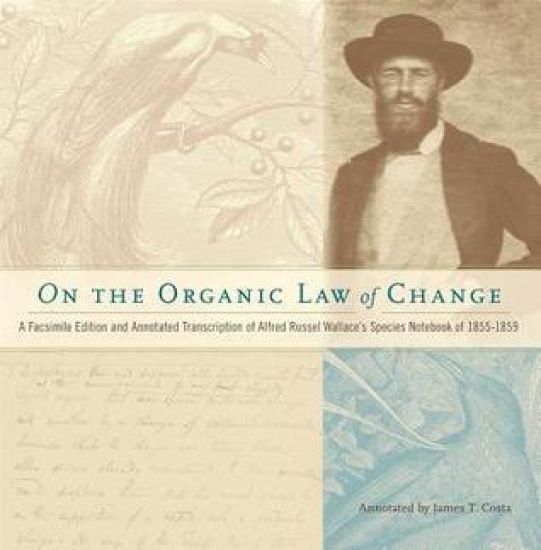
On the Organic Law of Change

On the Organic Law of Change

Alfred Russel Wallace

Harvard University Press
2013
sidottu
A giant of the discipline of biogeography and co-discoverer of natural selection, Alfred Russel Wallace was the most famous naturalist in the world when he died in 1913. To mark the centennial of Wallace's death, James Costa offers an elegant edition of the "Species Notebook" of 1855-1859, which Wallace kept during his legendary expedition in peninsular Malaysia, Indonesia, and western New Guinea. Presented in facsimile with text transcription and annotations, this never-before-published document provides a new window into the travels, personal trials, and scientific genius of the co-discoverer of natural selection.In one section, headed "Note for Organic Law of Change"--an extended critique of geologist Charles Lyell's anti-evolutionary arguments--Wallace sketches a book he would never write, owing to the unexpected events of 1858. In that year he sent to Charles Darwin an essay announcing his discovery of the mechanism for species change: natural selection. Darwin's friends Lyell and the botanist Joseph Hooker proposed a "delicate arrangement": a joint reading at the Linnean Society of his essay with Darwin's earlier private writings on the subject. Darwin would publish On the Origin of Species in 1859, to much acclaim; pre-empted, Wallace's first book on evolution waited two decades, but by then he had abandoned his original concept.On the Organic Law of Change realizes in spirit the project Wallace left unfinished, and asserts his stature as not only a founder of biogeography and the preeminent tropical biologist of his day but as Darwin's equal among the pioneers of evolution.