Kirjojen hintavertailu. Mukana 12 016 292 kirjaa ja 12 kauppaa.

Kirjahaku

Etsi kirjoja tekijän nimen, kirjan nimen tai ISBN:n perusteella.

12 kirjaa tekijältä Alfred W. Crosby

Children of the Sun

Children of the Sun

Alfred W. Crosby

WW Norton Co
2014
nidottu
All life on earth is dependent on energy from the sun, but one species has evolved to be especially efficient in tapping that supply. This is the story of the human species and its dedicated effort to sustain and elevate itself by making the earth’s stores of energy its own. A story of slow evolutionary change and sharp revolutionary departures, it takes readers from the origins of the species to our current fork in the road. With a winning blend of wit and insight, Alfred W. Crosby reveals the fundamental ways in which humans have transformed the world and themselves in their quest for energy. When they first started, humans found fuel much like other species in the simple harvesting of wild plants and animals. A major turn in the human career came with the domestication of fire, an unprecedented achievement unique to the species. The greatest advantage from this breakthrough came in its application to food. Cooking vastly increased the store of organic matter our ancestors could tap as food, and the range of places they could live. As they spread over the earth, humans became more complicated harvesters, negotiating alliances with several other species—plant and animal—leading to the birth of agriculture and civilizations. For millennia these civilizations tapped sun energy through the burning of recently living biomass—wood, for instance. But humans again took a revolutionary turn in the last two centuries with the systematic burning of fossilized biomass. Fossil fuels have powered our industrial civilization and in turn multiplied our demand for sun energy. Here we are then, on the verge of exceeding what the available sources of sun energy can conventionally afford us, and suffering the ill effects of our seemingly insatiable energy appetite. A found of the field of global history, Crosby gives a book that glows with illuminating power.
Throwing Fire

Throwing Fire

Alfred W. Crosby

Cambridge University Press
2010
pokkari
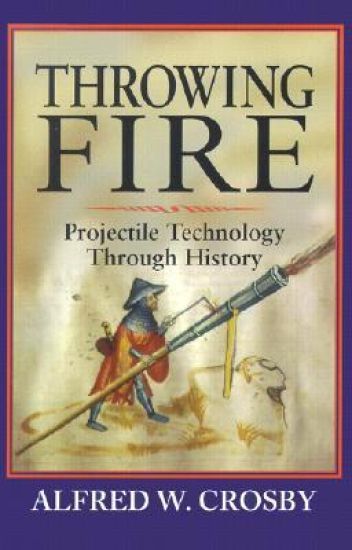
Historian Alfred W. Crosby looks at hard, accurate throwing and the manipulation of fire as unique human capabilities. Humans began throwing rocks in prehistory and then progressed to javelins, atlatls, bows and arrows. We learned to make fire by friction and used it to cook, drive game, burn out rivals, and alter landscapes. In historic times we invented catapults, trebuchets, and such flammable liquids as Greek Fire. About 1,000 years ago we invented gunpowder, which accelerated the rise of empires and the advance of European imperialism. In the 20th century, gunpowder weaponry enabled us to wage the most destructive wars of all time, peaking at the end of World War II with the V-2 and atomic bomb. Today, we have turned our projectile talents to space travel which may make it possible for our species to migrate to other bodies of our solar system and even other star systems.
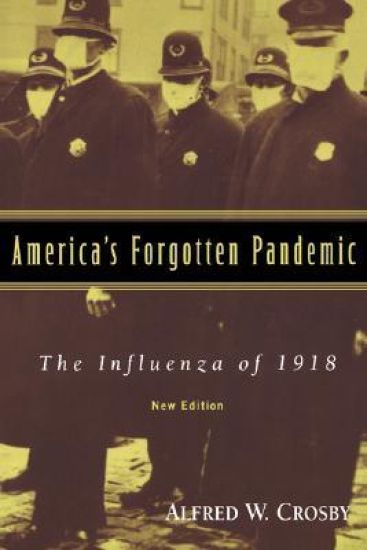
America's Forgotten Pandemic

America's Forgotten Pandemic

Alfred W. Crosby

Cambridge University Press
2003
pokkari
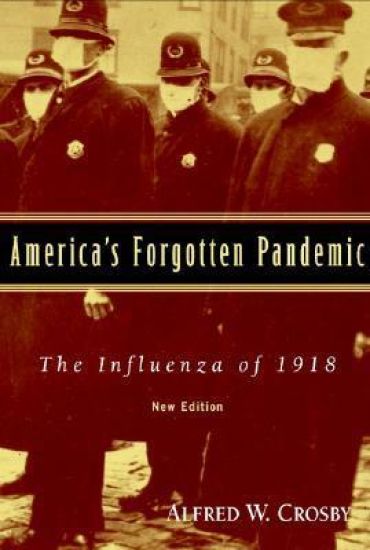
Between August 1918 and March 1919 the Spanish influenza spread worldwide, claiming over 25 million lives - more people than perished in the fighting of the First World War. It proved fatal to at least a half-million Americans. Yet, the Spanish flu pandemic is largely forgotten today. In this vivid narrative, Alfred W. Crosby recounts the course of the pandemic during the panic-stricken months of 1918 and 1919, measures its impact on American society, and probes the curious loss of national memory of this cataclysmic event. In a new edition, with a new preface discussing the recent outbreaks of diseases, including the Asian flu and the SARS epidemic, America’s Forgotten Pandemic remains both prescient and relevant.
The Measure of Reality

The Measure of Reality

Alfred W. Crosby

Cambridge University Press
1996
sidottu
Western Europeans were among the first, if not the first, to invent mechanical clocks, geometrically precise maps, double-entry bookkeeping, precise algebraic and musical notations, and perspective painting. By the sixteenth century more people were thinking quantitatively in western Europe than in any other part of the world. The Measure of Reality discusses the epochal shift from qualitative to quantitative perception in Western Europe during the late Middle Ages and Renaissance. This shift made modern science, technology, business practice, and bureaucracy possible.
The Measure of Reality

The Measure of Reality

Alfred W. Crosby

Cambridge University Press
1997
pokkari
Western Europeans were among the first, if not the first, to invent mechanical clocks, geometrically precise maps, double-entry bookkeeping, precise algebraic and musical notations, and perspective painting. By the sixteenth century more people were thinking quantitatively in western Europe than in any other part of the world. The Measure of Reality discusses the epochal shift from qualitative to quantitative perception in Western Europe during the late Middle Ages and Renaissance. This shift made modern science, technology, business practice, and bureaucracy possible.
Throwing Fire

Throwing Fire

Alfred W. Crosby

Cambridge University Press
2002
sidottu
Historian Alfred W. Crosby looks at hard, accurate throwing and the manipulation of fire as unique human capabilities. Humans began throwing rocks in prehistory and then progressed to javelins, atlatls, bows and arrows. We learned to make fire by friction and used it to cook, drive game, burn out rivals, and alter landscapes. In historic times we invented catapults, trebuchets, and such flammable liquids as Greek Fire. About 1,000 years ago we invented gunpowder, which accelerated the rise of empires and the advance of European imperialism. In the 20th century, gunpowder weaponry enabled us to wage the most destructive wars of all time, peaking at the end of World War II with the V-2 and atomic bomb. Today, we have turned our projectile talents to space travel which may make it possible for our species to migrate to other bodies of our solar system and even other star systems.
America's Forgotten Pandemic

America's Forgotten Pandemic

Alfred W. Crosby

Cambridge University Press
2003
sidottu
Between August 1918 and March 1919 the Spanish influenza spread worldwide, claiming over 25 million lives - more people than perished in the fighting of the First World War. It proved fatal to at least a half-million Americans. Yet, the Spanish flu pandemic is largely forgotten today. In this vivid narrative, Alfred W. Crosby recounts the course of the pandemic during the panic-stricken months of 1918 and 1919, measures its impact on American society, and probes the curious loss of national memory of this cataclysmic event. In a new edition, with a new preface discussing the recent outbreaks of diseases, including the Asian flu and the SARS epidemic, America’s Forgotten Pandemic remains both prescient and relevant.
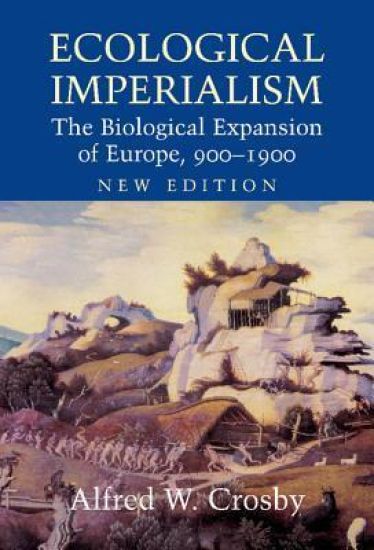
Ecological Imperialism

Ecological Imperialism

Alfred W. Crosby

Cambridge University Press
2004
sidottu
People of European descent form the bulk of the population in most of the temperate zones of the world - North America, Australia and New Zealand. The military successes of European imperialism are easy to explain; in many cases they were a matter of firearms against spears. But, as Alfred Crosby maintains in this highly original and fascinating book, the Europeans' displacement and replacement of the native peoples in the temperate zones was more a matter of biology than of military conquest. European organisms had certain decisive advantages over their New World and Australian counterparts. The spread of European disease, flora, and fauna went hand in hand with the growth of populations. Consequently, these imperialists became proprietors of the world’s most important agricultural lands. Now in a new edition with a new preface, Crosby revisits his now-classic work and again evaluates the global historical importance of European ecological expansion.
Ecological Imperialism

Ecological Imperialism

Alfred W. Crosby

Cambridge University Press
2015
pokkari
People of European descent form the bulk of the population in most of the temperate zones of the world - North America, Australia and New Zealand. The military successes of European imperialism are easy to explain; in many cases they were a matter of firearms against spears. But as Alfred W. Crosby maintains in this highly original and fascinating book, the Europeans' displacement and replacement of the native peoples in the temperate zones was more a matter of biology than of military conquest. European organisms had certain decisive advantages over their New World and Australian counterparts. The spread of European disease, flora and fauna went hand in hand with the growth of populations. Consequently, these imperialists became proprietors of the most important agricultural lands in the world. In the second edition, Crosby revisits his now classic work and again evaluates the global historical importance of European ecological expansion.
Germs, Seeds and Animals:

Germs, Seeds and Animals:

Alfred W. Crosby

M.E. Sharpe
1994
sidottu
Alfred Crosby almost alone redirected the attention of historians to ecological issues that were important precisely because they were global. In doing so, he answered those who believed that world history had become impossible as a consequence of the post-war proliferation of new historical specialities, including not only ecological history but also new social histories, areas studies, histories of mentalities and popular cultures, and studies of minorities, majorities, and ethnic groups. In the introduction to this volume, Professor Crosby recounts an intellectual path to ecological history that might stand as a rationale for world history in general. He simply decided to study the most pervasive and important aspects of human experience. By focusing on human universals like death and disease, his studies highlight the epidemic rather than the epiphenomenal.
Germs, Seeds and Animals:

Germs, Seeds and Animals:

Alfred W. Crosby

M.E. Sharpe
1994
nidottu
Alfred Crosby almost alone redirected the attention of historians to ecological issues that were important precisely because they were global. In doing so, he answered those who believed that world history had become impossible as a consequence of the post-war proliferation of new historical specialities, including not only ecological history but also new social histories, areas studies, histories of mentalities and popular cultures, and studies of minorities, majorities, and ethnic groups. In the introduction to this volume, Professor Crosby recounts an intellectual path to ecological history that might stand as a rationale for world history in general. He simply decided to study the most pervasive and important aspects of human experience. By focusing on human universals like death and disease, his studies highlight the epidemic rather than the epiphenomenal.