Kirjojen hintavertailu. Mukana 12 559 143 kirjaa ja 12 kauppaa.

Kirjahaku

Etsi kirjoja tekijän nimen, kirjan nimen tai ISBN:n perusteella.

2 kirjaa tekijältä Alice Y. Tseng

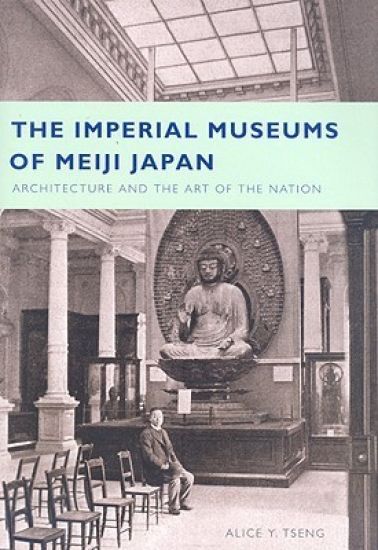
The Imperial Museums of Meiji Japan

The Imperial Museums of Meiji Japan

Alice Y. Tseng

University of Washington Press
2008
sidottu
It was not until Japan's opening to the West during the Meiji period (1868-1912) that terms for "art" (bijutsu) and "art museum" (bijutsukan) were coined. The Imperial Museums of Meiji Japan documents Japan's unification of national art and cultural resources to forge a modern identity influenced by European museum and exhibition culture. Japan's Imperial Museums were conceived of as national self-representations, and their creation epitomized the Meiji bureaucracy's mission to engage in the international standards and practices of the late nineteenth century. The architecture of the museums, by incorporating Western design elements and construction methods, effectively safeguarded and set off the nation's unique art historical lineage.Western paradigms and expertise, coupled with Japanese resolve and ingenuity, steered the course of the museums' development. Expeditions by high-ranking Japanese officials to Europe and the United States to explore the burgeoning world of art preservation and exhibition, and throughout Japan to inventory important cultural treasures, led to the establishment of the Imperial Museums in the successive imperial cities of Nara, Kyoto, and Tokyo.Over the course of nearly four decades, the English architect Josiah Conder, known as "the father of modern Japanese architecture," and his student Katayama Tokuma, who became the preeminent state architect, designed four main museum buildings to house the national art collection. These buildings articulated the museums' unified mission to preserve and showcase a millennium-long chronology of Japanese art, while reinforcing the distinctive historical and cultural character of their respective cities.This book is the first English-language study of the art, history, and architecture of Japan's Imperial Museums, the predecessors of today's national museums in Tokyo, Kyoto, and Nara. The Imperial Museums of Meiji Japan examines the museums' formative period and highlights cross-cultural influences that enriched and complicated Japan's search for a modern yet historically grounded identity.
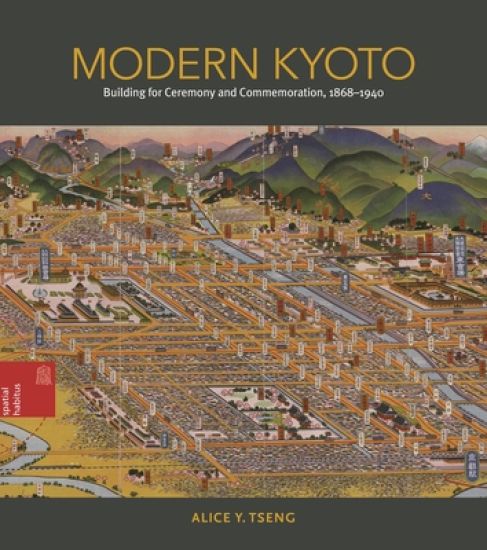
Modern Kyoto

Modern Kyoto

Alice Y. Tseng

University of Hawai'i Press
2018
sidottu
Can an imperial city survive, let alone thrive, without an emperor? Alice Y. Tseng answers this intriguing question in Modern Kyoto, a comprehensive study of the architectural and urban projects carried out in the old capital following Emperor Meiji’s move to Tokyo in 1868. Tseng contends that Kyoto—from the time of the relocation to the height of the Asia-Pacific War—remained critical to Japan’s emperor-centered national agenda as politicians, planners, historians, and architects mobilized the city’s historical connection to the imperial house to develop new public architecture, infrastructure, and urban spaces. Royal births, weddings, enthronements, and funerals throughout the period served as catalysts for fashioning a monumental modern city fit for hosting commemorative events for an eager domestic and international audience.Using a wide range of visual material (including architectural plans, postcards, commercial maps, and guidebooks), Tseng traces the development of four core areas of Kyoto: the palaces in the center, the Okazaki Park area in the east, the Kyoto Station area in the south, and the Kitayama district in the north. She offers an unprecedented framework that correlates nation building, civic boosterism, and emperor reverence to explore a diverse body of built works. Interlinking microhistories of the Imperial Garden, Heian Shrine, Lake Biwa Canal, the prefectural library, zoological and botanical gardens, main railway station, and municipal art museum, among others, her work asserts Kyoto’s vital position as a multi-faceted center of culture and patriotism in the expanding Japanese empire. Richly illustrated with many never-before-published photographs and archival sources, Modern Kyoto challenges readers to look beyond Tokyo for signposts of Japan’s urban modernity and opens up the study of modern emperors to incorporate fully built environments and spatial practices dedicated in their name.