Kirjojen hintavertailu. Mukana 12 083 983 kirjaa ja 12 kauppaa.

Kirjahaku

Etsi kirjoja tekijän nimen, kirjan nimen tai ISBN:n perusteella.

13 kirjaa tekijältä Alison Brysk

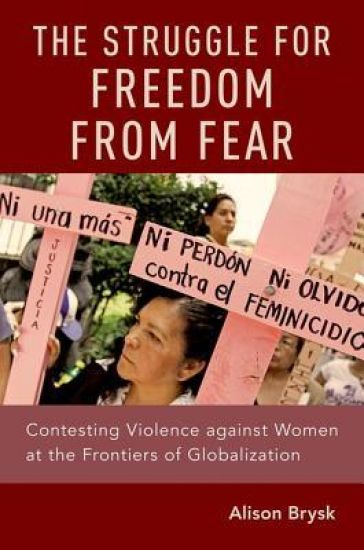
The Struggle for Freedom from Fear

The Struggle for Freedom from Fear

Alison Brysk

Oxford University Press Inc
2018
sidottu
How can we understand and contest the global wave of violence against women? In this book, Alison Brysk shows that gender violence across countries tends to change as countries develop and liberalize, but not in the ways that we might predict. She shows how liberalizing authoritarian countries and transitional democracies may experience more shifting patterns and greater levels of violence than less developed and democratic countries, due to changes and uncertainties in economic and political structures. Accordingly, Brysk analyzes the experience of semi-liberal, developing countries at the frontiers of globalization--Brazil, India, South Africa, Mexico, the Philippines, and Turkey--to map out patterns of gender violence and what can be done to change those patterns. As the book shows, gender violence is not static, nor can it be attributed to culture or individual pathology--rather it varies across a continuum that tracks economic, political, and social change. While a combination of international action, law, public policy, civil society mobilization, and changes in social values work to decrease gender violence, Brysk assesses the potential, limits, and balance of these measures. Brysk shows that a human rights approach is necessary but not sufficient to address gender violence, and that insights from feminist and development approaches are essential.
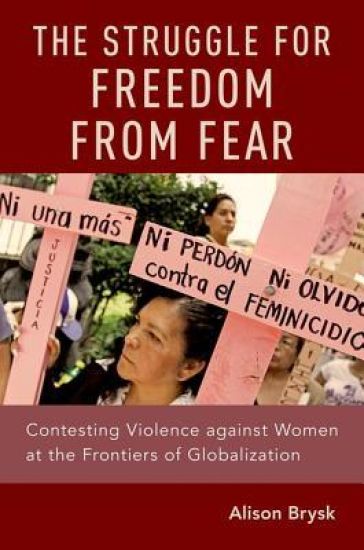
The Struggle for Freedom from Fear

The Struggle for Freedom from Fear

Alison Brysk

Oxford University Press Inc
2018
nidottu
How can we understand and contest the global wave of violence against women? In this book, Alison Brysk shows that gender violence across countries tends to change as countries develop and liberalize, but not in the ways that we might predict. She shows how liberalizing authoritarian countries and transitional democracies may experience more shifting patterns and greater levels of violence than less developed and democratic countries, due to changes and uncertainties in economic and political structures. Accordingly, Brysk analyzes the experience of semi-liberal, developing countries at the frontiers of globalization--Brazil, India, South Africa, Mexico, the Philippines, and Turkey--to map out patterns of gender violence and what can be done to change those patterns. As the book shows, gender violence is not static, nor can it be attributed to culture or individual pathology--rather it varies across a continuum that tracks economic, political, and social change. While a combination of international action, law, public policy, civil society mobilization, and changes in social values work to decrease gender violence, Brysk assesses the potential, limits, and balance of these measures. Brysk shows that a human rights approach is necessary but not sufficient to address gender violence, and that insights from feminist and development approaches are essential.
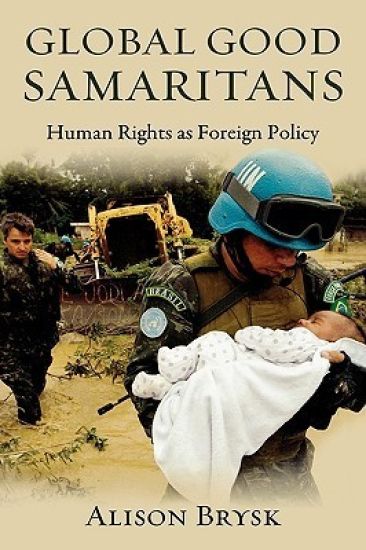
Global Good Samaritans

Global Good Samaritans

Alison Brysk

Oxford University Press Inc
2009
sidottu
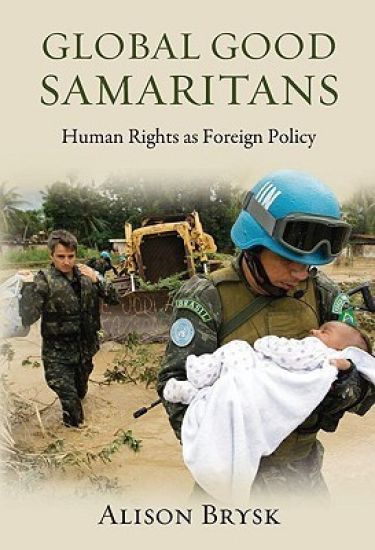
In a troubled world where millions die at the hands of their own governments and societies, some states risk their citizens' lives, considerable portions of their national budgets, and repercussions from opposing states to protect helpless foreigners. Dozens of Canadian peacekeepers have died in Afghanistan defending humanitarian reconstruction in a shattered faraway land with no ties to their own. Each year, Sweden contributes over $3 billion to aid the world's poorest citizens and struggling democracies, asking nothing in return. And, a generation ago, Costa Rica defied U.S. power to broker a peace accord that ended civil wars in three neighboring countries--and has now joined with principled peers like South Africa to support the United Nations' International Criminal Court, despite U.S. pressure and aid cuts. Hundreds of thousands of refugees are alive today because they have been sheltered by one of these nations. Global Good Samaritans looks at the reasons why and how some states promote human rights internationally, arguing that humanitarian internationalism is more than episodic altruism--it is a pattern of persistent principled politics. Human rights as a principled foreign policy defies the realist prediction of untrammeled pursuit of national interest, and suggests the utility of constructivist approaches that investigate the role of ideas, identities, and influences on state action. Brysk shows how a diverse set of democratic middle powers, inspired by visionary leaders and strong civil societies, came to see the linkage between their long-term interest and the common good. She concludes that state promotion of global human rights may be an option for many more members of the international community and that the international human rights regime can be strengthened at the interstate level, alongside social movement campaigns and the struggle for the democratization of global governance.
Global Good Samaritans

Global Good Samaritans

Alison Brysk

Oxford University Press Inc
2009
nidottu
In a troubled world where millions die at the hands of their own governments and societies, some states risk their citizens' lives, considerable portions of their national budgets, and repercussions from opposing states to protect helpless foreigners. Dozens of Canadian peacekeepers have died in Afghanistan defending humanitarian reconstruction in a shattered faraway land with no ties to their own. Each year, Sweden contributes over $3 billion to aid the world's poorest citizens and struggling democracies, asking nothing in return. And, a generation ago, Costa Rica defied U.S. power to broker a peace accord that ended civil wars in three neighboring countries--and has now joined with principled peers like South Africa to support the United Nations' International Criminal Court, despite U.S. pressure and aid cuts. Hundreds of thousands of refugees are alive today because they have been sheltered by one of these nations. Global Good Samaritans looks at the reasons why and how some states promote human rights internationally, arguing that humanitarian internationalism is more than episodic altruism--it is a pattern of persistent principled politics. Human rights as a principled foreign policy defies the realist prediction of untrammeled pursuit of national interest, and suggests the utility of constructivist approaches that investigate the role of ideas, identities, and influences on state action. Brysk shows how a diverse set of democratic middle powers, inspired by visionary leaders and strong civil societies, came to see the linkage between their long-term interest and the common good. She concludes that state promotion of global human rights may be an option for many more members of the international community and that the international human rights regime can be strengthened at the interstate level, alongside social movement campaigns and the struggle for the democratization of global governance.
Abortion Rights Backlash

Abortion Rights Backlash

Alison Brysk

OXFORD UNIVERSITY PRESS INC
2025
sidottu
Reproductive rights are fundamental for the life, freedom, health, and safety of over half the world's population. Yet reproductive freedoms are under attack worldwide, even where women have achieved political rights and workplace participation. According to the World Health Organization, about a third of pregnancies end in abortion--but about half of abortions are unsafe, resulting in tens of thousands of deaths each year. Why are abortion rights backsliding, even in developed democracies? Why do some modern societies progress toward reproductive freedoms, while others regress or stagnate? And what can the struggle for reproductive rights teach us about broader movements for human rights and gender justice? In Abortion Rights Backlash, Alison Brysk shows how threats to reproductive rights stem from a gendered political struggle over declining democracy, national identity, and widening inequality due to globalization. Formerly dominant groups facing social and economic crisis promote reactionary nationalist ideologies built around patriarchy, race, and religion as they seek to control population politics. Brysk demonstrates that this is a global phenomenon, comparing the diverging experiences of the politics of abortion in Ireland, Poland, Argentina, Brazil, and the United States (California vs. Texas). Timely and pathbreaking in its global perspective and feminist analysis, Abortion Rights Backlash transforms our understanding of human rights, the future of democracy, and the struggle for gender justice worldwide.
Abortion Rights Backlash

Abortion Rights Backlash

Alison Brysk

OXFORD UNIVERSITY PRESS INC
2025
nidottu
Reproductive rights are fundamental for the life, freedom, health, and safety of over half the world's population. Yet reproductive freedoms are under attack worldwide, even where women have achieved political rights and workplace participation. According to the World Health Organization, about a third of pregnancies end in abortion--but about half of abortions are unsafe, resulting in tens of thousands of deaths each year. Why are abortion rights backsliding, even in developed democracies? Why do some modern societies progress toward reproductive freedoms, while others regress or stagnate? And what can the struggle for reproductive rights teach us about broader movements for human rights and gender justice? In Abortion Rights Backlash, Alison Brysk shows how threats to reproductive rights stem from a gendered political struggle over declining democracy, national identity, and widening inequality due to globalization. Formerly dominant groups facing social and economic crisis promote reactionary nationalist ideologies built around patriarchy, race, and religion as they seek to control population politics. Brysk demonstrates that this is a global phenomenon, comparing the diverging experiences of the politics of abortion in Ireland, Poland, Argentina, Brazil, and the United States (California vs. Texas). Timely and pathbreaking in its global perspective and feminist analysis, Abortion Rights Backlash transforms our understanding of human rights, the future of democracy, and the struggle for gender justice worldwide.
Speaking Rights to Power

Speaking Rights to Power

Alison Brysk

Oxford University Press Inc
2013
sidottu
How can "Speaking Rights to Power" construct political will to respond to human rights abuse worldwide? Examining dozens of cases of human rights campaigns, this book shows how carefully crafted communications build recognition, solidarity, and social change. Alison Brysk presents an innovative analysis of the politics of persuasion, based in the strategic use of voice, framing, media, protest performance, and audience bridging. Building on twenty years of research on five continents, this comprehensive study ranges from Aung San Suu Kyi to Anna Hazare, from Congo to Colombia, and from the Arab Spring to Pussy Riot. It includes both well-chronicled campaigns, such as the struggle to end violence against women, as well as lesser-known efforts, including inter-ethnic human rights alliances in the U.S. Brysk compares relatively successful human rights campaigns with unavailing struggles. Grounding her analysis in the concrete practice of human rights campaigns, she lays out testable strategic guidance for human rights advocates. Speaking Rights to Power addresses cutting edge debates on human rights and the ethic of care, cosmopolitanism, charismatic leadership, communicative action and political theater, and the role of social media. It draws on constructivist literature from social movement and international relations theory, and it analyzes human rights as a form of global social imagination. Combining a normative contribution with judicious critique, this book shows not only that human rights rhetoric matters-but how to make it matter more.
Speaking Rights to Power

Speaking Rights to Power

Alison Brysk

Oxford University Press Inc
2013
nidottu
How can "Speaking Rights to Power" construct political will to respond to human rights abuse worldwide? Examining dozens of cases of human rights campaigns, this book shows how carefully crafted communications build recognition, solidarity, and social change. Alison Brysk presents an innovative analysis of the politics of persuasion, based in the strategic use of voice, framing, media, protest performance, and audience bridging. Building on twenty years of research on five continents, this comprehensive study ranges from Aung San Suu Kyi to Anna Hazare, from Congo to Colombia, and from the Arab Spring to Pussy Riot. It includes both well-chronicled campaigns, such as the struggle to end violence against women, as well as lesser-known efforts, including inter-ethnic human rights alliances in the U.S. Brysk compares relatively successful human rights campaigns with unavailing struggles. Grounding her analysis in the concrete practice of human rights campaigns, she lays out testable strategic guidance for human rights advocates. Speaking Rights to Power addresses cutting edge debates on human rights and the ethic of care, cosmopolitanism, charismatic leadership, communicative action and political theater, and the role of social media. It draws on constructivist literature from social movement and international relations theory, and it analyzes human rights as a form of global social imagination. Combining a normative contribution with judicious critique, this book shows not only that human rights rhetoric matters-but how to make it matter more.
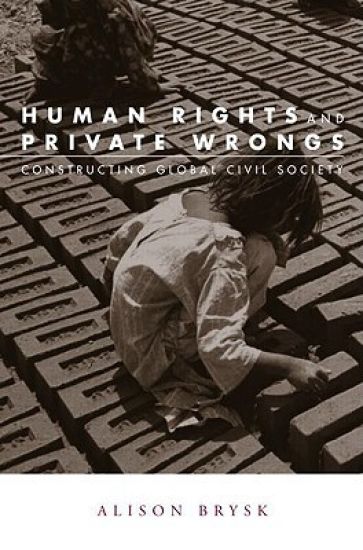
Human Rights and Private Wrongs

Human Rights and Private Wrongs

Alison Brysk

Routledge
2004
sidottu
Human Rights and Private Wrongs breaks new ground by considering a series of fascinating issues that are normally ignored by human rights specialists because they are too "private" to consider as policy issues: children's labor migration; refugee policy towards unaccompanied minors; financial matters of investor and business responsibility; and complex questions involving access to the benefits of pharmaceutical research, transnational organ trafficking, and the control over genetic research.
Human Rights and Private Wrongs

Human Rights and Private Wrongs

Alison Brysk

Routledge
2004
nidottu
Human Rights and Private Wrongs breaks new ground by considering a series of fascinating issues that are normally ignored by human rights specialists because they are too "private" to consider as policy issues: children's labor migration; refugee policy towards unaccompanied minors; financial matters of investor and business responsibility; and complex questions involving access to the benefits of pharmaceutical research, transnational organ trafficking, and the control over genetic research.
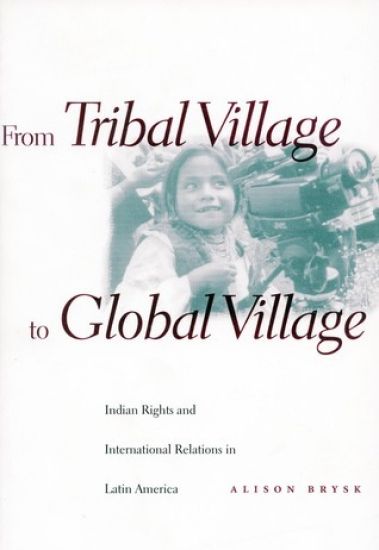
From Tribal Village to Global Village

From Tribal Village to Global Village

Alison Brysk

Stanford University Press
2000
sidottu
In Ecuador, every year since 1990 Indian protestors have brought the country to a standstill; in Mexico, Zapatista indigenous guerillas rose up in arms to protest North American free trade. In Brazil, shamans faced down bulldozers to block World Bank dams, while in Bolivia, peasants attacked U.S. troops for the right to grow coca. These are a few examples of the rise of a transnational human rights movement among the hemisphere's most isolated and powerless people, Latin American Indians. This book tells the story of the unexpected impact of the Indian rights movement on world politics, from reforming the United Nations to evicting oil companies. Using a constructivist theoretical approach that synthesizes international relations, social movement theory, ethnic politics, and work on democratic transitions, the author argues that marginalized people have responded to globalization with new, internationalized forms of identity politics that reconstruct power relations. Based on case studies from Ecuador, Mexico, Brazil, Nicaragua, and Bolivia, this book analyzes the implications of these human rights experiences for all of Latin America's 40 million indigenous citizens, and the 300 million native people throughout the world. The thematic organization of the book allows the author to trace distinctive dynamics of interstate relations, global markets, and transnational civil society. The book concludes with an analysis of the movement's impact and policy recommendations.
The Future of Human Rights

The Future of Human Rights

Alison Brysk

Polity Press
2018
sidottu
Human rights have fallen on hard times, yet they are more necessary than ever. People all over the world – from Amazonian villages to Iranian prisons – need human rights to gain recognition, campaign for justice, and save lives. But how can we secure a brighter future for human rights? What changes are required to confront the regime’s weaknesses and emerging global challenges? In this cutting-edge analysis, Alison Brysk sets out a pragmatic reformist agenda for human rights in the twenty-first century. Tracing problems and solutions through contemporary case studies – the plight of refugees, declining democracies such as Mexico and Turkey, the expansion of women’s rights, new norms for indigenous peoples, and rights regression in the USA – she shows that the dynamic strength of human rights lies in their evolving political practice. This distinctive vision demands that we build upon the gains of the human rights regime to construct new pathways which address historic rights gaps, from citizenship to security, from environmental protection to resurgent nationalism, and to globalization itself. Drawing on the author’s extensive experience as a leading human rights scholar and activist, The Future of Human Rights offers a broad and authoritative guide to the big questions in global human rights governance today.
The Future of Human Rights

The Future of Human Rights

Alison Brysk

Polity Press
2018
nidottu
Human rights have fallen on hard times, yet they are more necessary than ever. People all over the world – from Amazonian villages to Iranian prisons – need human rights to gain recognition, campaign for justice, and save lives. But how can we secure a brighter future for human rights? What changes are required to confront the regime’s weaknesses and emerging global challenges? In this cutting-edge analysis, Alison Brysk sets out a pragmatic reformist agenda for human rights in the twenty-first century. Tracing problems and solutions through contemporary case studies – the plight of refugees, declining democracies such as Mexico and Turkey, the expansion of women’s rights, new norms for indigenous peoples, and rights regression in the USA – she shows that the dynamic strength of human rights lies in their evolving political practice. This distinctive vision demands that we build upon the gains of the human rights regime to construct new pathways which address historic rights gaps, from citizenship to security, from environmental protection to resurgent nationalism, and to globalization itself. Drawing on the author’s extensive experience as a leading human rights scholar and activist, The Future of Human Rights offers a broad and authoritative guide to the big questions in global human rights governance today.