Kirjojen hintavertailu. Mukana 12 083 983 kirjaa ja 12 kauppaa.

Kirjahaku

Etsi kirjoja tekijän nimen, kirjan nimen tai ISBN:n perusteella.

6 kirjaa tekijältä Alison Clark

Slow Knowledge and the Unhurried Child

Slow Knowledge and the Unhurried Child

Alison Clark

TAYLOR FRANCIS LTD
2022
sidottu
This book explores the relationship with time in early childhood by arguing for the valuing of slow pedagogies and slow knowledge. Alison Clark points to alternative practices in Early Childhood Education and Care that enable a different pace and rhythm, against the backdrop of the acceleration in early childhood and the proliferation of testing and measurement. Diverse approaches are explored to enable an ‘unhurried child’ and less hurried adults. Slow Knowledge and the Unhurried Child is divided in three parts. Part 1, Reasons to be slow, looks at the pressures in Early Childhood Education and Care to speed up and for children to be ‘readied’ for the next stage. The book then explores different relationships with time for young children and educators. Part 2, Slow pedagogies and practices, explore some of the forms slow practices can take including outdoors, in the studio, in everyday routines, through stories, in pedagogical documentation and in ‘slow’ research. Part 3, Moving forward, shows what a ‘timefull’ approach to ECEC can look like, whilst debating the challenges and possibilities that exist. The book serves as a catalyst for urgent discussion about the need to slow down in early childhood education and teacher education and explores case studies of where slow early childhood education are already happening. It will be a key reading for researchers, practitioners and policy-makers about the relationship with time in early childhood and the importance of taking a longer view.
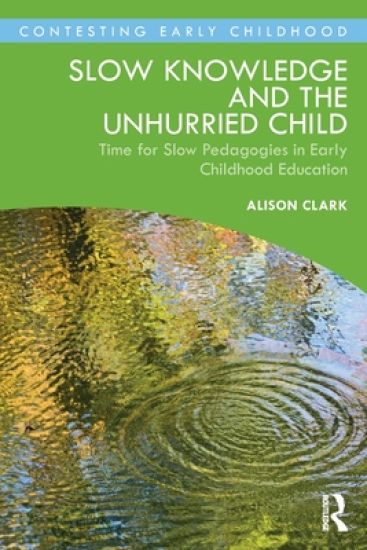
Slow Knowledge and the Unhurried Child

Slow Knowledge and the Unhurried Child

Alison Clark

TAYLOR FRANCIS LTD
2022
nidottu
This book explores the relationship with time in early childhood by arguing for the valuing of slow pedagogies and slow knowledge. Alison Clark points to alternative practices in Early Childhood Education and Care that enable a different pace and rhythm, against the backdrop of the acceleration in early childhood and the proliferation of testing and measurement. Diverse approaches are explored to enable an ‘unhurried child’ and less hurried adults. Slow Knowledge and the Unhurried Child is divided in three parts. Part 1, Reasons to be slow, looks at the pressures in Early Childhood Education and Care to speed up and for children to be ‘readied’ for the next stage. The book then explores different relationships with time for young children and educators. Part 2, Slow pedagogies and practices, explore some of the forms slow practices can take including outdoors, in the studio, in everyday routines, through stories, in pedagogical documentation and in ‘slow’ research. Part 3, Moving forward, shows what a ‘timefull’ approach to ECEC can look like, whilst debating the challenges and possibilities that exist. The book serves as a catalyst for urgent discussion about the need to slow down in early childhood education and teacher education and explores case studies of where slow early childhood education are already happening. It will be a key reading for researchers, practitioners and policy-makers about the relationship with time in early childhood and the importance of taking a longer view.
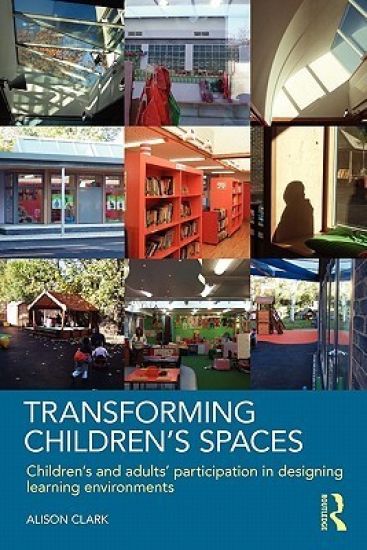
Transforming Children's Spaces

Transforming Children's Spaces

Alison Clark

Routledge
2010
sidottu
How can young children play an active role in developing the design of learning environments? What methods can be used to bring together children’s and practitioners’ views about their environment? What insights can young children offer into good designs for these children’s spaces?With the expansion of early childhood education and the move to 'extended schools', more young children will spend more time than ever before in institutions. Based on two actual building projects, this book is the first of its kind to demonstrate the possibilities of including young children’s perspectives in the design and review of children’s spaces. Situated at the heart of the debate about the relationship between the built environment and its impact on children’s learning and wellbeing, Transforming Children’s Spaces provides insights into how young children see their environment discusses children’s aspirations for future spaces develops the 'Mosaic approach' , pioneered by the author, as a method for listening to young children and adultsEmphasising the importance of visual and verbal methods of communication, this fascinating book demonstrates how practitioners and young children can articulate their perspectives, and shows how participatory methods can support new relationships between children, practitioners and architects. This book is essential reading for those who work in children's spaces and for those who design them as well as being of general interest to those studying education and childhood studies.
Transforming Children's Spaces

Transforming Children's Spaces

Alison Clark

Routledge
2010
nidottu
How can young children play an active role in developing the design of learning environments? What methods can be used to bring together children’s and practitioners’ views about their environment? What insights can young children offer into good designs for these children’s spaces?With the expansion of early childhood education and the move to 'extended schools', more young children will spend more time than ever before in institutions. Based on two actual building projects, this book is the first of its kind to demonstrate the possibilities of including young children’s perspectives in the design and review of children’s spaces. Situated at the heart of the debate about the relationship between the built environment and its impact on children’s learning and wellbeing, Transforming Children’s Spaces provides insights into how young children see their environment discusses children’s aspirations for future spaces develops the 'Mosaic approach' , pioneered by the author, as a method for listening to young children and adultsEmphasising the importance of visual and verbal methods of communication, this fascinating book demonstrates how practitioners and young children can articulate their perspectives, and shows how participatory methods can support new relationships between children, practitioners and architects. This book is essential reading for those who work in children's spaces and for those who design them as well as being of general interest to those studying education and childhood studies.
Listening to Young Children, Fourth Edition

Listening to Young Children, Fourth Edition

Alison Clark

JESSICA KINGSLEY PUBLISHERS
2027
pokkari
This updated and expanded book explains how to use the Mosaic approach, a practice that instils the importance of listening to children's life experiences. Supported by case studies, it shows how to use it in a variety of settings, outlines new applications of the approach in a post-Covid environment and covers working with vulnerable children.