Kirjojen hintavertailu. Mukana 11 365 727 kirjaa ja 12 kauppaa.

Kirjahaku

Etsi kirjoja tekijän nimen, kirjan nimen tai ISBN:n perusteella.

4 kirjaa tekijältä Alison Holland

Breaking the Silence

Breaking the Silence

Alison Holland

Melbourne University Press
2019
sidottu
Breaking the Silence recovers the conflicted politics around Aboriginal affairs in the first decades of the twentieth century. From 1905, when the report of the controversial Roth Royal Commission in Western Australia was made known to the public, to the eve of World War II, the condition and treatment of Aboriginal Australians, as well as their pasts and futures, were leading social questions which generated much discontent and discourse, and underscored the awakening of a national conscience. Yet this consternation was totally disproportionate to political will which contained it and consigned Aborigines on the eve of the second world war. In canvassing aspects of this politics — Aboriginal defenders and their claims and the responses of governments to them — Alison Holland's research qualifies the mantra of a 'great Australian silence'. She asks why there was such investment in Aboriginal affairs in the first half of the twentieth century, what form it took, what was at stake and what the outcomes were. In answering these questions, the book provides important historical context for the consternation and debates still being had in the Australian polity over Aboriginal affairs and raises some important connections between the beginning of the twentieth and twenty-first centuries.
Breaking the Silence

Breaking the Silence

Alison Holland

Melbourne University Press
2019
nidottu
Breaking the Silence recovers the conflicted politics around Aboriginal affairs in the first decades of the twentieth century. From 1905, when the report of the controversial Roth Royal Commission in Western Australia was made known to the public, to the eve of World War II, the condition and treatment of Aboriginal Australians, as well as their pasts and futures, were leading social questions which generated much discontent and discourse, and underscored the awakening of a national conscience. Yet this consternation was totally disproportionate to political will which contained it and consigned Aborigines on the eve of the second world war. In canvassing aspects of this politics — Aboriginal defenders and their claims and the responses of governments to them — Alison Holland's research qualifies the mantra of a 'great Australian silence'. She asks why there was such investment in Aboriginal affairs in the first half of the twentieth century, what form it took, what was at stake and what the outcomes were. In answering these questions, the book provides important historical context for the consternation and debates still being had in the Australian polity over Aboriginal affairs and raises some important connections between the beginning of the twentieth and twenty-first centuries.
Excess and Transgression in Simone de Beauvoir's Fiction

Excess and Transgression in Simone de Beauvoir's Fiction

Alison Holland

Ashgate Publishing Limited
2009
sidottu
Alison Holland’s innovative book fills a gap in Beauvoir studies by focusing on the writer’s frequently neglected novels and short stories, L’Invitée, Les Mandarins, Les Belles Images, and La Femme rompue. In illuminating the density and rich complexity of Beauvoir’s style, Holland challenges the often accepted view that Beauvoir’s writing is flat, detached, and controlled, revealing, rather, that her prose is frequently disrupted and inflected by forceful emotion. Holland shows that excess and transgression are intrinsic qualities of the texts, and argues that Beauvoir’s textual strategies duplicate madness in her fiction. Holland’s reading of Beauvoir’s fiction demonstrates the extent to which Beauvoir’s fiction undermines an ideologically patriarchal position on language. Her study is important not only for its re-evaluation of Beauvoir as a fiction writer but for its contribution to the wider debate on madness and literature.
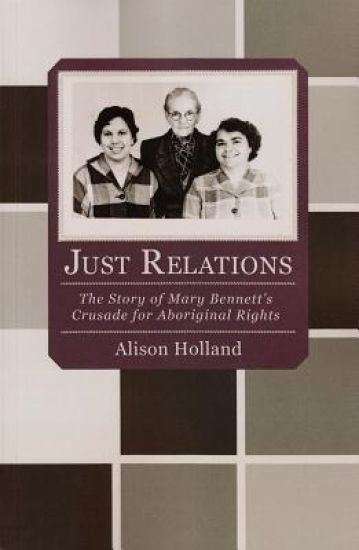
Just Relations

Just Relations

Alison Holland

UWAP
2015
nidottu
When Mary Bennett died in 1961, Australia lost one of its leading Aboriginal rights activists. Mary's crusade is still, sadly, a current one, and this book serves to historicise the ongoing struggle for Aboriginal rights through the lens of Mary's campaign. By tracing Mary's advocacy from the 1920s, when the possibility of Aboriginal human rights was first mooted, to the 1960s, when an attempt was made to have the Aboriginal question raised before the United Nations, Just Relations charts a large portion of human rights history. However, the book also tracks a discourse of needs, moral codes and sentiments and the urgent goal of keeping people alive. In this sense, then, Bennett's story demonstrates the close connection between the rise of humanitarianism as a political project and the rise of human rights.