
Kirjojen hintavertailu. Mukana 11 772 482 kirjaa ja 12 kauppaa.

Kirjahaku

Etsi kirjoja tekijän nimen, kirjan nimen tai ISBN:n perusteella.

2 kirjaa tekijältä Alison Howell

Madness in International Relations

Madness in International Relations

Alison Howell

Routledge
2011
sidottu
Madness in International Relations provides an important and innovative account of the role of psychology and psychiatry in global politics, showing how mental health governance has become a means of securing various populations, often with questionable effects.Through the analysis of three key case studies Howell illustrates how such therapeutic interventions can at times be coercive and sovereign, at other times disciplinary, and at still other times benevolent, though not benign. In each case a ‘diagnostic competition’ is traced, that is, a contestation over how best to diagnose and treat the population in question. The book examines the populations of Guantánamo Bay, post-conflict societies and western militaries, identifying how these diagnostic competitions ultimately rest on shared assumptions about the value of psychology and psychiatry in managing global security, about the value of achieving security through mental health governance, and ultimately about the medicalization of security.This work will be of great interest to all scholars of International relations, critical theory and security studies.
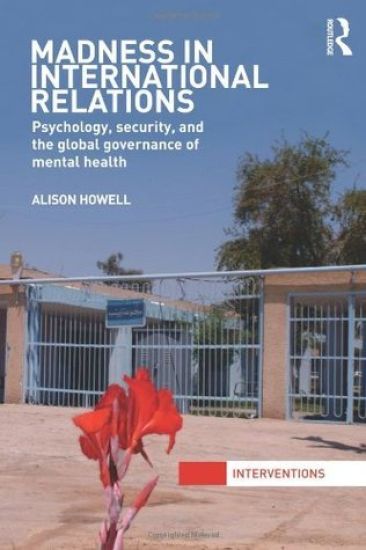
Madness in International Relations

Madness in International Relations

Alison Howell

Routledge
2013
nidottu
Madness in International Relations provides an important and innovative account of the role of psychology and psychiatry in global politics, showing how mental health governance has become a means of securing various populations, often with questionable effects.Through the analysis of three key case studies Howell illustrates how such therapeutic interventions can at times be coercive and sovereign, at other times disciplinary, and at still other times benevolent, though not benign. In each case a ‘diagnostic competition’ is traced, that is, a contestation over how best to diagnose and treat the population in question. The book examines the populations of Guantánamo Bay, post-conflict societies and western militaries, identifying how these diagnostic competitions ultimately rest on shared assumptions about the value of psychology and psychiatry in managing global security, about the value of achieving security through mental health governance, and ultimately about the medicalization of security.This work will be of great interest to all scholars of International relations, critical theory and security studies.