Kirjojen hintavertailu. Mukana 11 244 527 kirjaa ja 12 kauppaa.

Kirjahaku

Etsi kirjoja tekijän nimen, kirjan nimen tai ISBN:n perusteella.

29 kirjaa tekijältä Alison Stone

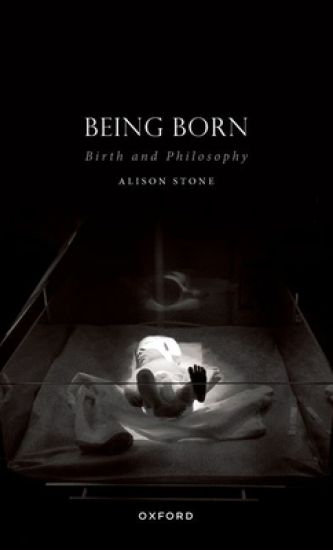
Being Born

Being Born

Alison Stone

Oxford University Press
2022
nidottu
All human beings are born and all human beings die. In these two ways we are finite: our lives begin and our lives come to an end. Historically philosophers have concentrated attention on our mortality—and comparatively little has been said about being born and how it shapes our existence. Alison Stone sets out to overcome this oversight by providing a systematic philosophical account of how being born shapes our condition as human beings. Drawing on both feminist philosophy and existentialist concerns about the structure of meaningful human existence, Stone offers an original perspective on human existence. She explores how human existence is shaped by the way that we are born. Taking natality into account transforms our view of human existence and illuminates how many of its aspects are connected with our birth. These aspects include dependency, the relationality of the self, vulnerability, reception and inheritance of culture and history, embeddedness in social power, situatedness, and radical contingency. Considering natality also sheds new light on anxiety, mortality, and the temporality of human life. This book therefore bears on death and the meaning of life, as well as many debates in feminist and continental philosophy.
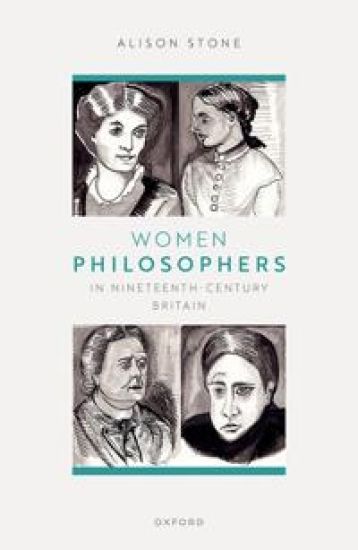
Women Philosophers in Nineteenth-Century Britain

Women Philosophers in Nineteenth-Century Britain

Alison Stone

Oxford University Press
2023
sidottu
Many women wrote philosophy in nineteenth-century Britain, and they wrote across the full range of philosophical topics. Yet these important women thinkers have been left out of the philosophical canon and many of them are barely known today. The aim of this book is to put them back on the map. It introduces twelve women philosophers - Mary Shepherd, Harriet Martineau, Ada Lovelace, George Eliot, Frances Power Cobbe, Helena Blavatsky, Julia Wedgwood, Victoria Welby, Arabella Buckley, Annie Besant, Vernon Lee, and Constance Naden. Alison Stone looks at their views on naturalism, philosophy of mind, evolution, morality and religion, and progress in history. She shows how these women interacted and developed their philosophical views in conversation with one another, not only with their male contemporaries. The rich print and periodical culture of the period enabled these women to publish philosophy in forms accessible to a general readership, despite the restrictions women faced, such as having limited or no access to university education. Stone explains how these women became excluded from the history of philosophy because there was a cultural shift at the end of the nineteenth century towards specialised forms of philosophical writing, which depended on academic credentials that were still largely unavailable to women.
Frances Power Cobbe

Frances Power Cobbe

Alison Stone

OXFORD UNIVERSITY PRESS INC
2022
sidottu
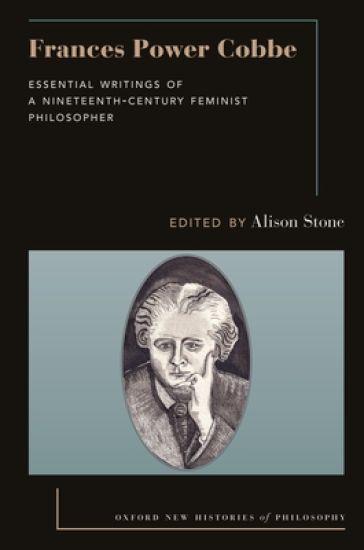
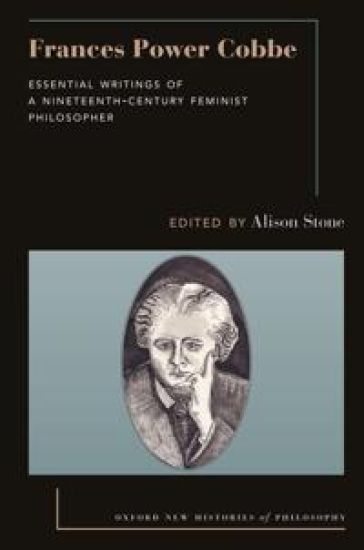
This volume brings together essential writings by the unjustly neglected nineteenth-century philosopher Frances Power Cobbe (1822-1904). A prominent ethicist, feminist, champion of animal welfare, and critic of Darwinism and atheism, Cobbe was well known and highly regarded in the Victorian era. This collection of her work introduces contemporary readers to Cobbe and shows how her thought developed over time, beginning in 1855 with her Essay on Intuitive Morals, in which she set out her duty-based moral theory, arguing that morality and religion are indissolubly connected. This work provided the framework within which she addressed many theoretical and practical issues in her prolific publishing career. In the 1860s and early 1870s, she gave an account of human duties to animals; articulated a duty-based form of feminism; defended a unique type of dualism in the philosophy of mind; and argued against evolutionary ethics. Cobbe put her philosophical views into practice, campaigning for women's rights and for first the regulation and later the abolition of vivisection. In turn her political experiences led her to revise her ethical theory. From the 1870s onwards she increasingly emphasized the moral role of the emotions, especially sympathy, and she theorized a gradual historical progression in sympathy. Moving into the 1880s, Cobbe combatted secularism, agnosticism, and atheism, arguing that religion is necessary not only for morality but also for meaningful life and culture. Shedding light on Cobbe's philosophical perspective and its applications, this volume demonstrates the range, systematicity and philosophical character of her work and makes her core ethical theory and its central applications and developments available for teaching and scholarship.
Frances Power Cobbe

Frances Power Cobbe

Alison Stone

OXFORD UNIVERSITY PRESS INC
2022
nidottu
This volume brings together essential writings by the unjustly neglected nineteenth-century philosopher Frances Power Cobbe (1822-1904). A prominent ethicist, feminist, champion of animal welfare, and critic of Darwinism and atheism, Cobbe was well known and highly regarded in the Victorian era. This collection of her work introduces contemporary readers to Cobbe and shows how her thought developed over time, beginning in 1855 with her Essay on Intuitive Morals, in which she set out her duty-based moral theory, arguing that morality and religion are indissolubly connected. This work provided the framework within which she addressed many theoretical and practical issues in her prolific publishing career. In the 1860s and early 1870s, she gave an account of human duties to animals; articulated a duty-based form of feminism; defended a unique type of dualism in the philosophy of mind; and argued against evolutionary ethics. Cobbe put her philosophical views into practice, campaigning for women's rights and for first the regulation and later the abolition of vivisection. In turn her political experiences led her to revise her ethical theory. From the 1870s onwards she increasingly emphasized the moral role of the emotions, especially sympathy, and she theorized a gradual historical progression in sympathy. Moving into the 1880s, Cobbe combatted secularism, agnosticism, and atheism, arguing that religion is necessary not only for morality but also for meaningful life and culture. Shedding light on Cobbe's philosophical perspective and its applications, this volume demonstrates the range, systematicity and philosophical character of her work and makes her core ethical theory and its central applications and developments available for teaching and scholarship.
Being Born

Being Born

Alison Stone

Oxford University Press
2019
sidottu
All human beings are born and all human beings die. In these two ways we are finite: our lives begin and our lives come to an end. Historically philosophers have concentrated attention on our mortality--and comparatively little has been said about being born and how it shapes our existence. Alison Stone sets out to overcome this oversight by providing a systematic philosophical account of how being born shapes our condition as human beings. Drawing on both feminist philosophy and existentialist concerns about the structure of meaningful human existence, Stone offers an original perspective on human existence. She explores how human existence is shaped by the way that we are born. Taking natality into account transforms our view of human existence and illuminates how many of its aspects are connected with our birth. These aspects include dependency, the relationality of the self, vulnerability, reception and inheritance of culture and history, embeddedness in social power, situatedness, and radical contingency. Considering natality also sheds new light on anxiety, mortality, and the temporality of human life. This book therefore bears on death and the meaning of life, as well as many debates in feminist and continental philosophy.
Women on Philosophy of Art

Women on Philosophy of Art

Alison Stone

Oxford University Press
2024
sidottu
Women on Philosophy of Art is the first study of women's philosophies of art in long nineteenth-century Britain. It looks at seven women spanning the time from the Enlightenment to the beginning of modernism. They are Anna Barbauld, Joanna Baillie, Harriet Martineau, Anna Jameson, Frances Power Cobbe, Emilia Dilke, and Vernon Lee. The central issue that concerned them was how art related to morality and religion. Baillie and Martineau treated art as an agency of moral instruction, whereas Dilke and Lee argued that art must be made for beauty's sake. Barbauld, Jameson, and Cobbe thought that beauty and religion were linked, while other women believed that art and religion must be decoupled. Other topics explored are gender and genius, tragedy, literary realism, why we enjoy the sufferings of fictional characters, the hierarchy of the art-forms, whether art can transcend its historical circumstances, and critical issues around the artistic canon. Examining the print culture that made these women's interventions possible, this book shows that these women were doing a particular kind of philosophy of art, which was interdisciplinary and closely tied to artistic criticism and practice. The book traces how these seven women influenced one another, as well as engaging with their male contemporaries. But unlike their male interlocutors, these women have been unjustly left out of narratives about the history of aesthetics. By including these women, we can enrich and broaden our understanding of the history of philosophy of art.
Feminism, Psychoanalysis, and Maternal Subjectivity
In this book, Alison Stone develops a feminist approach to maternal subjectivity. Stone argues that in the West the self has often been understood in opposition to the maternal body, so that one must separate oneself from the mother and maternal care-givers on whom one depended in childhood to become a self or, in modernity, an autonomous subject. These assumptions make it difficult to be a mother and a subject, an autonomous creator of meaning. Insofar as mothers nonetheless strive to regain their subjectivity when their motherhood seems to have compromised it, theirs cannot be the usual kind of subjectivity premised on separation from the maternal body. Mothers are subjects of a new kind, who generate meanings and acquire agency from their position of re-immersion in the realm of maternal body relations, of bodily intimacy and dependency. Thus Stone interprets maternal subjectivity as a specific form of subjectivity that is continuous with the maternal body. Stone analyzes this form of subjectivity in terms of how the mother typically reproduces with her child her history of bodily relations with her own mother, leading to a distinctive maternal and cyclical form of lived time.
Luce Irigaray and the Philosophy of Sexual Difference

Luce Irigaray and the Philosophy of Sexual Difference

Alison Stone

Cambridge University Press
2009
pokkari
Alison Stone offers a feminist defence of the idea that sexual difference is natural, providing a novel interpretation of the later philosophy of Luce Irigaray. She defends Irigaray's unique form of essentialism and her rethinking of the relationship between nature and culture, showing how Irigaray's ideas can be reconciled with Judith Butler's performative conception of gender, through rethinking sexual difference in relation to German Romantic philosophies of nature. This is a sustained attempt to connect feminist conceptions of embodiment to German idealist and Romantic accounts of nature. Not merely an interpretation of Irigaray, this book also presents an original feminist perspective on nature and the body. It will encourage debate on the relations between sexual difference, essentialism, and embodiment.
Luce Irigaray and the Philosophy of Sexual Difference

Luce Irigaray and the Philosophy of Sexual Difference

Alison Stone

Cambridge University Press
2006
sidottu
Alison Stone offers a feminist defence of the idea that sexual difference is natural, providing a novel interpretation of the later philosophy of Luce Irigaray. She defends Irigaray's unique form of essentialism and her rethinking of the relationship between nature and culture, showing how Irigaray's ideas can be reconciled with Judith Butler's performative conception of gender, through rethinking sexual difference in relation to German Romantic philosophies of nature. This is a sustained attempt to connect feminist conceptions of embodiment to German idealist and Romantic accounts of nature. Not merely an interpretation of Irigaray, this book also presents an original feminist perspective on nature and the body. It will encourage debate on the relations between sexual difference, essentialism, and embodiment.
An Introduction to Feminist Philosophy
This is the first book to offer a systematic account of feminist philosophy as a distinctive field of philosophy. The book introduces key issues and debates in feminist philosophy including: the nature of sex, gender, and the body; the relation between gender, sexuality, and sexual difference; whether there is anything that all women have in common; and the nature of birth and its centrality to human existence. An Introduction to Feminist Philosophy shows how feminist thinking on these and related topics has developed since the 1960s. The book also explains how feminist philosophy relates to the many forms of feminist politics. The book provides clear, succinct and readable accounts of key feminist thinkers including de Beauvoir, Butler, Gilligan, Irigaray, and MacKinnon. The book also introduces other thinkers who have influenced feminist philosophy including Arendt, Foucault, Freud, and Lacan. Accessible in approach, this book is ideal for students and researchers interested in feminist philosophy, feminist theory, women's studies, and political theory. It will also appeal to the general reader.
An Introduction to Feminist Philosophy
This is the first book to offer a systematic account of feminist philosophy as a distinctive field of philosophy. The book introduces key issues and debates in feminist philosophy including: the nature of sex, gender, and the body; the relation between gender, sexuality, and sexual difference; whether there is anything that all women have in common; and the nature of birth and its centrality to human existence. An Introduction to Feminist Philosophy shows how feminist thinking on these and related topics has developed since the 1960s. The book also explains how feminist philosophy relates to the many forms of feminist politics. The book provides clear, succinct and readable accounts of key feminist thinkers including de Beauvoir, Butler, Gilligan, Irigaray, and MacKinnon. The book also introduces other thinkers who have influenced feminist philosophy including Arendt, Foucault, Freud, and Lacan. Accessible in approach, this book is ideal for students and researchers interested in feminist philosophy, feminist theory, women's studies, and political theory. It will also appeal to the general reader.
Petrified Intelligence

Petrified Intelligence

Alison Stone

State University of New York Press
2004
pokkari
A critical introduction to Hegel's metaphysics and philosophy of nature.Petrified Intelligence offers the first comprehensive treatment of Hegel's Philosophy of Nature, exploring its central place within his system, including its relation to his Logic, Philosophy of Mind, and moral and political thought. It highlights the contemporary relevance of Hegel's approach to nature, particularly with respect to environmental issues. Challenging the standard view that Hegel devalues nature relative to mind and culture, Alison Stone reveals the deep concern to re-enchant the natural world that pervades his entire philosophical project. Written in clear and nontechnical language, the book also provides a critical introduction to Hegel's metaphysics.
Frances Power Cobbe

Frances Power Cobbe

Alison Stone

Cambridge University Press
2022
pokkari
This Element introduces the philosophy of Frances Power Cobbe (1822-1904), a very well-known moral theorist, advocate of animal welfare and women's rights, and critic of Darwinism and atheism in the Victorian era. After locating Cobbe's achievements within nineteenth-century British culture, this Element examines her duty-based moral theory of the 1850s and then her 1860s accounts of duties to animals, women's rights, and the mind and unconscious thought. From the 1870s, in critical response to Darwin's evolutionary ethics, Cobbe put greater moral weight on the emotions, especially sympathy. She now criticised atheism for undermining morality, emphasised women's duties to develop virtues of character, and recommended treating animals with sympathy and compassion. The Element links Cobbe's philosophical arguments to her campaigns for women's rights and against vivisection, brings in critical responses from her contemporaries, explains how she became omitted from the history of philosophy, and shows the lasting importance of her work.
Feminism, Psychoanalysis, and Maternal Subjectivity
In this book, Alison Stone develops a feminist approach to maternal subjectivity. Stone argues that in the West the self has often been understood in opposition to the maternal body, so that one must separate oneself from the mother and maternal care-givers on whom one depended in childhood to become a self or, in modernity, an autonomous subject. These assumptions make it difficult to be a mother and a subject, an autonomous creator of meaning. Insofar as mothers nonetheless strive to regain their subjectivity when their motherhood seems to have compromised it, theirs cannot be the usual kind of subjectivity premised on separation from the maternal body. Mothers are subjects of a new kind, who generate meanings and acquire agency from their position of re-immersion in the realm of maternal body relations, of bodily intimacy and dependency. Thus Stone interprets maternal subjectivity as a specific form of subjectivity that is continuous with the maternal body. Stone analyzes this form of subjectivity in terms of how the mother typically reproduces with her child her history of bodily relations with her own mother, leading to a distinctive maternal and cyclical form of lived time.
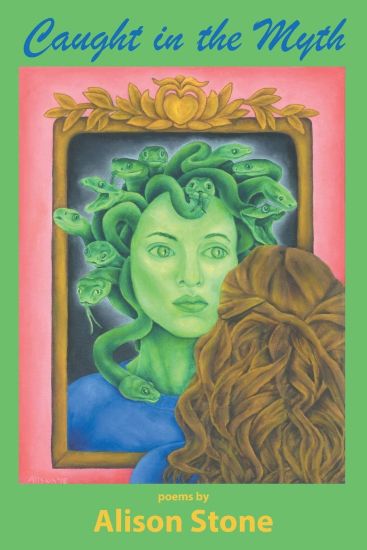
Caught in the Myth

Caught in the Myth

Alison Stone

NYQ Books
2019
pokkari
Alison Stone's sixth collection deals with the myths, both classic and contemporary, that shape our psyches and our world. From Caligula and Medusa to Gabby Douglas and Ivanka Trump, these speakers illuminate the timeless struggles for power and love that play a central role in literature and art. Stone's speakers tell their stories in poems that both transcend culture and time and illuminate this particular historical moment.
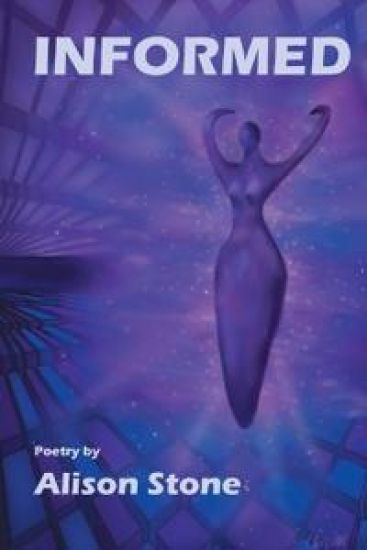
Informed

Informed

Alison Stone

New York Quarterly
2024
pokkari
Pulling traditional forms into the 21st century, Alison Stone uses pantoums, ghazals, a jeweled sonnet crown, and other structures to explore the subjects of contemporary life. Love, sex, family, politics, and the pandemic are both confined and liberated into the frameworks in which Stone places them. Claiming and owning these forms allows Stone to bring a rich and layered music to these poems, leaving the reader both moved and transformed.Pulling traditional forms into the 21st century, Alison Stone uses pantoums, ghazals, a jeweled sonnet crown, and other structures to explore the subjects of contemporary life. Love, sex, family, politics, and the pandemic are both confined and liberated into the frameworks in which Stone places them. Claiming and owning these forms allows Stone to bring a rich and layered music to these poems, leaving the reader both moved and transformed.
Plain Missing

Plain Missing

Alison Stone

Independently Published
2017
pokkari
When Drew Kincaid rolls into the Amish community of Hunters Ridge to serve as best man for his army buddy, he doesn't plan on staying beyond the weekend. He also doesn't plan on meeting his friend's beautiful sister, Olivia. Olivia Cooper, a sheriff's deputy, is intrigued by her brother's friend, but she long ago swore off complicated men. And Drew Kincaid screams, "Complicated." In the midst of the wedding celebration, Olivia's eighteen-year-old Amish neighbor goes missing. However, the young woman's father seems more ashamed of his daughter's betrayal than her safety and refuses to cooperate with law enforcement. Olivia suspects the Amish tenet to stay separate is just an excuse to hide a secret. One that could turn deadly. Olivia won't rest until she locates her neighbor. Her investigation lands her in the crosshairs of a deranged stalker who she fears may have also targeted her neighbor. Meanwhile, Drew is compelled to protect his army buddy's sister, even though he's pretty sure the deputy can handle herself. But he'll use any excuse to get closer to her. Will she let him? Or will the stalker get to her first?
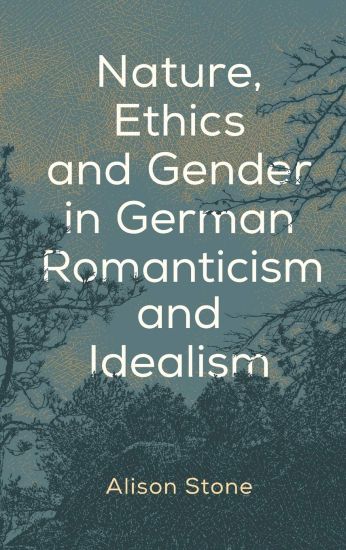
Nature, Ethics and Gender in German Romanticism and Idealism
This book provides an account of the development of ideas about nature from the Early German Romantics into the philosophies of nature of Schelling and Hegel. In clear and accessible language, Alison Stone explains how the project of philosophy of nature took shape and made sense in the post-Kantian context. She also shows how ideas of nature were central to the philosophical and literary projects of the Early German Romantics, with attention to Friedrich Schlegel, Novalis and Hölderlin. Stone advances a distinctive, original perspective on Romantic and Idealist accounts of nature and their ethical implications regarding human-nature relations and intra-human political relations, especially but not only around gender and race. The book demonstrates how these approaches to nature have contemporary relevance to a range of current debates such as those over naturalism, the environmental crisis, and the politics of gender, race and colonialism.