Kirjojen hintavertailu. Mukana 11 699 587 kirjaa ja 12 kauppaa.

Kirjahaku

Etsi kirjoja tekijän nimen, kirjan nimen tai ISBN:n perusteella.

4 kirjaa tekijältä Alison Suen

Why It's OK to Be a Slacker

Why It's OK to Be a Slacker

Alison Suen

Routledge
2021
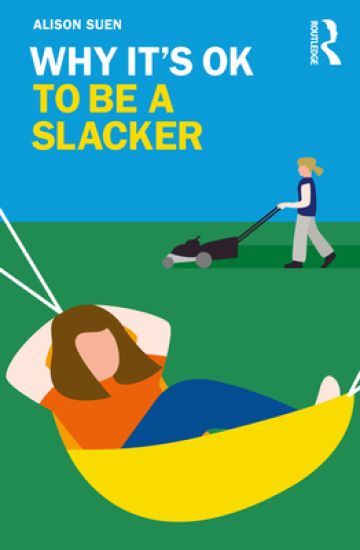
nidottu
"Stop slacking off!"Your parents may have said this to you when you were deep into a video-gaming marathon. Or maybe your roommate said it to you when you were lounging on the couch scrolling through Instagram. You may have even said it to yourself on days you did nothing. But what is so bad about slacking? Could it be that there’s nothing bad about not making yourself useful?Against our hyper-productivity culture, Alison Suen critically interrogates our disapproval of slackers—individuals who do the bare minimum just to get by. She offers a taxonomy of slackers, analyzes common objections to slacking, and argues that each of these objections either fails or carries problematic assumptions. But while this book defends slacking, it does not promote the slacker lifestyle as the key to something better (such as cultural advancement and self-actualization), as some pro-leisure scholars have argued. In fact, Suen argues that slacking is unique precisely because it serves no noble cause. Slacking is neither a deliberate protest to social ills nor is it a path to autonomy. Slackers just slack. By examining the culture of hyper-productivity, Suen argues that it is in fact OK to be a slacker. Key Features Demonstrates the uniqueness of slacking, via a critical examination of six distinct "pro-leisure" philosophical accounts. Articulates a taxonomy of slackers, as well as in-depth examinations of Hollywood slackers and slackers in academia. Examines common objections to slacking (like the freeloading problem), and offers a rebuttal to each of them. Offers an understanding of our productivity culture from an existential perspective.
Why It's OK to Be a Slacker

Why It's OK to Be a Slacker

Alison Suen

Routledge
2021
sidottu
"Stop slacking off!"Your parents may have said this to you when you were deep into a video-gaming marathon. Or maybe your roommate said it to you when you were lounging on the couch scrolling through Instagram. You may have even said it to yourself on days you did nothing. But what is so bad about slacking? Could it be that there’s nothing bad about not making yourself useful?Against our hyper-productivity culture, Alison Suen critically interrogates our disapproval of slackers—individuals who do the bare minimum just to get by. She offers a taxonomy of slackers, analyzes common objections to slacking, and argues that each of these objections either fails or carries problematic assumptions. But while this book defends slacking, it does not promote the slacker lifestyle as the key to something better (such as cultural advancement and self-actualization), as some pro-leisure scholars have argued. In fact, Suen argues that slacking is unique precisely because it serves no noble cause. Slacking is neither a deliberate protest to social ills nor is it a path to autonomy. Slackers just slack. By examining the culture of hyper-productivity, Suen argues that it is in fact OK to be a slacker. Key Features Demonstrates the uniqueness of slacking, via a critical examination of six distinct "pro-leisure" philosophical accounts. Articulates a taxonomy of slackers, as well as in-depth examinations of Hollywood slackers and slackers in academia. Examines common objections to slacking (like the freeloading problem), and offers a rebuttal to each of them. Offers an understanding of our productivity culture from an existential perspective.
The Speaking Animal

The Speaking Animal

Alison Suen

Rowman Littlefield International
2015
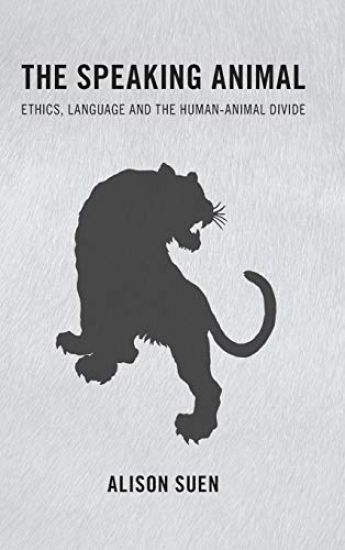
sidottu
Animals regularly populate philosophical texts as a foil to illustrate what it means to be human. How should we understand this human-animal divide? Not only does it inform us of who we are, it also tells us how we should relate to the larger non-human world. The Speaking Animal interrogates the human-animal divide by looking at our linguistic differences – how the speaking human subject is constructed through its opposition to the dumb animal. Alison Suen begins with an analysis of the role of language in animal ethics, with an eye toward the voice/voiceless opposition that is at work in animal advocacy. After offering a critical analysis of the ethical and political significance of speaking for animals, the book takes on a more constructive turn, going against the usual interpretation of language as a capacity that allows us to reason. Instead, it argues that our language capacity is also a relational capacity. Language is that which enables us to develop kinship with others – including animal others.
The Speaking Animal

The Speaking Animal

Alison Suen

Rowman Littlefield International
2015
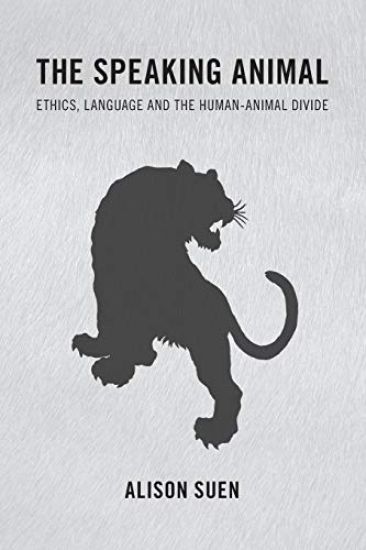
nidottu
Animals regularly populate philosophical texts as a foil to illustrate what it means to be human. How should we understand this human-animal divide? Not only does it inform us of who we are, it also tells us how we should relate to the larger non-human world. The Speaking Animal interrogates the human-animal divide by looking at our linguistic differences – how the speaking human subject is constructed through its opposition to the dumb animal. Alison Suen begins with an analysis of the role of language in animal ethics, with an eye toward the voice/voiceless opposition that is at work in animal advocacy. After offering a critical analysis of the ethical and political significance of speaking for animals, the book takes on a more constructive turn, going against the usual interpretation of language as a capacity that allows us to reason. Instead, it argues that our language capacity is also a relational capacity. Language is that which enables us to develop kinship with others – including animal others.