On 28 August 1984, Josef Fritzl drugged his teenage daughter with ether and imprisoned her in an underground bunker behind eight locked doors. Over the following twenty-four years, he raped and abused her, never letting her or the children she bore him out of the dark, windowless cellar.Based on 150 new interviews with psychologists, neighbours, colleagues and friends who knew Fritzl, as well as the insight of his own chilling confession, Allan Hall reconstructs the monstrous personality behind this hideous crime. He exposes Josef Fritzl's dark past in Nazi Austria, his previous conviction as a rapist, the appalling conditions in which Elisabeth and her children were kept and her astonishingly brave conduct while held prisoner. Including exclusive photographs and previously unseen evidence, this is a truly heart-stopping record of one of the most elaborate and disturbing cases of abuse in modern times.
One monster. Three innocent girls. Ten years in captivity.22 August 2002: 21-year-old Michelle Knight disappears walking home. 21 April 2003: Amanda Berry goes missing the day before her seventeenth birthday. 2 April 2004: 14-year-old Gina DeJesus fails to come home from school. For over a decade these girls remained undetected in a house just three miles from the block where they all went missing, held captive by a terrifying sexual predator. Tortured, starved and raped, kept in chains, Captive reveals the dark obsessions that drove Ariel Castro to kidnap and enslave his innocent victims. Based on exclusive interviews with witnesses, psychologists, family and police, this is an unflinching record of a truly shocking crime in a very ordinary neighbourhood.
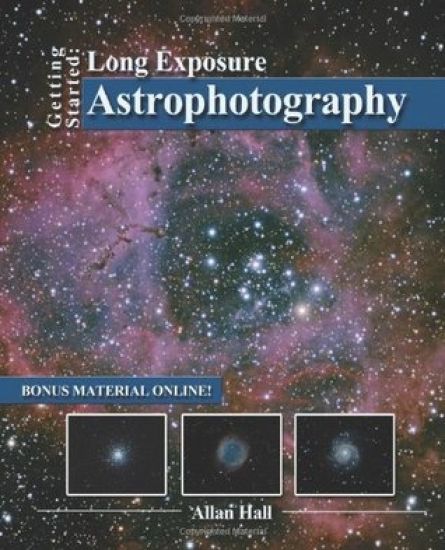
This astrophotography book is a primer and a fully-formed, practical guide for entering the world of long exposure astrophotography. Allan Hall's Getting Started: Long Exposure astrophotography brings the rewarding pursuit of stellar imaging to your bedside table. With academic flare and his signature approachability, Hall utilizes a suite of formats to provide readers with everything they need to begin - and develop, all while avoiding as much of the technical jargon and math as possible. From charts, images, purchasing guides, walkthroughs, and detailed descriptions, this Getting Started title is an in-depth resource for today's astrophotographer at any level of their discipline. Leading up to an incredibly useful list of the first twenty-five objects an astrophotographer might image with long exposures, this Getting Started title also offers a range of equipment advice and grounded descriptions of why certain phenomena occur - as well as what they will mean for you and your shoots. Though founded in the clarity and precision of science and photography, astrophotography can nonetheless be one of the most artistic and even sensual crafts, as well as one of the most daunting. A road map is essential when pursuing a rich experience of imaging and cataloging the night sky. Getting Started: Long Exposure Astrophotography, with over 200 illustrations, images, charts, and graphs bolstering its clear and instructive text, takes readers from practical equipment purchases, savvy preparations, and understanding of heavenly bodies, with the proper - and smart - ways to capture their breathtaking beauty. From purchasing your first astrophotography telescope, hooking up your camera, taking long-exposure images, and finally, processing that finished image, this book is rich with provisions and tips. Hall expertly balances his own procedures with general and inclusive guides from set-up to software recommendations. In this book you will learn: The difference between long and short exposure astrophotographyWhat equipment you may needHow different equipment comparesHow to set up your equipmentMaking your equipment work togetherWhat software you might needDifferent types of exposures (pictures)What might affect your exposuresTaking exposuresProcessing exposuresPutting it all togetherAnd much more So, if you have ever wanted to take photographs of glowing nebulae, spiral galaxies, and shimmering star clusters, this is the reference you want on your desk as well as with you out under the sky. A journey begins, with Hall exploring in-depth details of field rotation and focusing methods, as well as explaining not just the what and how, but the ever-important why. So you won't just follow instructions for multiple image stacking, you'll understand the effect and craft of it. For today's astrophotographers, access is key. Encouragingly, there is more than ever in many ways. From the quality of the equipment that you can purchase to the ready availability of software and meteorological information, it's a photographer's dream in many ways. Let this unprecedented scenario work for you, whether you're looking to take your first photos or enhance your development as a long-exposure cosmic curator. From start to finish, Allan Hall's Getting Started: Long Exposure Astrophotography book is your comprehensive resource, taking you from entrance, to expertise in the rewarding field of astrophotography - with a focus on the long exposure element that makes for such memorable, lifelong pieces of photography. More like a friend sitting beside you, guiding you, than a textbook, see why thousands of astrophotographers have used this book to get started in their journey into long-exposure astrophotography.
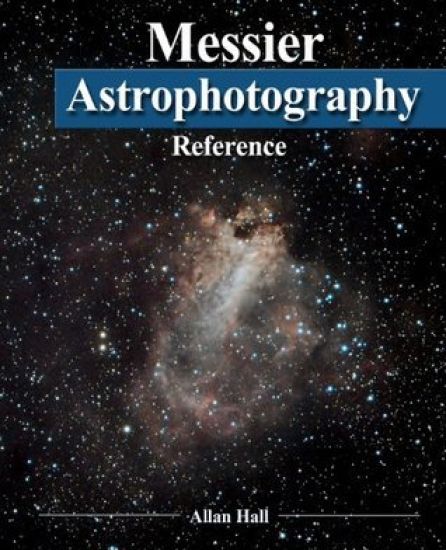
The Messier objects are some of the brightest and most well-defined objects in the night sky, and the place where most budding astronomers and astrophotographers get their first experience. Capturing images of these objects, while easier than most of the other night sky objects, can still present challenges to the person just starting out in astrophotography. Every object can be wildly different with differing exposures, different times of the year it is visible, and different sizes. Where do you start? From the author of Getting Started: Long Exposure Astrophotography and Getting Started: Budget Astrophotography comes a book specifically aimed at helping beginning astrophotographers in North America capture some or all of the Messier objects. Finally, here is one resource you can use on your desk or take into the field providing information specific to capturing each Messier object, or all 110 of them, in photographs. No other book includes this much information specifically aimed at the beginning astrophotographer. From objects that can be easily captured with just a few images and nothing but a DSLR camera, to objects that can use hundreds of images of different exposures grouped and stretched separately, this book covers them all giving you differing approaches and showing you what you can expect to get from using the author's techniques. For each Messier object, this book includes: The Messier number and nameA finished image of the objectA graphic showing the best time of the year to image the objectGraphics showing the approximate size of the object in three different scopesA short description of the objectCoordinates of the objectDetailed notes on imaging the objectA star chart showing the object's locationOriginally written to be used with the author's book Getting Started: Long Exposure Astrophotography, this book concentrates on the objects themselves with some specific tips to image them, particularly with a DSLR. Even with a different type of camera the tips and information presented in this book are an invaluable resource when imaging the Messier objects. Shooting the Messier objects is a fantastic way to start or continue your astrophotography pursuits, and this book will help make that experience easier and more enjoyable.
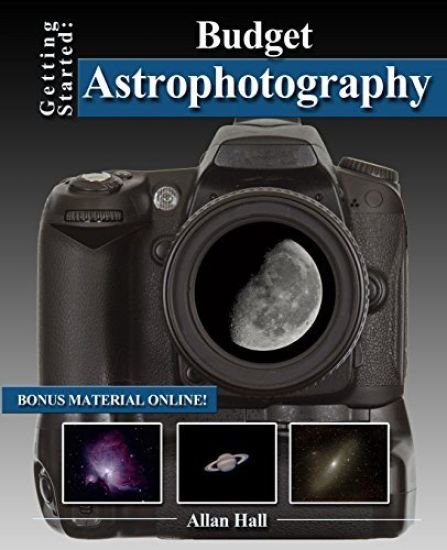
Allan Hall makes learning how to photograph the night sky easy with his new book Getting Started: Budget Astrophotography. In this guide, you will learn the fundamentals of astrophotography - what it is, how it's done, and how to do it yourself. Getting Started: Budget Astrophotography is divided into these three sections in order to provide a comprehensive overview of the basics of astrophotography.Understanding - The first section of Hall's guide focuses on understanding astrophotography. Amateur and professional stargazers know that one of the most important things to consider when viewing the heavens is light pollution. Light pollution is exactly what it sounds like - too much light in our environments makes it more difficult to get a good look at planets, stars, and other celestial bodies. If you want to get the best view and photo possible, you must find a location that has little light. This makes a huge difference. In addition to finding a good location for viewing and shooting, you will learn about camera basics, including how to mount a camera and focus a lens. Beyond that, you will read about various types of telescopes and what they do.Doing - The title of the second segment of this reference guide speaks for itself. Once you've learned the fundamentals of location, cameras, and telescopes, it's time to put your knowledge to use. This section discusses how to find targets, as in how to find objects of interest to shoot. From capturing images to camera and exposure settings, you will learn how to make the most of your instruments and location by taking a great shot. This section also discusses making videos, image stacking, and image editing, an important aspect of astrophotography. Many of the celestial shots we see are time-lapse or edited in some way (to improve clarity and reduce visual "noise"). While it may sound difficult, this reference guide simplifies the processes by providing step-by-step instructions.Building - For the handy home astrophotographer, this section includes information about do-it-yourself projects. From modifying your equipment (for example, improving your focus capabilities, modifying a webcam for astrophotography, and even adapting your laptop screen to function in the dark) to building add-ons, you'll learn how to enhance your experience in your own home. Hall provides information about creating glass solar filters for your cameras and even making your own dew heaters. In this book you will learn: The problems associated with astrophotography, and how to overcome themHow to attach virtually any type of camera to a telescopeHow to use virtually any type of telescopeHow to use a camera without a telescopeHow to focus your camera with and without a telescopeType of images you will captureHow to process the images you captureAnd much more Getting Started: Budget Astrophotography is a great reference guide for beginners and amateur astrophotographers. If you have an interest in astronomy and want to capture what you've viewed through a telescope, doing so is possible from your own home. Hall's comprehensive guide also provides ideas about where to start (as in, what targets are best to photograph), where to find more information about astrophotography, and even a glossary of terms. Indulge your hobby and learn how to improve with Getting Started: Budget Astrophotography.
Do you want to learn how to take photographs of an exciting solar or Lunar Eclipse? Do you have the right equipment for the job? Do you want to know ALL the tips and techniques needed to make this a success? A total Solar Eclipse is an incredible sight to behold. It is one of nature's awe-inspiring events and has been the subject of amazement, wonder, and fear throughout the ages. But they don't come around very often. In fact, the last total solar eclipse for most of North America was in 2017. In 2024, however, you will have another chance to witness this rare phenomenon as another total solar eclipse will occur on the 8th of April. Now, with How to Take Pictures of an Eclipse, you can be prepared to capture this unique moment as well as other solar and lunar eclipses with information on: Safety warningsThe basics you'll need to knowGetting the images you really wantWhat sort of camera to useUsing a telescopeMotorized mountsAnd much more...Capturing this amazing, once-in-a-generation event is something that you won't want to miss out on, and capturing the best shots of it is crucial when it comes to bragging rights. Now is the time to act if you want to be prepared for this spectacular sight. Get your copy of How to Take Pictures of an Eclipse now and make sure that you are ready to get the photographs that will amaze your friends and family and be the envy of all.
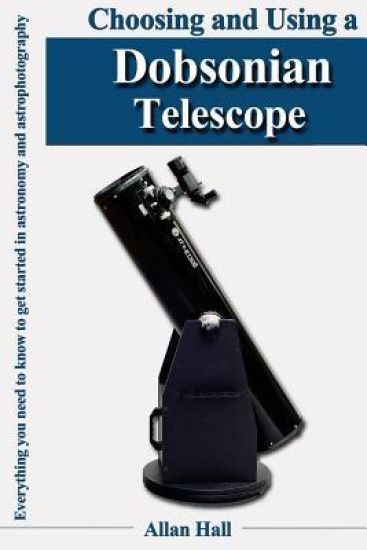
Dobsonian telescopes are the most popular beginner telescope and first came to prominence in the 1960's. They have provided many thousands of amateur sky-watchers with a low-cost, dependable telescope which allows them to see deep into the night skies. There are numerous types of this popular telescope which are available to buy, and getting the one that best suits your needs is something that could prove to be a challenge. In this new book by Allan Hall, Choosing and Using a Dobsonian Telescope, you will find all the information you will need to make the most informed choice on your purchase, including: *A brief history of the telescope *The different manufacturers *Selecting the right one for your purposes *Accessories *Set up and use *Useful tips and tricks *Where to find more information *And much more... A telescope is not an insignificant purchase and you may want to make sure you spend your hard earned money where it counts when it comes to getting the right piece of equipment for your star-gazing, so it pays to make sure that you are going to buy something that is relevant to you and which will give you many years of pleasure. By reading Choosing and Using a Dobsonian Telescope, you will become more informed and better positioned to make the right choice, the first time. And with a special section devoted to the accessories you can buy, including things like eyepieces, filters, cases, collimators and many more, you will also be making the right choices when it comes to these too. Whether you are watching the skies from the comfort of your own back yard, or using your telescope at a remote dark site it pays to get the right equipment for you. Get your copy of Choosing and Using a Dobsonian Telescope now Make sure you know all about this wonderful type of telescope, before you buy.
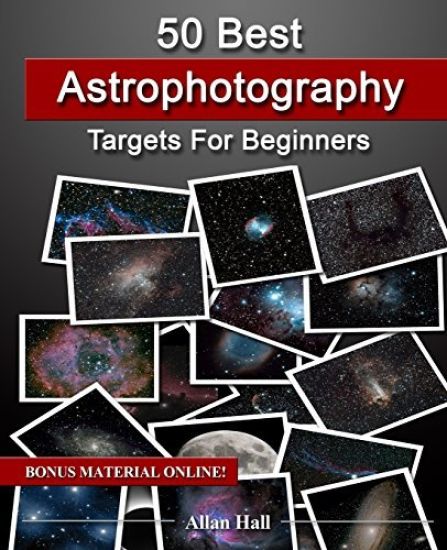
Are you interested in astrophotography targets in the northern hemisphere? Do you need good information on objects that can help you as a starting point? Taking images of objects that are millions of miles from Earth is about as complicated as it sounds and when you start out you will find it hard to target the right ones. Size, brightness, and type are just a few of the more common considerations, but there are many more that relate to the type of equipment you have in hand and what the best tools for the job will be. One of the hardest hurdles is knowing what you are looking for out in the field when you take that first image before processing. Is that the object? Is that what it is supposed to look like? Now, with 50 Best Astrophotography Targets for Beginners, you have a handy information guide that will provide the answers to those questions and much more. This book will show you: How to get startedTackling close astrophotography targets like the sun and moonWhat do the targets look likeThe best time of the year to shoot themHow big the targets areHow to find themWhat the images look like straight out of the cameraAnd much more...Once you have mastered the techniques needed to take stunning photographs of these amazing beginner astrophotography targets you can move on to further reading on the subject, but making sure that you are on the right course is the first step. Designed with the novice in mind, 50 Best Astrophotography Targets for Beginners provides good, clear information in an easily understood format, allowing you to take the photographs you've always wanted to take. It even includes photographs that realistically show you, as a beginner, what you can expect to achieve. There are no NASA or Hubble images in this book From the author of Getting Started: Long Exposure Astrophotography, Getting Started: Budget Astrophotography, and the Messier Astrophotography Reference, this book is aimed specifically at the beginning astrophotographer using a camera such as a DSLR in the Northern Hemisphere. Get a copy today and see how it will improve the way you take amazing shots of the heavens that will impress and delight friends and family alike
Do you have a hard time finding objects in the night sky? I sure used to When I got my first telescope I was so excited I could barely assemble it with my shaking hands. Once outside my excitement was doubled as I looked at the moon. I must have spent half an hour just looking at the craters. All that excitement was stripped away within minutes after than because I had no idea how to find anything else in the sky. The books I had read on astronomy had all these beautiful images of nebulae and galaxies, but no matter where I pointed my telescope, I saw nothing but stars. I thought I had it solved when I found the coordinates of some objects I really wanted to see, moved the telescope until the readings on the dials matched those coordinates, and was looking at the ground. In disgust the telescope became a living room decoration. This book aims to solve that issue by teaching you how to navigate the night sky. You will learn the star hopping, altitude azimuth, and right ascension declination methods of navigation. Sections will not only teach you what the terms mean, but give you example you can use to actually find things on your own. If you want to really learn how to find objects in the night sky, you need this book, get your copy now
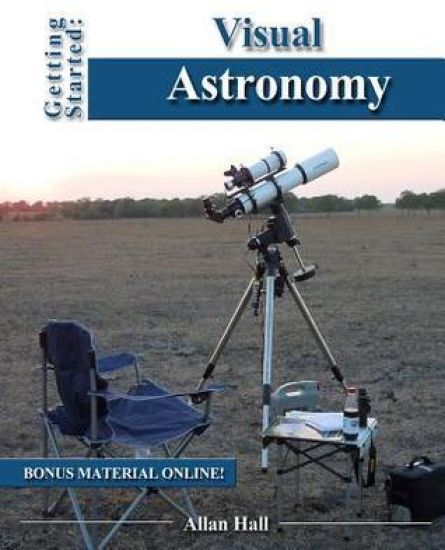
If you are having a hard time seeing celestial objects with your new telescope then 50 Amazing Things To See With Your New Telescope is the book for you. Chocked full of objects like stars, galaxies, nebulae, and planets there are objects fit for anyone and any type of telescope. From small refractors up to larger Dobsonians, you will be able to see lots of objects using this book. It even includes objects viewable from both northern and southern hemispheres To make finding these objects fun and easy the book uses black on white constellation charts which are easy to read even in the dark. No confusing star maps, celestial coordinates, or hard to understand directions. If you can find the constellation, you can find the objects in the book. Copies of these charts are also available as a free download in case you have a hard time using the ones in the book. Having a hard time finding the constellations? This book gives you lots of ideas on making it easier for you to find the constellations. The book even has some constellation maps for different times of the year to give you a head start in locating them. A large glossary is included to help you not only with the terms used in the book, but also with terms you might run into shopping for accessories or looking up astronomy information online. Don't return that telescope or stuff it in the attic, get a copy of 50 Amazing Things To See With Your New Telescope and have some fun
Eight years of darknessOn March 2, 1998, while on her way to school, ten-year-old Natascha Kampusch was abducted. More than eight years later, on August 23, 2006, she escaped with a story that shocked and horrified the entire world. She spent the most delicate years of her life hidden in a cellar underneath an ordinary Austrian suburban home. How was she able to survive? What sort of woman had emerged? What kind of man was Wolfgang Priklopil, her abductor--and what demands had he made of her?Journalists Allan Hall and Michael Leidig covered Natascha's story from the beginning. The result of extraordinary investigative reporting, Girl in the Cellar gets to the heart of this very tragic case to reveal a truth no one would have imagined.
When Natascha Kampusch made her bid for freedom on 23 August 2006 after eight years held captive in a seemingly ordinary Austrian suburban house, her story horrified and astonished the entire world. How did she survive a childhood locked in a cellar? What sort of young woman had emerged? What kind of man was Wolfgang Priklopil, her abductor - and what demands had he made of her? As the days and weeks passed and Natascha's TV interview failed to quell the curiosity, so the questions began to change. What exactly was the relationship between abductor and hostage? Why had Natascha waited so long to escape when it seemed there had been other, earlier opportunities? Did Natascha's parents know Priklopil before he kidnapped their daughter? Allan Hall and Michael Leidig have tracked the story from the days of the 10-year-old's disappearance. They have spoken to police investigators, lawyers, psychiatrists, and to the family members closest to Natascha. They have come as close as possible to uncovering the full, shocking story. It is a story that tests the limits of our understanding of how human beings behave - and makes our hearts bleed for the plight of an innocent child caught up in a horror story almost beyond our imagining.
There is no doubt about it: life is full of mystery. This compelling volume allows readers to peer into the uncovering of state and military secrets such as Watergate, North Korea's purported nuclear bomb testing, and Wikileaks, as well as true crime cases, such as the search for the "Missing Earl." Whether it's Hollywood secrets like Rock Hudson's shocking double life or the excavation of the ancient city of Teotihuacan, students will learn how great mysteries can be hidden, and in turn how they are revealed. Sidebars, a glossary, and a further reading section are also included.