Kirjojen hintavertailu. Mukana 11 348 969 kirjaa ja 12 kauppaa.

Kirjahaku

Etsi kirjoja tekijän nimen, kirjan nimen tai ISBN:n perusteella.

5 kirjaa tekijältä Allen Thiher

Revels in Madness

Revels in Madness

Allen Thiher

The University of Michigan Press
2000
sidottu
"Fascinating and important . . . a work of prodigious scholarship, covering the entire history of Western thought and treating both literary and medical discourses with subtlety and verve."---Louis Sass, author of Madness and Modernism"The scope of this book is daunting, ranging from madness in the ancient Greco-Roman world, to Christianized concepts of medieval folly, through the writings of early modern authors such as Shakespeare, Cervantes, and Descartes, and on to German Romantic philosophy, fin de siècle French poetry, and Freud . . . Artaud, Duras, and Plath."---Isis"This provocative and closely argued work will reward many readers."---ChoiceIn Revels in Madness, Allen Thiher surveys a remarkable range of writers as he shows how conceptions of madness in literature have reflected the cultural assumptions of their era. Thiher underscores the transition from classical to modern theories of madness-a transition that began at the end of the Enlightenment and culminates in recent women's writing that challenges the postmodern understanding of madness as a fall from language or as a dysfunction of culture.
Understanding Robert Musil

Understanding Robert Musil

Allen Thiher

University of South Carolina Press
2009
sidottu
This book contains deft analysis of the fiction, theater, and essays of the author of ""The Man without Qualities"". In this critical introduction to the major works of Austrian modernist writer Robert Musil (1880-1942), Allen Thiher maps Musil's development as a writer, illustrating how his work evolved in response to catastrophic historical events such as World War I, the collapse of the Austro-Hungarian Empire, and Hitler's seizure of power. Following his service in World War I, Musil began to view writing as his vocation, and, during this early period in his literary career, he produced short fiction, plays, and some of the most interesting essays on politics, ethics, and literature to be published during the Weimar era. In exploring these writings as well as ""The Man without Qualities"", a work left unfinished upon Musil's death in exile during World War II, Thiher's study plumbs the depths of Musil's ambition and accomplishments and presents a concise interpretation of the lasting significance of the writer's interrogations of the foundations of modern European culture.
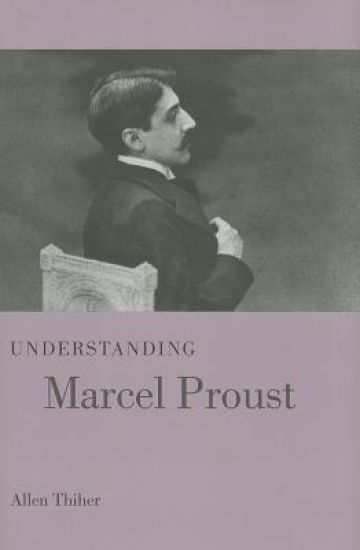
Understanding Marcel Proust

Understanding Marcel Proust

Allen Thiher

University of South Carolina Press
2013
sidottu
Understanding Marcel Proust includes an overview of Marcel Proust's development as a writer, addressing works both published and unpublished in his lifetime, and then offers an in-depth interpretation of Proust's major novel, In Search of Lost Time, relating it to the Western literary tradition while also demonstrating its radical newness as a narrative.In his introduction Allen Thiher outlines Proust's development in the context of the political and artistic life of the Third Republic, arguing that everything Proust wrote before In Search of Lost Time was an experiment in sorting out whether he wanted to be a writer of critical theory or of fiction. Ultimately, Thiher observes, all these experiments had a role in the elaboration of the novel. Proust became both theorist and fiction writer by creating a bildungsroman narrating a writer's education. What is perhaps most original about Thiher's interpretation, however, is his demonstration that Proust removed his aged narrator from the novel's temporal flow to achieve a kind of fictional transcendence. Proust never situates his narrator in historical time, which allows him to demonstrate concretely what he sees as the function of art: the truth of the absolute particular removed from time's determinations. The artist that the narrator hopes to become at the end of the novel must pursue his own individual truths - those in fact that the novel has narrated, for him and the reader, up to the novel's conclusion. Written in a language accessible to upper-level undergraduates as well as literate general readers, Understanding Marcel Proust simultaneously addresses a scholarly public aware of the critical arguments that Proust's work has generated. Thiher's study should make Proust's In Search of Lost Time more widely accessible by explicating its structure and themes.
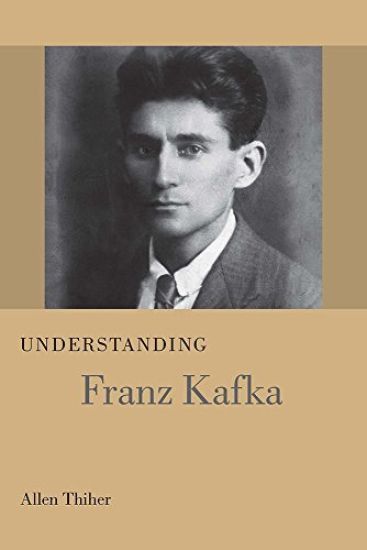
Understanding Franz Kafka

Understanding Franz Kafka

Allen Thiher

University of South Carolina Press
2018
sidottu
Franz Kafka is without question one of the most influential writers of the twentieth century despite the fact that much of his work remained unpublished when he died at a relatively young age in 1924. Kafka’s eccentric methods of composition and his diffident attitude toward publishing left most of his writing to be edited and published after his death by his literary executor, Max Brod. In Understanding Franz Kafka, Allen Thiher addresses the development of Kafka’s work by analyzing it in terms of its chronological unfolding, emphasizing the various phases in Kafka’s life that can be discerned in his constant quest to find a meaning for his writing. Thiher also shows that Kafka’s work, frequently self-referential, explores the ways literature can have meaning in a world in which writing is a dubious activity.After outlining Kafka’s life using new biographical information, Thiher examines Kafka’s first attempts at writing, often involving nearly farcical experiments. The study then shows how Kafka’s work developed through twists and turns, beginning with the breakthrough stories The Judgment and The Metamorphosis, continuing with his first attempt at a novel with Amerika, and followed by Kafka’s shifting back and forth between short fiction and two other unpublished novels, The Trial and The Castle. Thiher also calls on Kafka’s notebooks and diaries. These help demonstrate that Kafka never stopped experimenting in his attempt to find a literary form that might satisfy his desire to create some kind of transcendental literary text in an era in which the transcendent is at best an object of nostalgia or of comic derision. In short, Thiher contends, Kafka constantly sought the grounds for writing in a world in which all appears groundless.
Reform for an Enlightenment Education

Reform for an Enlightenment Education

Allen Thiher

Academica Press
2020
sidottu
Drawing on a distinguished 40-year university career, Allen Thiher probes the subjects that serve as a basis for higher education in the twenty-first century. Addressing the general reader as well as the scholar, he argues that all the best about contemporary culture springs directly from the unfettered rationalism of the Enlightenment. Provocatively, Thiher argues that today’s education system is failing to produce students with the enlightened sensibilities they need to lead good and ethical lives and instead focuses on short-term utilitarian aims.Thiher pleads for the arts and sciences to be restored to their central position in education. His ideal curriculum is unabashedly rationalist and designed to set forth a coherent program of study that avoids the destructive pieties of right-wing nationalism and the censorious clichés of “political correctness.”