Kirjojen hintavertailu. Mukana 11 244 527 kirjaa ja 12 kauppaa.

Kirjahaku

Etsi kirjoja tekijän nimen, kirjan nimen tai ISBN:n perusteella.

3 kirjaa tekijältä Amanda L. Tyler

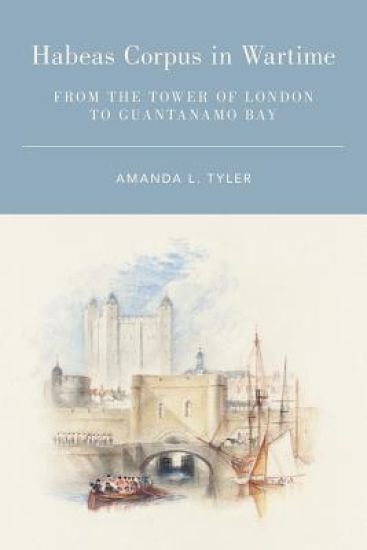
Habeas Corpus in Wartime

Habeas Corpus in Wartime

Amanda L. Tyler

Oxford University Press Inc
2019
nidottu
Habeas Corpus in Wartime unearths and presents a comprehensive account of the legal and political history of habeas corpus in wartime in the Anglo-American legal tradition. The book begins by tracing the origins of the habeas privilege in English law, giving special attention to the English Habeas Corpus Act of 1679, which limited the scope of executive detention and used the machinery of the English courts to enforce its terms. It also explores the circumstances that led Parliament to invent the concept of suspension as a tool for setting aside the protections of the Habeas Corpus Act in wartime. Turning to the United States, the book highlights how the English suspension framework greatly influenced the development of early American habeas law before and after the American Revolution and during the Founding period, when the United States Constitution enshrined a habeas privilege in its Suspension Clause. The book then chronicles the story of the habeas privilege and suspension over the course of American history, giving special attention to the Civil War period. The final chapters explore how the challenges posed by modern warfare during the twentieth and twenty-first centuries have placed great strain on the previously well-settled understanding of the role of the habeas privilege and suspension in American constitutional law, particularly during World War II when the United States government detained tens of thousands of Japanese American citizens and later during the War on Terror. Throughout, the book draws upon a wealth of original and heretofore untapped historical resources to shed light on the purpose and role of the Suspension Clause in the United States Constitution, revealing all along that many of the questions that arise today regarding the scope of executive power to arrest and detain in wartime are not new ones.
Habeas Corpus

Habeas Corpus

Amanda L. Tyler

Oxford University Press Inc
2021
nidottu
Legal scholar Amanda L. Tyler discusses the history and future of habeas corpus in America and around the world. The concept of habeas corpus--literally, to receive and hold the body--empowers courts to protect the right of prisoners to know the basis on which they are being held by the government and grant prisoners their freedom when they are held unlawfully. It is no wonder that habeas corpus has long been considered essential to freedom. For nearly eight hundred years, the writ of habeas corpus has limited the executive in the Anglo-American legal tradition from imprisoning citizens and subjects with impunity. Writing in the eighteenth century, the widely influential English jurist and commentator William Blackstone declared the writ a "bulwark" of personal liberty. Across the Atlantic, in the leadup to the American Revolution, the Continental Congress declared that the habeas privilege and the right to trial by jury were among the most important rights in a free society. This Very Short Introduction chronicles the storied writ of habeas corpus and how its common law and statutory origins spread from England throughout the British Empire and beyond, witnessing its use today around the world in nations as varied as Canada, Israel, India, and South Korea. Beginning with the English origins of the writ, the book traces its historical development both as a part of the common law and as a parliamentary creation born out of the English Habeas Corpus Act of 1679, a statute that so dramatically limited the executive's power to detain that Blackstone called it no less than a "second Magna Carta." The book then takes the story forward to explore how the writ has functioned in the centuries since, including its controversial suspension by President Abraham Lincoln during the Civil War. It also analyzes the major role habeas corpus has played in such issues as the World War II incarceration of Japanese Americans and the US Supreme Court's recognition during the War on Terror of the concept of a "citizen enemy combatant." Looking ahead the story told in these pages reveals the immense challenges that the habeas privilege faces today and suggests that in confronting them, we would do well to remember how the habeas privilege brought even the king of England to his knees before the law.
Habeas Corpus in Wartime

Habeas Corpus in Wartime

Amanda L. Tyler

Oxford University Press Inc
2017
sidottu
Habeas Corpus in Wartime unearths and presents a comprehensive account of the legal and political history of habeas corpus in wartime in the Anglo-American legal tradition. The book begins by tracing the origins of the habeas privilege in English law, giving special attention to the English Habeas Corpus Act of 1679, which limited the scope of executive detention and used the machinery of the English courts to enforce its terms. It also explores the circumstances that led Parliament to invent the concept of suspension as a tool for setting aside the protections of the Habeas Corpus Act in wartime. Turning to the United States, the book highlights how the English suspension framework greatly influenced the development of early American habeas law before and after the American Revolution and during the Founding period, when the United States Constitution enshrined a habeas privilege in its Suspension Clause. The book then chronicles the story of the habeas privilege and suspension over the course of American history, giving special attention to the Civil War period. The final chapters explore how the challenges posed by modern warfare during the twentieth and twenty-first centuries have placed great strain on the previously well-settled understanding of the role of the habeas privilege and suspension in American constitutional law, particularly during World War II when the United States government detained tens of thousands of Japanese American citizens and later during the War on Terror. Throughout, the book draws upon a wealth of original and heretofore untapped historical resources to shed light on the purpose and role of the Suspension Clause in the United States Constitution, revealing all along that many of the questions that arise today regarding the scope of executive power to arrest and detain in wartime are not new ones.