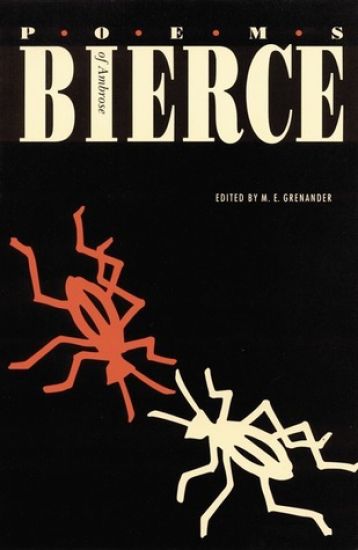
Ambrose Bierce is one of the most colorful figures in American literary history. A writer whose Devil's Dictionary remains the delight of misanthropes and fans of satire throughout the English-speaking world, he was also a master of the short story form. From the late 1860s through the early 1900s, he worked as a journalist, gaining wide renown in the 1890s and 1900s as a satirical columnist for William Randolph Hearst's chain of newspapers. In 1913 Bierce traveled to Mexico and joined Pancho Villa's army as an observer. He disappeared late that year and his fate has been a matter of dispute ever since. The poems that Bierce wrote throughout his career are less well known than his stories, journalistic pieces, and aphoristic observations on human folly. Nevertheless, his work as a poet, as critic Donald Sidney-Fryer has argued, "clearly merits the attention of the discriminating lover and student of poetry." Varied in form and subject matter, most of his poems are (not surprisingly) satires.This volume contains a generous selection of Bierce's poems; they are alternately ironic, melancholy, bitter, and wickedly amusing. There are also fifteen essays and letters on poetry, poets, and such topics as "Wit and Humor" and "The Passing of Satire." Certainly there have been few authors more intimately familiar with wit and satire than the brilliant, iconoclastic Bierce. As editor M. E. Grenander makes plain in her introduction, both are abundantly present in this collection of "some of the most remarkable verse in American literary history."