Kirjojen hintavertailu. Mukana 12 016 292 kirjaa ja 12 kauppaa.

Kirjahaku

Etsi kirjoja tekijän nimen, kirjan nimen tai ISBN:n perusteella.

7 kirjaa tekijältä Amit Ranjan

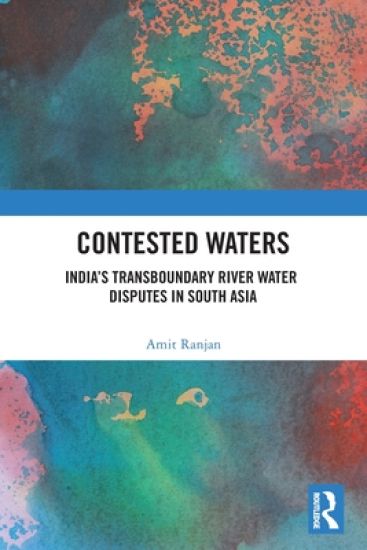
Contested Waters

Contested Waters

Amit Ranjan

Routledge India
2022
nidottu
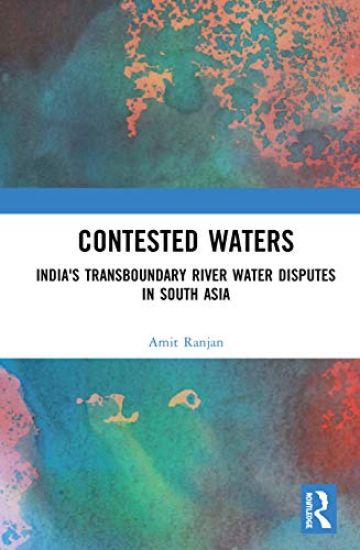
This book examines India’s transboundary river water disputes with its South Asian riparian neighbours — Pakistan, Bangladesh, Nepal and Bhutan. It explores the history of disputes and cooperation over the transboundary river water in this region as well as discusses current disputes and future concerns. It analyses how and why existing transboundary river water sharing treaties between India and its South Asian riparian neighbours are confronted with challenges. The book indicates that India’s transboundary river water disputes with its South Asian riparian neighbours are likely to escalate in coming years due to the widening of the demand¬–supply gap in the respective countries. It further shows the impact of bilateral relations on the resolution of transboundary river water disputes, even as cordial relationships do not always guarantee the absence of river water disputes between riparian states. The book looks at some key questions: How political are India’s transboundary rivers water disputes in South Asia? Why do the roots of India’s river water disputes with Bangladesh and Pakistan lie in the partition of the British India in 1947? Why are there reservations against India’s hydroelectricity projects or allegations of water theft? Is it possible to resolve transboundary river water disputes among these South Asian countries? This book will greatly interest scholars and researchers working in the areas of river management, environmental politics, transnationalism, water resources, politics and international relations, security studies, peace and conflict studies, geopolitics, development studies, governance and public administration, and South Asian studies in addition to policymakers and journalists.
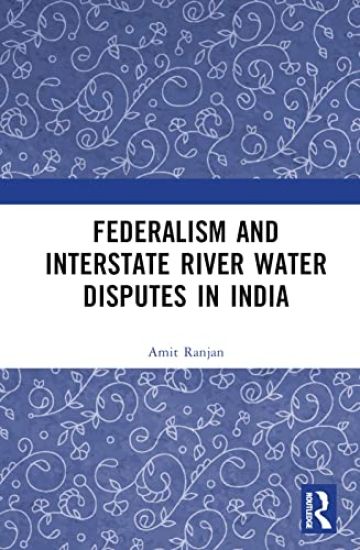
Federalism and Inter-State River Water Disputes in India
This book examines the Union-State and inter-State relations concerning water issues in India. It analyses the federal structure in India and looks at its effectiveness in addressing the inter-state river water disputes in the country through three cases: the Cauvery, Krishna and Mahadayi Rivers water dispute. It probes into the physical, political, legal and constitutional measures taken by the Union government and the states to deal with the inter-State and Union-State tussles over inter-State river waters. The author studies the debate over centralisation and decentralisation of water resources, as well as the inter-state river water disputes that have aroused feelings of sub-nationalism in many regions of India. Finally, this book also examines socio-political tensions over multipurpose water projects and other supply-side infrastructures, and their efficacy in addressing India’s increasing water problems.This book will interest researchers and students of Environmental Politics, Political Science, Public Policy, Environmental Geography, Indian Politics, South Asian Studies, Environmental Economics, Environmental Policy, River Management, and Resource politics.
Federalism and Inter-State River Water Disputes in India
This book examines the Union-State and inter-State relations concerning water issues in India. It analyses the federal structure in India and looks at its effectiveness in addressing the inter-state river water disputes in the country through three cases: the Cauvery, Krishna and Mahadayi Rivers water dispute. It probes into the physical, political, legal and constitutional measures taken by the Union government and the states to deal with the inter-State and Union-State tussles over inter-State river waters. The author studies the debate over centralisation and decentralisation of water resources, as well as the inter-state river water disputes that have aroused feelings of sub-nationalism in many regions of India. Finally, this book also examines socio-political tensions over multipurpose water projects and other supply-side infrastructures, and their efficacy in addressing India’s increasing water problems.This book will interest researchers and students of Environmental Politics, Political Science, Public Policy, Environmental Geography, Indian Politics, South Asian Studies, Environmental Economics, Environmental Policy, River Management, and Resource politics.
Contested Waters

Contested Waters

Amit Ranjan

Routledge India
2020
sidottu
This book examines India’s transboundary river water disputes with its South Asian riparian neighbours — Pakistan, Bangladesh, Nepal and Bhutan. It explores the history of disputes and cooperation over the transboundary river water in this region as well as discusses current disputes and future concerns. It analyses how and why existing transboundary river water sharing treaties between India and its South Asian riparian neighbours are confronted with challenges. The book indicates that India’s transboundary river water disputes with its South Asian riparian neighbours are likely to escalate in coming years due to the widening of the demand¬–supply gap in the respective countries. It further shows the impact of bilateral relations on the resolution of transboundary river water disputes, even as cordial relationships do not always guarantee the absence of river water disputes between riparian states. The book looks at some key questions: How political are India’s transboundary rivers water disputes in South Asia? Why do the roots of India’s river water disputes with Bangladesh and Pakistan lie in the partition of the British India in 1947? Why are there reservations against India’s hydroelectricity projects or allegations of water theft? Is it possible to resolve transboundary river water disputes among these South Asian countries? This book will greatly interest scholars and researchers working in the areas of river management, environmental politics, transnationalism, water resources, politics and international relations, security studies, peace and conflict studies, geopolitics, development studies, governance and public administration, and South Asian studies in addition to policymakers and journalists.
India–Bangladesh Border Disputes

India–Bangladesh Border Disputes

Amit Ranjan

Springer Verlag, Singapore
2018
sidottu
This book discusses history of mental construction of the border between India and Bangladesh. It investigates how and when a border was constructed between the people, and discusses how the mental construction preceded the physical construction. It also examines the perils faced by those forced to leave their homes as a result of the partition of India in 1947. Globally throughout history, the absence of borders made the movement of people from one place to another easier. The construction of borders and sovereign de-limitation of territory restricted or even prevented seamless migration. The situation becomes more complex near borders that were previously open to the movement of people. One such border is between India and Bangladesh, where, in August 1947, suddenly people were told that the places they used to visit on a daily basis were now a part of a different sovereign country. This book argues that borders construct the identity of an individual or a group. Those who cross to the other side of border, for whatever reason, are identified and categorized by the state and the people. Sometimes these migrants face violence from the locals because they are considered a threat to the local working class. The book also explains how, after the liberation of Bangladesh in 1971, everyday encounter between people from India and Bangladesh have further embedded a feeling of us versus them. In 2015, India and Bangladesh agreed to implement the India–Bangladesh Land Boundary Agreement (LBA). This book assesses whether the implementation of this agreement will have impacts on border-related problems like mobility, migration, and tensions. It is a valuable resource for policymakers, journalists, researchers and students.
India–Bangladesh Border Disputes

India–Bangladesh Border Disputes

Amit Ranjan

Springer Verlag, Singapore
2018
nidottu
This book discusses history of mental construction of the border between India and Bangladesh. It investigates how and when a border was constructed between the people, and discusses how the mental construction preceded the physical construction. It also examines the perils faced by those forced to leave their homes as a result of the partition of India in 1947. Globally throughout history, the absence of borders made the movement of people from one place to another easier. The construction of borders and sovereign de-limitation of territory restricted or even prevented seamless migration. The situation becomes more complex near borders that were previously open to the movement of people. One such border is between India and Bangladesh, where, in August 1947, suddenly people were told that the places they used to visit on a daily basis were now a part of a different sovereign country. This book argues that borders construct the identity of an individual or a group. Those who cross to the other side of border, for whatever reason, are identified and categorized by the state and the people. Sometimes these migrants face violence from the locals because they are considered a threat to the local working class. The book also explains how, after the liberation of Bangladesh in 1971, everyday encounter between people from India and Bangladesh have further embedded a feeling of us versus them. In 2015, India and Bangladesh agreed to implement the India–Bangladesh Land Boundary Agreement (LBA). This book assesses whether the implementation of this agreement will have impacts on border-related problems like mobility, migration, and tensions. It is a valuable resource for policymakers, journalists, researchers and students.