
Kirjahaku
Etsi kirjoja tekijän nimen, kirjan nimen tai ISBN:n perusteella.
68 kirjaa tekijältä Amitav Ghosh
Rajkumar, in truly Dickensian style, succeeds at making a fortune from his logging business, but never forgets Dolly, the girl he saw accompanying the exiled Burmese royal family.
Fom the author of The Glass Palace, the widely-acclaimed bestseller. The Hungry Tide is a rich, exotic saga set in Calcutta and in the vast archipelago of islands in the Bay of Bengal.

A NEW EDITION WITH AN INTRODUCTION BY NEEL MUKHERJEE The international bestseller from the Booker Prize-shortlisted author 'Ghosh has established himself as one of the finest prose writers of his generation' Financial Times Set in Burma during the British invasion of 1885, this masterly novel tells the story of Rajkumar, a poor boy lifted on the tides of social and political chaos, who goes on to create an empire in the Burmese teak forest. When soldiers force the royal family out of the Glass Palace and into exile, Rajkumar befriends Dolly, a young woman in the court of the Burmese Queen, whose love will shape his life. He cannot forget her, and years later, as a rich man, he goes in search of her. From the Booker Prize-shortlisted author, an unforgettable story of love, war and family. Spanning three generations, in Burma, Malaya and India, The Glass Palace is an extraordinary epic.

Are we deranged? The acclaimed Indian novelist Amitav Ghosh argues that future generations may well think so. How else to explain our imaginative failure in the face of global warming? In his first major book of nonfiction since In an Antique Land, Ghosh examines our inability--at the level of literature, history, and politics--to grasp the scale and violence of climate change. The extreme nature of today's climate events, Ghosh asserts, make them peculiarly resistant to contemporary modes of thinking and imagining. This is particularly true of serious literary fiction: hundred-year storms and freakish tornadoes simply feel too improbable for the novel; they are automatically consigned to other genres. In the writing of history, too, the climate crisis has sometimes led to gross simplifications; Ghosh shows that the history of the carbon economy is a tangled global story with many contradictory and counterintuitive elements. Ghosh ends by suggesting that politics, much like literature, has become a matter of personal moral reckoning rather than an arena of collective action. But to limit fiction and politics to individual moral adventure comes at a great cost. The climate crisis asks us to imagine other forms of human existence--a task to which fiction, Ghosh argues, is the best suited of all cultural forms. His book serves as a great writer's summons to confront the most urgent task of our time.
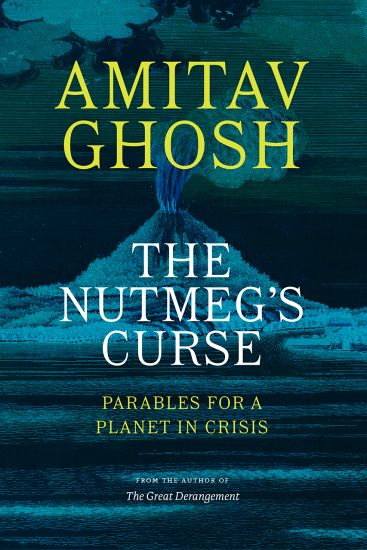
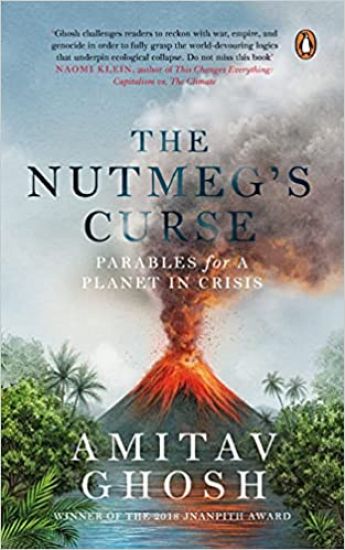
The Nutmeg's Curse: Parables for a Planet in Crisis
Amitav Ghosh
University of Chicago Press
2021
sidottu
In this ambitious successor to The Great Derangement, acclaimed writer Amitav Ghosh finds the origins of our contemporary climate crisis in Western colonialism's violent exploitation of human life and the natural environment. A powerful work of history, essay, testimony, and polemic, Amitav Ghosh's new book traces our contemporary planetary crisis back to the discovery of the New World and the sea route to the Indian Ocean. The Nutmeg's Curse argues that the dynamics of climate change today are rooted in a centuries-old geopolitical order constructed by Western colonialism. At the center of Ghosh's narrative is the now-ubiquitous spice nutmeg. The history of the nutmeg is one of conquest and exploitation--of both human life and the natural environment. In Ghosh's hands, the story of the nutmeg becomes a parable for our environmental crisis, revealing the ways human history has always been entangled with earthly materials such as spices, tea, sugarcane, opium, and fossil fuels. Our crisis, he shows, is ultimately the result of a mechanistic view of the earth, where nature exists only as a resource for humans to use for our own ends, rather than a force of its own, full of agency and meaning. Writing against the backdrop of the global pandemic and the Black Lives Matter protests, Ghosh frames these historical stories in a way that connects our shared colonial histories with the deep inequality we see around us today. By interweaving discussions on everything from the global history of the oil trade to the migrant crisis and the animist spirituality of Indigenous communities around the world, The Nutmeg's Curse offers a sharp critique of Western society and speaks to the profoundly remarkable ways in which human history is shaped by non-human forces.
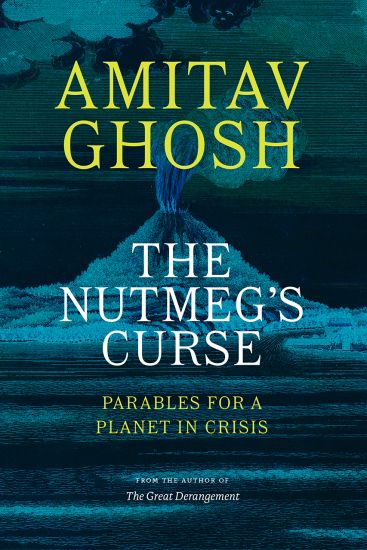
The Nutmeg's Curse: Parables for a Planet in Crisis
Amitav Ghosh
University of Chicago Press
2022
nidottu
In this ambitious successor to The Great Derangement, acclaimed writer Amitav Ghosh finds the origins of our contemporary climate crisis in Western colonialism's violent exploitation of human life and the natural environment. A powerful work of history, essay, testimony, and polemic, Amitav Ghosh's new book traces our contemporary planetary crisis back to the discovery of the New World and the sea route to the Indian Ocean. The Nutmeg's Curse argues that the dynamics of climate change today are rooted in a centuries-old geopolitical order constructed by Western colonialism. At the center of Ghosh's narrative is the now-ubiquitous spice nutmeg. The history of the nutmeg is one of conquest and exploitation--of both human life and the natural environment. In Ghosh's hands, the story of the nutmeg becomes a parable for our environmental crisis, revealing the ways human history has always been entangled with earthly materials such as spices, tea, sugarcane, opium, and fossil fuels. Our crisis, he shows, is ultimately the result of a mechanistic view of the earth, where nature exists only as a resource for humans to use for our own ends, rather than a force of its own, full of agency and meaning. Writing against the backdrop of the global pandemic and the Black Lives Matter protests, Ghosh frames these historical stories in a way that connects our shared colonial histories with the deep inequality we see around us today. By interweaving discussions on everything from the global history of the oil trade to the migrant crisis and the animist spirituality of Indigenous communities around the world, The Nutmeg's Curse offers a sharp critique of Western society and speaks to the profoundly remarkable ways in which human history is shaped by non-human forces.
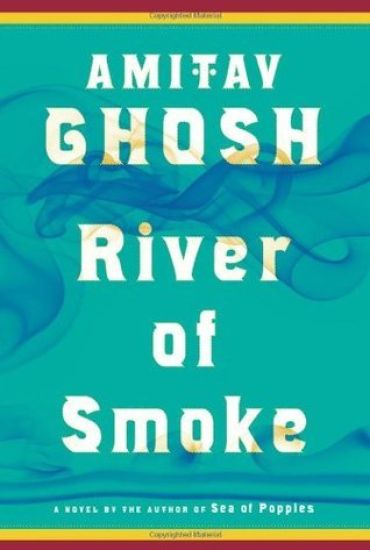
A Washington Post Notable Fiction Book for 2011 The Ibis, loaded to its gunwales with a cargo of indentured servants, is in the grip of a cyclone in the Bay of Bengal; among the dozens flailing for survival are Neel, the pampered raja who has been convicted of embezzlement; Paulette, the French orphan masquerading as a deck-hand; and Deeti, the widowed poppy grower fleeing her homeland with her lover, Kalua. The storm also threatens the clipper ship Anahita, groaning with the largest consignment of opium ever to leave India for Canton. And the Redruth, a nursery ship, carries Frederick "Fitcher" Penrose, a horticulturist determined to track down the priceless treasures of China that are hidden in plain sight: its plants that have the power to heal, or beautify, or intoxicate. All will converge in Canton's Fanqui-town, or Foreign Enclave: a tumultuous world unto itself where civilizations clash and sometimes fuse. It is a powder keg awaiting a spark to ignite the Opium Wars. Spectacular coincidences, startling reversals of fortune, and tender love stories abound. But this is much more than an irresistible page-turner. The blind quest for money, the primacy of the drug trade, the concealment of base impulses behind the rhetoric of freedom: in River of Smoke the nineteenth and twenty-first centuries converge, and the result is a consuming historical novel with powerful contemporary resonance. Critics praised Sea of Poppies for its vibrant storytelling, antic humor, and rich narrative scope; now Amitav Ghosh continues the epic that has charmed and compelled readers all over the globe.

Past and present collide in a novel about a girl who might just be a "case of the reincarnation type." Varsha Gupta wants fish for lunch. Her family is shocked; the three-year-old has never tasted fish in her life. The Guptas are strict vegetarians and don't allow it inside their Calcutta mansion. But Varsha claims she can remember another life, in a mud house by a river where she caught and cooked fish with a different mother. Perplexed, the Guptas turn to Dr. Shoma Bose, a psychologist who has been investigating what are known as "cases of the reincarnation type" for years. But her understanding of the world is changed forever by Varsha's revelations. Half a century later, Varsha's case file catches the attention of a group of environmental activists, and Shoma's nephew Dinu is drawn inexorably into their plans. As Dinu finds himself caught up in the search for Varsha, buried memories of his own past begin to surface. Traveling between late 1960s Calcutta and present-day Brooklyn, Amitav Ghosh's Ghost-Eye is an urgent and expansive novel from one of our greatest living storytellers, about family, fate, and our fragile planet.
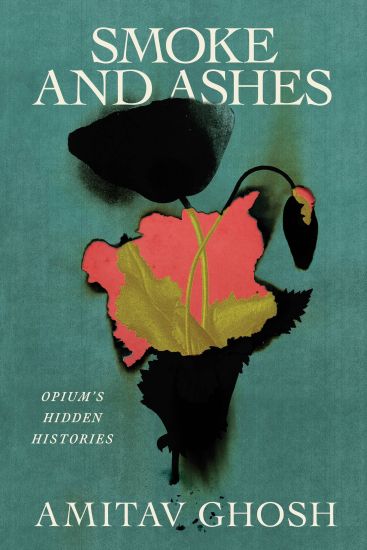
Named a Most Anticipated Book of 2024 by Foreign Policy, Literary Hub, and The Millions Ghosh unravels the impact of the opium trade on global history and in his own family―the climax of a yearslong project.When Amitav Ghosh began the research for his monumental cycle of novels the Ibis Trilogy, he was startled to learn how the lives of the nineteenth-century sailors and soldiers he wrote about were dictated not only by the currents of the Indian Ocean but also by the precious commodity carried in enormous quantities on those currents: opium. Most surprising of all, however, was the discovery that his own identity and family history were swept up in the story. Smoke and Ashes is at once a travelogue, a memoir, and an essay in history, drawing on decades of archival research. In it, Ghosh traces the transformative effect the opium trade had on Britain, India, and China, as well as the world at large. The trade was engineered by the British Empire, which exported Indian opium to sell to China to redress their great trade imbalance, and its revenues were essential to the empire's financial survival. Following the profits further, Ghosh finds opium central to the origins of some of the world's biggest corporations, of America's most powerful families and prestigious institutions (from the Astors and Coolidges to the Ivy League), and of contemporary globalism itself. Moving deftly between horticultural history, the mythologies of capitalism, and the social and cultural repercussions of colonialism, in Smoke and Ashes Ghosh reveals the role that one small plant has had in making our world, now teetering on the edge of catastrophe.
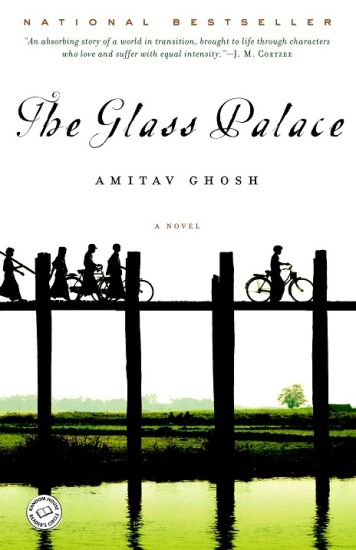
NATIONAL BESTSELLER - NAMED ONE OF THE BEST BOOKS OF THE YEAR BY THE NEW YORK TIMES BOOK REVIEW AND LOS ANGELES TIMES "A rich, layered epic that probes the meaning of identity and homeland-- a literary territory that is as resonant now, in our globalized culture, as it was when the sun never set on the British Empire."--Los Angeles Times Book Review Set in Burma during the British invasion of 1885, this masterly novel tells the story of Rajkumar, a poor boy lifted on the tides of political and social chaos, who goes on to create an empire in the Burmese teak forest. When soldiers force the royal family out of the Glass Palace and into exile, Rajkumar befriends Dolly, a young woman in the court of the Burmese Queen, whose love will shape his life. He cannot forget her, and years later, as a rich man, he goes in search of her. The struggles that have made Burma, India, and Malaya the places they are today are illuminated in this wonderful novel by the writer Chitra Divakaruni calls "a master storyteller." Praise for The Glass Palace "An absorbing story of a world in transition, brought to life through characters who love and suffer with equal intensity."--J. M. Coetzee"There is no denying Ghosh's command of culture and history. . . . He] proves a writer of supreme skill and intelligence."--The Atlantic Monthly"I will never forget the young and old Rajkumar, Dolly, the Princesses, the forests of teak, the wealth that made families and wars. A wonderful novel. An incredible story."--Grace Paley"A novelist of dazzling ingenuity."--San Francisco Chronicle
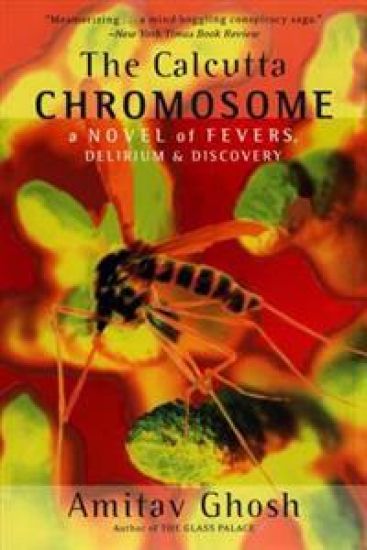
From Victorian lndia to near-future New York, The Calcutta Chromosome takes readers on a wondrous journey through time as a computer programmer trapped in a mind-numbing job hits upon a curious item that will forever change his life. When Antar discovers the battered I.D. card of a long-lost acquaintance, he is suddenly drawn into a spellbinding adventure across centuries and around the globe, into the strange life of L. Murugan, a man obsessed with the medical history of malaria, and into a magnificently complex world where conspiracy hangs in the air like mosquitoes on a summer night.
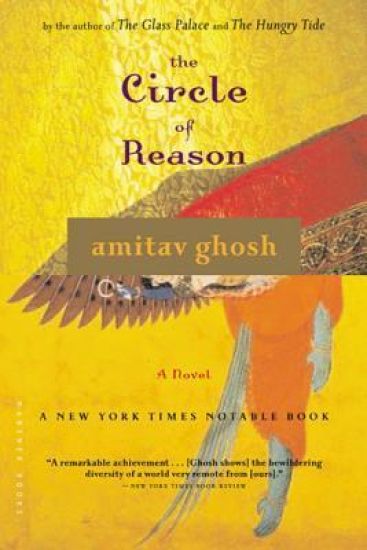
Amitav Ghosh's extraordinary novel makes a claim on literary turf held by Gabriel Garc a M rquez and Salman Rushdie. In a vivid and magical story, The Circle of Reason traces the misadventures of Alu, a young master weaver in a small Bengali village who is falsely accused of terrorism. Alu flees his home, traveling through Bombay to the Persian Gulf to North Africa with a bird-watching policeman in pursuit.
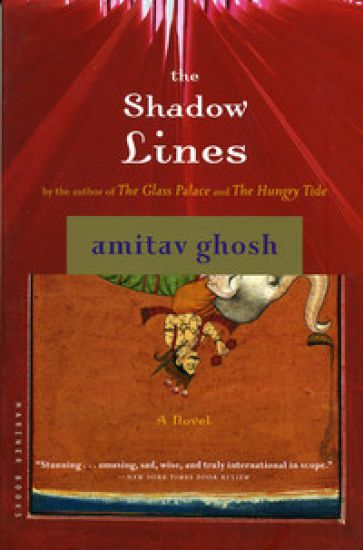
"A stunning novel" following two families -- one British, one Bengali -- from the New York Times best-selling author of Sea of Poppies (The New Republic).Opening in Calcutta in the 1960s, Amitav Ghosh's radiant second novel follows an English family and a Bengali family as their lives intertwine across the generations in both tragic and comic ways. The narrator, Indian born and English educated, traces events back and forth in time, from the outbreak of World War II to the late twentieth century, through years of Bengali partition and violence -- observing the ways in which political events invade private lives -- in an "ambitious, funny, poignant" saga (A. K. Ramanujan)."Amusing, sad, wise, and truly international in scope." -- New York Times Book Review
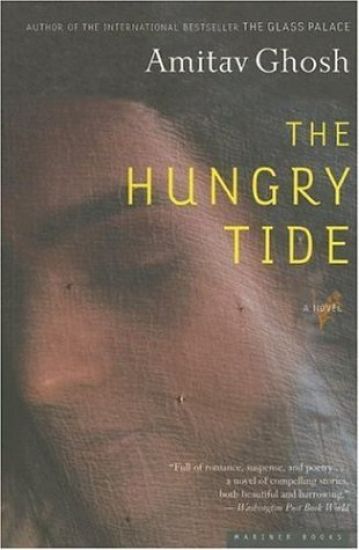
The author of The Glass Palace presents a new novel of life in modern India, chronicling the interwoven journey of an American marine biologist and a Delhi businessman who travel to the remote Sundarban islands. Reader's Guide available. Reprint.
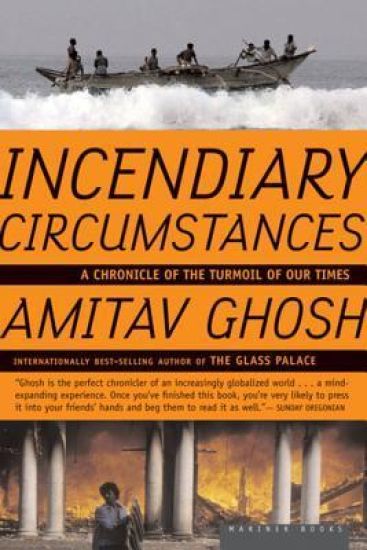
Incendiary Circumstances: A Chronicle of the Turmoil of Our Times
Amitav Ghosh
HARPER PERENNIAL
2007
nidottu
A collection of essays by the best-selling novelist and journalist provides eyewitness accounts and reflections on some of the most important and turbulent events of the past thirty years, including the catastrophic impact of the tsunami on the Andaman and Nicobar Islands, the tragedy of September 11th, the rise of Islamic fundamentalism, and more. Reprint.
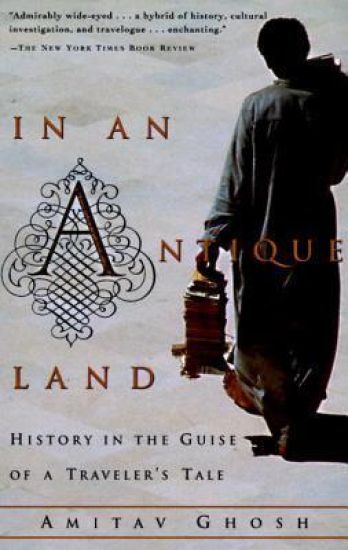
Once upon a time, an Indian writer named Amitav Ghosh set out as an Indian slave, name unknown, who some seven hundred years before had traveled to the Middle East. The journey took him to a small village in Egypt, where medieval customs coexist with twentieth-century desires and discontents. But even as Ghosh sought to re-create the life of his Indian predecessor, he found himself immersed in those of his modern Egyptian neighbors. Combining shrewd observations with painstaking historical research, Ghosh serves up skeptics and holy men, merchants and sorcerers. Some of these figures are real, some only imagine, but all emerge as vividly as the characters in a great novel. In an Antique Land is an inspired work that transcends genres as deftly as it does eras, weaving an entrancing and intoxicating spell.