Kirjojen hintavertailu. Mukana 11 717 486 kirjaa ja 12 kauppaa.

Kirjahaku

Etsi kirjoja tekijän nimen, kirjan nimen tai ISBN:n perusteella.

2 kirjaa tekijältä Amy E. Stich

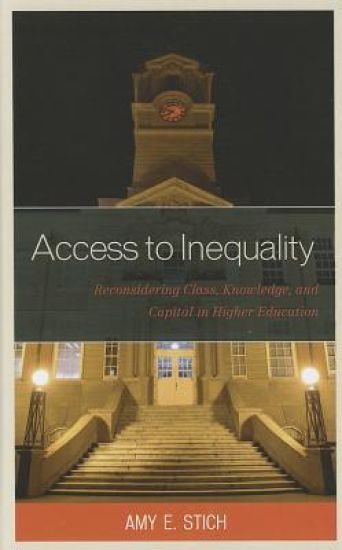
Access to Inequality

Access to Inequality

Amy E. Stich

Lexington Books
2012
sidottu
Set against the backdrop of democratization, increased opportunity, and access, income-based gaps in college entry, persistence, and graduation continue to grow, underlining a deep contradiction within American higher education. In other words, despite the well-intended, now mature process of democratization, the postsecondary system is still charged with high levels of inequality. In the interest of uncovering the mechanisms through which democratization, as currently conceived, preserves and perpetuates inequality within the system of higher education, this book reconsiders the role of social class in the production and dissemination of knowledge, the valuation of cultural capital, and the reproduction of social inequalities. Drawing upon the author’s year-long qualitative research study within one “democratized” institution of higher education and its associated art museum, Access to Inequality explores the vestiges of an exclusionary history within higher education and the art world—two related contexts that have arguably failed to adequately respond to the public’s call to democratize.

Access to Inequality

Access to Inequality

Amy E. Stich

Lexington Books
2014
nidottu
Set against the backdrop of democratization, increased opportunity, and access, income-based gaps in college entry, persistence, and graduation continue to grow, underlining a deep contradiction within American higher education. In other words, despite the well-intended, now mature process of democratization, the postsecondary system is still charged with high levels of inequality. In the interest of uncovering the mechanisms through which democratization, as currently conceived, preserves and perpetuates inequality within the system of higher education, this book reconsiders the role of social class in the production and dissemination of knowledge, the valuation of cultural capital, and the reproduction of social inequalities. Drawing upon the author’s year-long qualitative research study within one “democratized” institution of higher education and its associated art museum, Access to Inequality explores the vestiges of an exclusionary history within higher education and the art world—two related contexts that have arguably failed to adequately respond to the public’s call to democratize.