Kirjojen hintavertailu. Mukana 12 083 983 kirjaa ja 12 kauppaa.

Kirjahaku

Etsi kirjoja tekijän nimen, kirjan nimen tai ISBN:n perusteella.

3 kirjaa tekijältä Amy Kaminsky

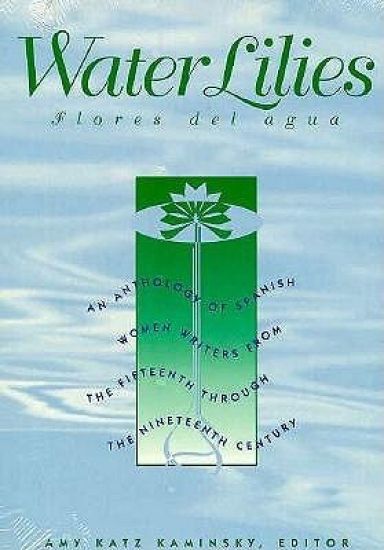
Water Lilies

Water Lilies

Amy Kaminsky

University of Minnesota Press
1995
nidottu
Poetry and prose by Spanish women presented here in both English and Spanish.A dazzling sampler, Water Lilies brings to light a rich and until now largely invisible version of Spanish literary history. These hard-to-find works, most translated for the first time, are printed on facing pages in Spanish and English and located within a critical, biographical, and historical overview. Here are five centuries of writing by Spanish women, the unknown recovered from obscurity, the well-known seen as they rarely have been-in the context of a women’s literary history. Some of these writers, like Rosalía de Castro in “The Bluestockings” and Teresa de Cartagena in Wonder at the Work of God, question the relationship between the woman writer and the act of writing. Some, like the poet Carolina Coronado in “The Twin Geniuses: Sappho and Saint Teresa of Jesus,” overtly seek a literary tradition. Others, like Saint Teresa in her Life and Luisa Sigea in her poetry, provide touchstones for women in search of such a tradition.Legends and stories of women’s friendships, the inconstancy of men, and the love of God; Spain’s first autobiographical text; secular and religious poetry from medieval through recent times; an excerpt from one of the few chivalresque novels written by a woman; a full-length Golden Age comedia: this is the wide range of works Water Lilies comprises. Brought together for the first time, the writers articulate their resistance to, and their complicity in, a literary history that, until now, has tried to exclude them.
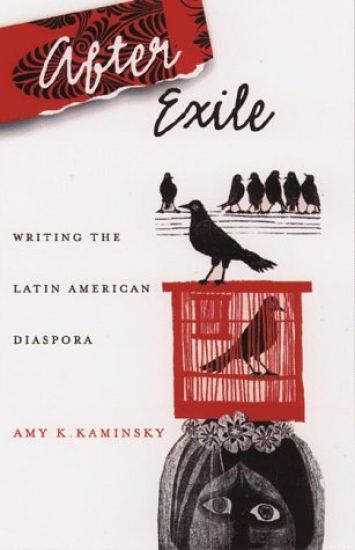
After Exile

After Exile

Amy Kaminsky

University of Minnesota Press
1999
nidottu
Considers the effect of exile on contemporary South American writers.Can an exiled writer ever really go home again? What of the writers of Argentina, Uruguay, and Chile, whose status as exiles in the 1970s and 1980s largely defined their identities and subject matter? After Exile takes a critical look at these writers, at the effect of exile on their work, and at the complexities of homecoming-a fraught possibility when democracy was restored to each of these countries.Both famous and lesser known writers people this story of dislocation and relocation, among them José Donoso, Ana Vásquez, Luisa Valenzuela, Cristina Peri Rossi, and Mario Benedetti. In their work-and their predicament-Amy K. Kaminsky considers the representation of both physical uprootedness and national identity-or, more precisely, an individual’s identity as a national subject. Here, national identity is not the double abstraction of “identity” and “nation,” but a person’s sense of being and belonging that derives from memories and experiences of a particular place. Because language is crucial to this connection, Kaminsky explores the linguistic isolation, miscommunication, and multilingualism that mark late-exile and post-exile writing. She also examines how gender difference affects the themes and rhetoric of exile-how, for example, traditional projections of femininity, such as the idea of a “mother country,” are used to allegorize exile. Describing exile as a process (sometimes of acculturation, sometimes of alienation), this work fosters a new understanding of how writers live and work in relation to space and place, particularly the place called home.ISBN 0-8166-3147-6 Cloth £00.00 $42.95xx ISBN 0-8166-3148-4 Paper £00.00 $16.95x208 Pages 5 7/8 x 9 JuneTranslation inquiries: University of Minnesota Press