Kirjojen hintavertailu. Mukana 11 342 296 kirjaa ja 12 kauppaa.

Kirjahaku

Etsi kirjoja tekijän nimen, kirjan nimen tai ISBN:n perusteella.

3 kirjaa tekijältä Amy Olberding

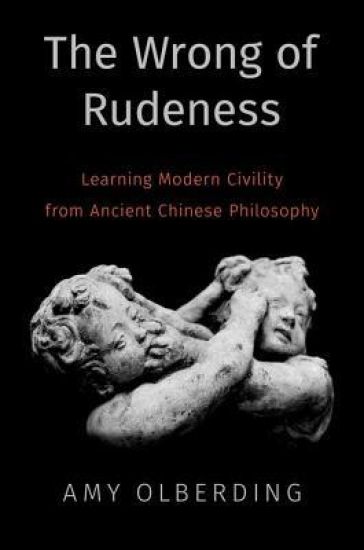
The Wrong of Rudeness

The Wrong of Rudeness

Amy Olberding

Oxford University Press Inc
2019
sidottu
In a time of fractious politics, being rude can feel wickedly gratifying, while being polite can feel simple-minded or willfully naïve. Do manners and civility even matter now? Is it worthwhile to make the effort to be polite? When rudeness has become routine and commonplace, why bother? When so much of public and social life with others is painful and bitterly acrimonious, why should anyone be polite? As Amy Olberding argues, civility and ordinary politeness are linked both to big values, such as respect and consideration, and to the fundamentally social nature of human beings. Being polite is not just a nicety--it has deep meaning. Olberding explores the often overwhelming temptations to incivility and rudeness, and the ways that they must and can be resisted. Drawing on the wisdom of early Chinese philosophers who lived through great political turmoil but nonetheless avidly sought to "mind their manners," the book articulates a way of thinking about politeness that is distinctively social. We can feel profoundly alienated from others, and others can sometimes be truly terrible, yet, as the Confucian philosophers encourage us to see, because we are social, neglecting the social and political courtesies comes at perilous cost. The book considers not simply why civility and politeness are important, but how. It reveals how small insults can accumulate to damage social relations, how separating people into tribes undermines our better interests, and how even bodily and facial expressions can influence our lives with others. Many of us, in spite of our best efforts, are often tempted to be rude, and will find here tools for fighting that temptation.
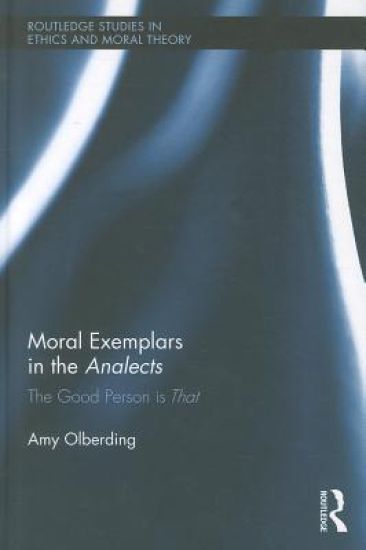
Moral Exemplars in the Analects

Moral Exemplars in the Analects

Amy Olberding

Routledge
2011
sidottu
In this study, Olberding proposes a new theoretical model for reading the Analects. Her thesis is that the moral sensibility of the text derives from an effort to conceptually capture and articulate the features seen in exemplars, exemplars that are identified and admired pre-theoretically and thus prior to any conceptual criteria for virtue. Put simply, Olberding proposes an "origins myth" in which Confucius, already and prior to his philosophizing knows whom he judges to be virtuous. The work we see him and the Analects' authors pursuing is their effort to explain in an organized, generalized, and abstract way why pre-theoretically identified exemplars are virtuous. Moral reasoning here begins with people and with inchoate experiences of admiration for them. The conceptual work of the text reflects the attempt to analyze such people and parse such experiences in order to distill abstract qualities that account for virtue and can guide emulation.
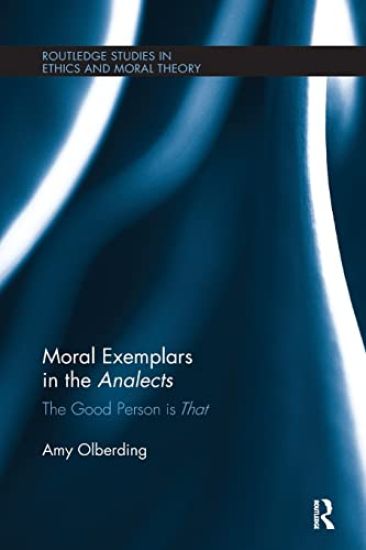
Moral Exemplars in the Analects

Moral Exemplars in the Analects

Amy Olberding

Routledge
2017
nidottu
In this study, Olberding proposes a new theoretical model for reading the Analects. Her thesis is that the moral sensibility of the text derives from an effort to conceptually capture and articulate the features seen in exemplars, exemplars that are identified and admired pre-theoretically and thus prior to any conceptual criteria for virtue. Put simply, Olberding proposes an "origins myth" in which Confucius, already and prior to his philosophizing knows whom he judges to be virtuous. The work we see him and the Analects' authors pursuing is their effort to explain in an organized, generalized, and abstract way why pre-theoretically identified exemplars are virtuous. Moral reasoning here begins with people and with inchoate experiences of admiration for them. The conceptual work of the text reflects the attempt to analyze such people and parse such experiences in order to distill abstract qualities that account for virtue and can guide emulation.