Kirjojen hintavertailu. Mukana 11 534 673 kirjaa ja 12 kauppaa.

Kirjahaku

Etsi kirjoja tekijän nimen, kirjan nimen tai ISBN:n perusteella.

5 kirjaa tekijältä Amy Quan Barry

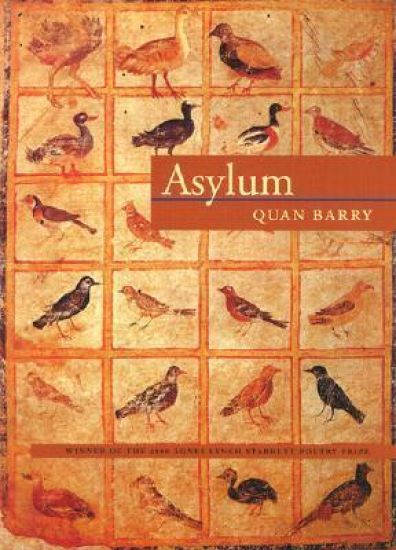
Asylum

Asylum

Amy Quan Barry

University of Pittsburgh Press
2001
nidottu
Winner of the 2000 Agnes Lynch Starrett Poetry Prize2002 finalist in poetry, Society of Midland AuthorsQuan Barry’s stunning debut collection has been compared to Sylvia Plath’s Ariel for the startling complexity of craft and the original sophisticated vision behind it. In these poems beauty is just as likely to be discovered on a radioactive atoll as in the existential questions raised by The Matrix.Asylum is a work concerned with giving voice to the displaced—both real and fictional. In "some refrains Sam would have played had he been asked" the piano player from Casablanca is fleshed out in ways the film didn’t allow. Steven Seagal, Yukio Mishima, Tituba of the Salem Witch Trials, and eighteenth-century black poet Phillis Wheatley also populate these poems.Barry engages with the world—the Tuskegee syphilis experiments, the legacy of the Vietnam war—but also tackles the broad meditative question of the individual’s existence in relation to a higher truth, whether examining rituals or questioning, "Where is it written that we should want to be saved?" Ultimately, Asylum finds a haven by not looking away.
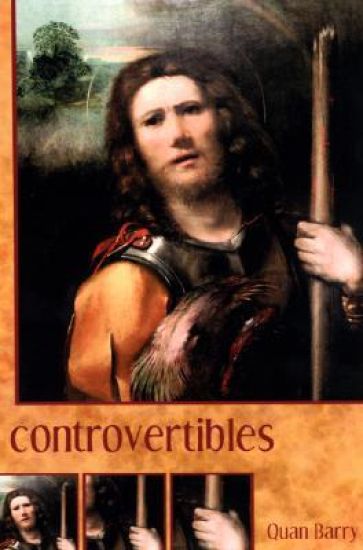
Controvertibles

Controvertibles

Amy Quan Barry

University of Pittsburgh Press
2004
nidottu
Controvertibles features more of the refined brilliance and delicate lyricism of this poet, cast in a more meditative mode. Throughout, she examines cultural objects by lifting them out of their usual settings and repositioning them in front of new, disparate backdrops. Doug Flutie's famous Hail Mary pass and Rutger Hauer's role in Blade Runner are contextualized within the Tibetan Book of the Dead. Bob Beamon's world-record-setting long jump in the 1968 Olympics is slowed down and examined in the style of The Matrix's revolutionary bullet time.Samantha Smith, Richard Nixon, the Shroud of Turin, Igor Stravinsky, the largo from Handel's Xerxes, the resurrection of Lazarus, and the groundbreaking 1984 Apple Computer Super Bowl commercial are among the many disparate people and objects Barry uses to explore the multifaceted nature of existence.
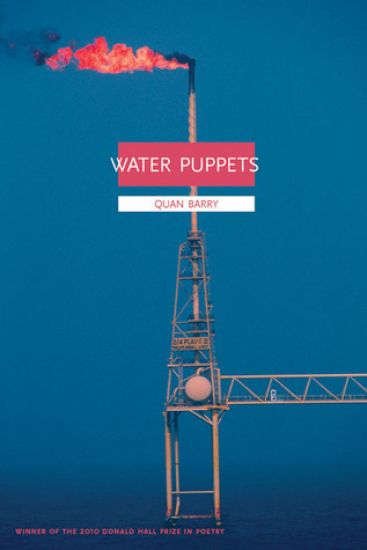
Water Puppets

Water Puppets

Amy Quan Barry

University of Pittsburgh Press
2011
nidottu
Winner of the 2010 Donald Hall Prize in PoetryIn her third poetry collection, Quan Barry explores the universal image of war as evidenced in Afghanistan and Iraq as well as Vietnam, the country of her birth. In the long poem \u201cmeditations\u201d Barry examines her own guilt in initially supporting the invasion of Iraq. Throughout the manuscript she investigates war and its aftermath by negotiating between geographically disparate landscapes—from the genocide in the Congo—to a series of pros poem \u201csnapshots\u201d of modern day Vietnam. Despite the gravity of war, Barry also turns her signature lyricism to other topics such as the beauty of Peru or the paintings of Ana Fernandez.
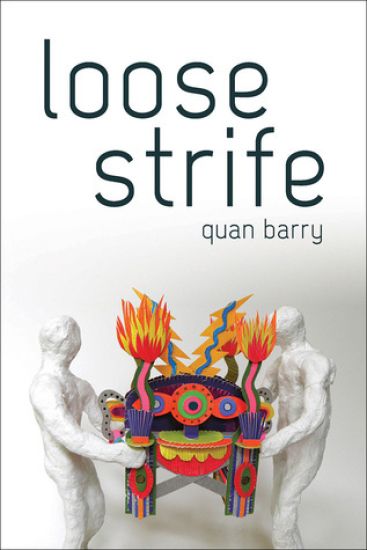
Loose Strife

Loose Strife

Amy Quan Barry

University of Pittsburgh Press
2015
nidottu
In poems initially inspired by Aeschylus' fifth-century B.C. trilogy "The Oresteia," which chronicles the fall of the House of Atreides, Loose Strife investigates the classical sense of loose strife, namely "to loose battle" or "sow chaos," a concept which is still very much with us more than twenty-five hundred years later.
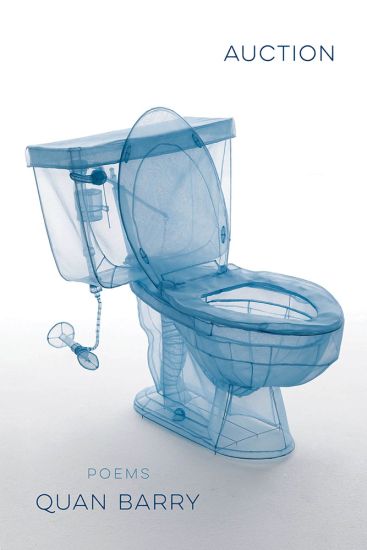
Auction

Auction

Amy Quan Barry

UNIVERSITY OF PITTSBURGH PRESS
2024
nidottu
In Auction, her first poetry collection in eight years, the poet, novelist, and playwright Quan Barry travels the globe in her signature quest into the existential nature of experience. These poems explore the inner landscapes of both the human and animal realms, revealing them to be points along the same spectrum. At the heart of the book lies an extended study of toxic storytelling as an element of warcraft, but Barry also contemplates the death of a Buddhist master, the plight of migrants both at home and abroad, the ethics of travel and consumption, and the larger question of how and why we construct a self in order to navigate the world.