Kirjojen hintavertailu. Mukana 12 363 183 kirjaa ja 12 kauppaa.

Kirjahaku

Etsi kirjoja tekijän nimen, kirjan nimen tai ISBN:n perusteella.

5 kirjaa tekijältä Amy Sargeant

The Servant

The Servant

Amy Sargeant

British Film Institute
2020
nidottu
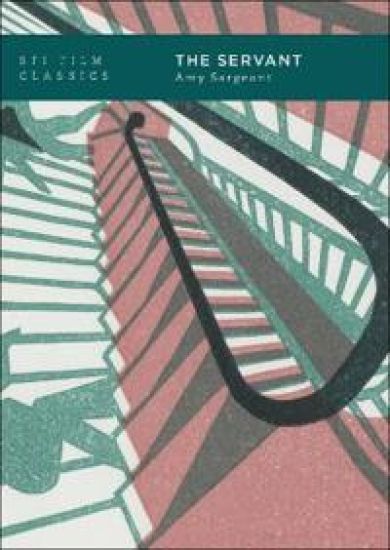
Amy Sargeant's compelling and meticulous study of Joseph Losey's The Servant (1963) sets the film in the context of a long tradition of fictional depictions of the master-servant relationship, from Shakespeare to Cervantes, Henry James, Dorothy L. Sayers and P.G. Wodehouse. Sargeant points out that while many of these relationships are played for comic effect, that of the 'young master' Tony (James Fox) and his manservant Barrett (Dirk Bogarde) unfolds in a far more sinister manner, with Barrett coming to dominate and humiliate the hapless Tony.Sargeant's reading pays particular attention to the contribution not only of Losey and Harold Pinter, who adapted the screenplay from Robin Maugham's novella, but also of the cinematographer Douglas Slocombe, designer Richard Macdonald and costume designer Beatrice 'Bumble' Dawson. She analyses the performances of Sarah Miles as Barrett's lover Vera and Wendy Craig as Tony's fiancee Susan, as well as those of Fox and Bogarde, and gives careful consideration to how the film uses architectural form, interior design and decoration, and clothing to establish character and relationships. In the context of the collapse of the British Empire, and a beleaguered Establishment beset by spy and sex scandals, the film can be read, Sargeant argues, as a metaphor for the 'state of the nation' in the early 1960s.Finally, Sargeant considers the film's critical and commercial reception in Britain, Europe and the United States - its release, how it was received as one of a number of 'emigre' films, and Losey's surprising denial of a homoerotic intent in the Tony-Barrett relationship.In her new foreword to this edition, Amy Sargeant considers contemporary resonances of the film's depiction of a twisted master-servant relationship in recent TV and cinema including The Crown, Downton Abbey and The Trial of Christine Keeler.
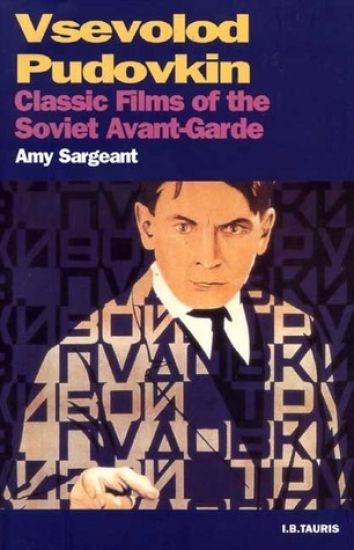
Vsevolod Pudovkin

Vsevolod Pudovkin

Amy Sargeant

I.B. Tauris
2001
sidottu
Pudovkin is listed amongst the great and the good of twentieth century directors: his influence is acknowledged by such diverse figures as Hitchcock and Kubrick, Zavattini and Mamet, and Walter Benjamin usedhis work as a vital source forhis studies of the aesthetics and cultural politics of the period.Vsevelod Pudovkin: Classic Works of the Soviet Avant-Garde is the first book on Pudovkin for more than twenty-five years. It covers his career from his apprenticeship with Gardin and Kuleshov in the early '20s to his sound films of the early '30s. It discusses films on which Pudovkin worked as director, as collaborator and in which he appeared, from the famous troika, The Mother, The End of St Petersburg and Storm over Asia to the lesser known The Mechanics of the Brain and The Living Corpse. Pudovkin's art is placed in the context of his contribution to the cultural and political fervour of Soviet Russia after the Revolution, and especially the theoretical disputes with his contemporary Eisenstein. The book also suggests broader alignments within European avant-garde movements and takes a close look at the influence D. W. Griffith exerted over this giant of early Soviet film-making.Vsevelod Pudovkin: Classic Films of the Soviet Avant-Garde is the companion volume to Richard Taylor's translations of Pudovkin's writings, The Pudovkin Collection.
Storm Over Asia

Storm Over Asia

Amy Sargeant

I.B. Tauris
2008
nidottu
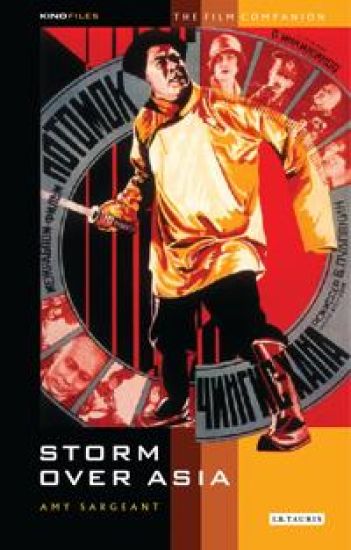
"Storm over Asia" ('The Heir to Genghis Khan') was the third of Vsevolod Pudovkin's great silent films. Released in 1928 it confirmed the director's reputation and Soviet cinema's growing stature internationally. It was subsequently re-edited, sonorised and re-released in 1949. The Buriat-Mongolian actor, Valeri Inkizhinov stars as the trapper hero, Bair, a character partly inspired by the actual Revolutionary figure, Sukhebator. Many of the extras in the film had participated in the events depicted. The film acknowledges a debt to D.W. Griffith and documents the everyday life and rituals of the people living around Lake Baikal, a culture that was almost entirely suppressed in the 1930s.This KINOfile describes the circumstances under which "Storm over Asia" was produced and distributed and discusses the warm reception of the film in Russia, Germany and France. In Britain the film was widely understood as an attack on British involvement in the Russian Civil War and on colonial policy in China and India - and was banned. Amy Sargeant also examines the potency of the Genghis Khan myth for a Soviet audience, and the continuing resonance of this fine film.
British Historical Cinema

British Historical Cinema

Claire Monk; Amy Sargeant

Routledge
2002
sidottu
Films recreating or addressing 'the past' - recent or distant, actual or imagined - have been a mainstay of British cinema since the silent era. From Elizabeth to Carry On Up The Khyber, and from the heritage-film debate to issues of authenticity and questions of genre, British Historical Cinema explores the ways in which British films have represented the past on screen, the issues they raise and the debates they have provoked. Discussing films from biopics to literary adaptations, and from depictions of Britain's colonial past to the re-imagining of recent decades in retro films such as Velvet Goldmine, a range of contributors ask whose history is being represented, from whose perspective, and why.
British Historical Cinema

British Historical Cinema

Claire Monk; Amy Sargeant

Routledge
2002
nidottu
Films recreating or addressing 'the past' - recent or distant, actual or imagined - have been a mainstay of British cinema since the silent era. From Elizabeth to Carry On Up The Khyber, and from the heritage-film debate to issues of authenticity and questions of genre, British Historical Cinema explores the ways in which British films have represented the past on screen, the issues they raise and the debates they have provoked. Discussing films from biopics to literary adaptations, and from depictions of Britain's colonial past to the re-imagining of recent decades in retro films such as Velvet Goldmine, a range of contributors ask whose history is being represented, from whose perspective, and why.