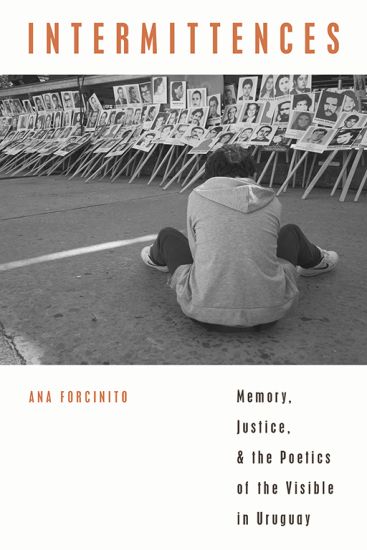
The construction of memory entails a battle not only between memory and forgetting but also between different memories. There are multiple constructions of memory, and in the dispute between them, some become hegemonic, while others remain in the margins. Ana Forcinito explores the intermittences of transitional justice and memory in post-dictatorship Uruguay. The processes of building memory and transitional justice are repetitive but inconstant. They are contested by both internal and external forces and shaped by tensions between oblivion and silence. Forcinito explores models of reconciliation to present an alternative narrative of the past and to expose the blind spots of memory.
Forcinito explores how testimonial voices have played a pivotal role in the fight for justice, memory, and gender rights. Through the concept of diffraction, she examines how these voices move through and reshape barriers to construct sonic spaces that connect bodies and create spaces for listening. While Argentina is sometimes regarded as a global leader in human rights, LGBTQI+ rights, and feminist movements, legal and judicial responses to gender-based violence following the last military dictatorship (1976-1983) were slow to materialize. This book explores these delayed advancements while highlighting the role of testimonial voices in shaping them. Testimonial expressions outside the legal scenario denounce violence and explore the edges of memory, the difficulty of remembering, as well as the doubts surrounding memory. They expose the difficulties of narrating violent events and their aftermaths and how gender-based violence is entangled with other expressions of violence.
Hear Me with Your Eyes examines the intrusion of the voice into the cinematographic gaze and the intersections (and ruptures) of the sound-image in Argentine women filmmakers from a feminist perspective. In different ways, Maria Luisa Bemberg, Lita Stantic, Lucrecia Martel, Albertina Carri, Maria Victoria Menis, Lucia Puenzo, Sabrina Farji, Paula de Luque, Anahi Berneri, Sandra Gugliotta, and Gabriela David explore the visual realm through the continuities, intrusions, irrelevancies, harmonies, and desynchronizations of the voice. Or, instead, they explore different voices and their modulations, including whispers, screams, singing, echoes, breathing, resonance, sighs, and the transcendent voice, the narrative voice, the silenced voice, the articulated and unarticulated voice, and that which is none of the above. These voices suggest another relationship with the audiovisual realm, one that seems to include a closeness that erases, if only intermittently, the unalterable relationship between subject and object that characterizes the patriarchal visual regime.