Kirjojen hintavertailu. Mukana 11 627 484 kirjaa ja 12 kauppaa.

Kirjahaku

Etsi kirjoja tekijän nimen, kirjan nimen tai ISBN:n perusteella.

4 kirjaa tekijältä Anand Vivek Taneja

The Gabriel of Madness

The Gabriel of Madness

Anand Vivek Taneja

University of California Press
2026
sidottu
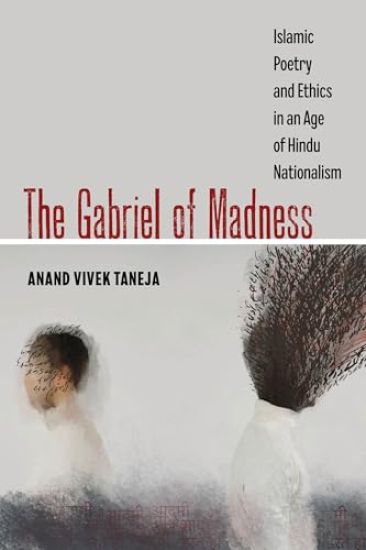
A free ebook version of this title is available through Luminos, University of California Press’s Open Access publishing program. Visit www.luminosoa.org to learn more. Since a right-wing Hindu nationalist government came to power in 2014, Indian Muslims have faced rampant Islamophobia, lynchings and mob violence, discriminatory legislation, and economic ostracism. How have Indian Muslims—the largest religious minority in the world’s largest democracy—responded to the failures and demise of state secularism? Using the lens of Urdu poetry, this beautiful ethnography explores how Indian Muslims have drawn upon Islamic traditions to actualize free-thinking selves and imagine a pluralistic society unbeholden to coercive state power. Through poetic symposiums, interviews, social media, and deep conversations with diverse Muslim interlocutors, from religious leaders to politicians, civil society activists to poets, Anand Vivek Taneja paints a portrait of the vitality of Indian Muslim artistic, ethical, and spiritual life at a moment of existential crisis.
The Gabriel of Madness

The Gabriel of Madness

Anand Vivek Taneja

University of California Press
2026
pokkari
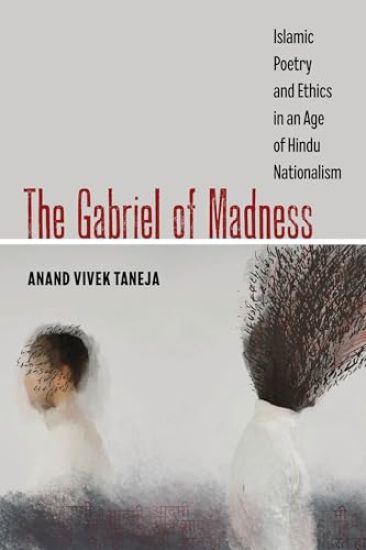
A free ebook version of this title is available through Luminos, University of California Press’s Open Access publishing program. Visit www.luminosoa.org to learn more. Since a right-wing Hindu nationalist government came to power in 2014, Indian Muslims have faced rampant Islamophobia, lynchings and mob violence, discriminatory legislation, and economic ostracism. How have Indian Muslims—the largest religious minority in the world’s largest democracy—responded to the failures and demise of state secularism? Using the lens of Urdu poetry, this beautiful ethnography explores how Indian Muslims have drawn upon Islamic traditions to actualize free-thinking selves and imagine a pluralistic society unbeholden to coercive state power. Through poetic symposiums, interviews, social media, and deep conversations with diverse Muslim interlocutors, from religious leaders to politicians, civil society activists to poets, Anand Vivek Taneja paints a portrait of the vitality of Indian Muslim artistic, ethical, and spiritual life at a moment of existential crisis.
Jinnealogy

Jinnealogy

Anand Vivek Taneja

STANFORD UNIVERSITY PRESS
2017
sidottu
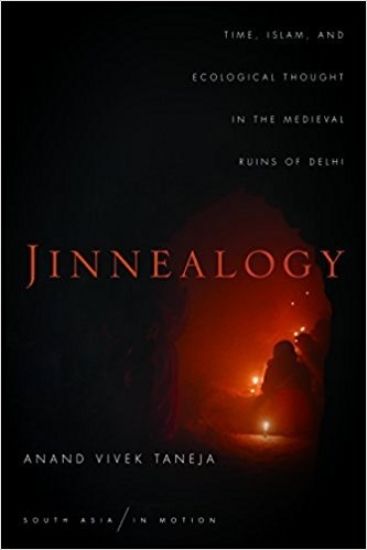
In the ruins of a medieval palace in Delhi, a unique phenomenon occurs: Indians of all castes and creeds meet to socialize and ask the spirits for help. The spirits they entreat are Islamic jinns, and they write out requests as if petitioning the state. At a time when a Hindu right wing government in India is committed to normalizing a view of the past that paints Muslims as oppressors, Anand Vivek Taneja's Jinnealogy provides a fresh vision of religion, identity, and sacrality that runs counter to state-sanctioned history. The ruin, Firoz Shah Kotla, is an unusually democratic religious space, characterized by freewheeling theological conversations, DIY rituals, and the sanctification of animals. Taneja observes the visitors, who come mainly from the Muslim and Dalit neighborhoods of Delhi, and uses their conversations and letters to the jinns as an archive of voices so often silenced. He finds that their veneration of the jinns recalls pre-modern religious traditions in which spiritual experience was inextricably tied to ecological surroundings. In this enchanted space, Taneja encounters a form of popular Islam that is not a relic of bygone days, but a vibrant form of resistance to state repression and post-colonial visions of India.
Jinnealogy

Jinnealogy

Anand Vivek Taneja

Stanford University Press
2017
pokkari
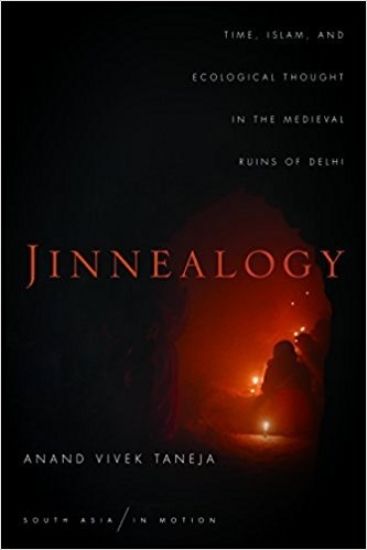
In the ruins of a medieval palace in Delhi, a unique phenomenon occurs: Indians of all castes and creeds meet to socialize and ask the spirits for help. The spirits they entreat are Islamic jinns, and they write out requests as if petitioning the state. At a time when a Hindu right wing government in India is committed to normalizing a view of the past that paints Muslims as oppressors, Anand Vivek Taneja's Jinnealogy provides a fresh vision of religion, identity, and sacrality that runs counter to state-sanctioned history. The ruin, Firoz Shah Kotla, is an unusually democratic religious space, characterized by freewheeling theological conversations, DIY rituals, and the sanctification of animals. Taneja observes the visitors, who come mainly from the Muslim and Dalit neighborhoods of Delhi, and uses their conversations and letters to the jinns as an archive of voices so often silenced. He finds that their veneration of the jinns recalls pre-modern religious traditions in which spiritual experience was inextricably tied to ecological surroundings. In this enchanted space, Taneja encounters a form of popular Islam that is not a relic of bygone days, but a vibrant form of resistance to state repression and post-colonial visions of India.