Kirjojen hintavertailu. Mukana 11 244 527 kirjaa ja 12 kauppaa.

Kirjahaku

Etsi kirjoja tekijän nimen, kirjan nimen tai ISBN:n perusteella.

35 kirjaa tekijältä Andre Gide

The Notebooks of Andre Walter

The Notebooks of Andre Walter

Andre Gide

Philosophical Library
1968
pokkari
This debut work lays bare the early brilliance and philosophical conflicts of Andr Gide, a towering figure in French literature. Andr Gide, one of the masters of French literature, captures the essence of the philosophical Romantic in this profoundly personal first novel, completed when he was just twenty years old. Drawing heavily on his religious upbringing and private journals, The Notebooks of Andr Walter--with its "white" and "black" halves--tells the story of a young man pining for his forbidden love, cousin Emmanuelle. But his evocative memories and devoted yearnings, carefully crafted through quotations and diary excerpts, lead only to madness and death. Annotated with footnotes from translator and scholar Wade Baskin, this story within a story offers a unique portrait of the artist as a young man, as it reveals the key themes of self-analysis and moral conscience that Gide explores in his mature works.
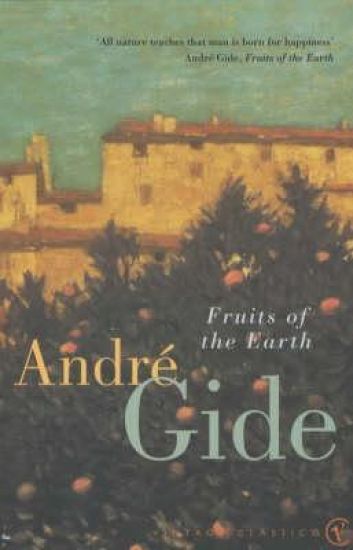
Fruits Of The Earth

Fruits Of The Earth

Andre Gide

Vintage Publishing
2002
pokkari
The author wrote this work when he was suffering from tuberculosis. Addressed to the reader, it is a hymn to the pleasures of life that Gide came so close to losing: travel, touch, hearing, smell, sight and, above all, taste.
The Immoralist

The Immoralist

Andre Gide

PENGUIN CLASSICS
2001
nidottu
"The humanist has four leading characteristics--curiosity, a free mind, belief in good taste, and a belief in the human race--and all four are present in Gide. . . . The humanist of our age." --E. M. Forster A Penguin Classic In The Immoralist, Andr Gide presents the confessional account of a man seeking the truth of his own nature. The story's protagonist, Michel, knows nothing about love when he marries the gentle Marceline out of duty to his father. On the couple's honeymoon to Tunisia, Michel becomes very ill, and during his recovery he meets a young Arab boy whose radiant health and beauty captivate him. An awakening for him both sexually and morally, Michel discovers a new freedom in seeking to live according to his own desires. But, as he also discovers, freedom can be a burden. A frank defense of homosexuality and a challenge to prevailing ethical concepts, The Immoralist is a literary landmark, marked by Gide's masterful, pure, simple style. For more than seventy years, Penguin has been the leading publisher of classic literature in the English-speaking world. With more than 1,800 titles, Penguin Classics represents a global bookshelf of the best works throughout history and across genres and disciplines. Readers trust the series to provide authoritative texts enhanced by introductions and notes by distinguished scholars and contemporary authors, as well as up-to-date translations by award-winning translators.
Lafcadio's Adventures

Lafcadio's Adventures

Andre Gide

VINTAGE
2003
nidottu
Passing with cinematographic speed across the capitals of Europe, Nobel laureate Andr Gide's Lafcadio's Adventures is a brilliantly sly satire and one of the clearest articulations of his greatest theme: the unmotivated crime. When Lafcadio Wluiki, a street-smart nineteen-year-old in 1890s Paris, learns that he's heir to an ailing French nobleman's fortune, he's seized by wanderlust. Traveling through Rome in expensive new threads, he becomes entangled in a Church extortion scandal involving an imprisoned Pope, a skittish purveyor of graveyard statuary, an atheist-turned-believer on the edge of insolvency, and all manner of wastrels, swindlers, aristocrats, adventurers, and pickpockets. With characteristic irony, Gide contrives a hilarious detective farce whereby the wrong man is apprehended, while the charmingly perverse Lafcadio--one of the most original creations in all modern fiction--goes free.
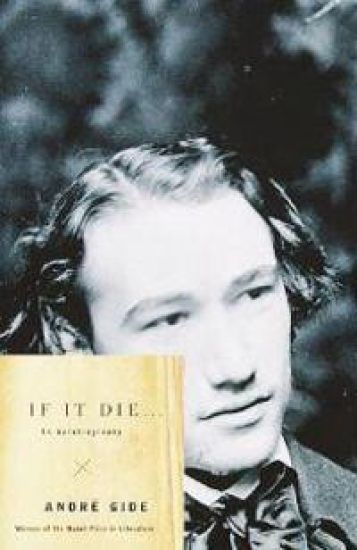
If It Die . . .: An Autobiography
This is the major autobiographical statement from Nobel laureate Andr Gide. In the events and musings recorded here we find the seeds of those themes that obsessed him throughout his career and imbued his classic novels The Immoralist and The Counterfeiters. Gide led a life of uncompromising self-scrutiny, and his literary works resembled moments of that life. With If It Die, Gide determined to relay without sentiment or embellishment the circumstances of his childhood and the birth of his philosophic wanderings, and in doing so to bring it all to light. Gide's unapologetic account of his awakening homosexual desire and his portrait of Oscar Wilde and Lord Alfred Douglas as they indulged in debauchery in North Africa are thrilling in their frankness and alone make If It Die an essential companion to the work of a twentieth-century literary master.
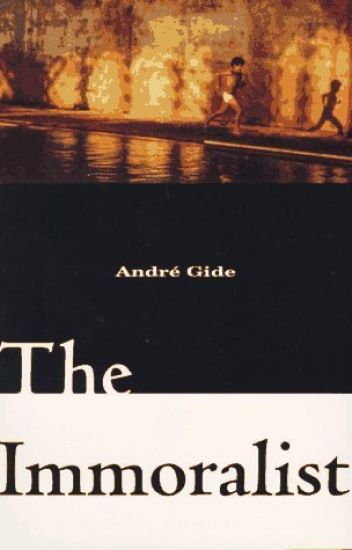
The Immoralist

The Immoralist

Andre Gide

Vintage Books
1996
nidottu
In The Immoralist, André Gide presents the confessional account of a man seeking the truth of his own nature. The story's protagonist, Michel, knows nothing about love when he marries the gentle Marceline out of duty to his father. On the couple's honeymoon to Tunisia, Michel becomes very ill, and during his recovery he meets a young Arab boy whose radiant health and beauty captivate him. An awakening for him both sexually and morally, Michel discovers a new freedom in seeking to live according to his own desires. But, as he also discovers, freedom can be a burden. A frank defense of homosexuality and a challenge to prevailing ethical concepts, The Immoralist is a literary landmark, marked by Gide's masterful, pure, simple style. Translated by David Watson, with an introduction by Alan Sheridan.
Notes on Chopin

Notes on Chopin

Andre Gide

Philosophical Library
1978
sidottu
An inspiring discourse on the power of music from one of the twentieth century's most important figures, Andr Gide Andr Gide, one of the great intellectuals of the twentieth century and a devoted pianist, invites readers to reevaluate Fr d ric Chopin as a composer "betrayed . . . deeply, intimately, totally violated" by a music community that had fundamentally misinterpreted his work. As a profound admirer of Chopin's "promenade of discoveries," Gide intersperses musical notation throughout the text to illuminate his arguments, but most moving is Gide's own poetic expression for the music he so loved.
Oscar Wilde

Oscar Wilde

Andre Gide

Philosophical Library
2007
sidottu
Gide, in this first English translation, defended a poet named Oscar Wilde when other poets threatened to wreck Wilde's life and attempted to show that Wilde was an honorable man. Gide's personal sketches are presented in this book that are in original form. This work was written during the prime of Oscar Wilde's life. Andr Gide (1869-1951), French writer, whose novels, plays, and autobiographical works are distinguished for their exhaustive analysis of individual efforts at self-realization and Protestant ethical concepts; together with his critical works they had a profound influence on French writing and philosophy. Gide was born November 22, 1869, in Paris into a strict Protestant family and educated at the cole Alsacienne and the Lyc e Henri IV. In his first book, Les cahiers d'Andre Walter (The Notebooks of Andre Walter, 1891), Gide described the religious and romantic idealism of an unhappy young man. He then became associated with the Symbolists, but in 1894 began to develop an individualistic approach and style. In Les nourritures terrestres (The Fruits of the Earth, 1897) he preached the doctrine of active hedonism. Thereafter his works were devoted to examining the problems of individual freedom and responsibility, from many points of view. The Immoralist (1902; trans. 1930) and Strait Is the Gate (1909; trans. 1924) are studies of individual ethical concepts in conflict with conventional morality. The Caves of the Vatican (trans. 1927 and also published in English as Lafcadio's Adventures), in which Gide ridiculed the possibility of complete personal independence, appeared in 1914. The idyll La symphonie pastorale (The Pastoral Symphony, 1919; produced as a motion picture, 1947) dealt with love and responsibility. Gide examined the problems of middle-class families and of adolescence in If It Die (1920; trans. 1935) and in the popular novel of youth in Paris, The Counterfeiters (1926; trans. 1928). Gide's preoccupation with individual moral responsibility led him to seek public office. After filling municipal positions in Normandy (Normandie), he became a special envoy of the colonial ministry in 1925-26 and wrote two books describing conditions in the French African colonies. These reports, Voyage au Congo (1927) and Retour du Tchad (1927), were instrumental in bringing about reforms in French colonial law. They were published together in English as Travels in the Congo (1929). In the early 1930s Gide had expressed his admiration and hope for the "experiment" in the USSR, but after a journey in the Soviet Union he reported his disillusionment in Return from the U.S.S.R. (1936; trans. 1937). Many of Gide's critical studies appeared in La Nouvelle Revue Fran aise, a literary periodical that he helped to found in 1909 and that became a dominant influence in French intellectual circles. These essays are principally analyses of the psychology of creative artists.
Notes on Chopin

Notes on Chopin

Andre Gide

Philosophical Library
1978
pokkari
An inspiring discourse on the power of music from one of the twentieth century's most important figures, Andr Gide Andr Gide, one of the great intellectuals of the twentieth century and a devoted pianist, invites readers to reevaluate Fr d ric Chopin as a composer "betrayed . . . deeply, intimately, totally violated" by a music community that had fundamentally misinterpreted his work. As a profound admirer of Chopin's "promenade of discoveries," Gide intersperses musical notation throughout the text to illuminate his arguments, but most moving is Gide's own poetic expression for the music he so loved.
The White Notebook

The White Notebook

Andre Gide

Philosophical Library
1965
pokkari
This first published work lays bare the early brilliance and philosophical conflicts of Andr Gide, a towering figure in French literature Nobel Prize-winning writer Andr Gide lays bare his adolescent psyche in this early work, first conceived and published as part of his novel The Notebooks of Andr Walter, completed when he was just twenty years old. This profoundly personal work draws heavily on his religious upbringing and private journals to tell the story of a young man who, like the author, pines for his forbidden love, cousin Emmanuelle. This unique portrait of Gide as a young man presents the passions and conflicts, temptations and anguish he would explore in maturity.
Oscar Wilde

Oscar Wilde

Andre Gide

Philosophical Library
2007
pokkari
Gide, in this first English translation, defended a poet named Oscar Wilde when other poets threatened to wreck Wilde's life and attempted to show that Wilde was an honorable man. Gide's personal sketches are presented in this book that are in original form. This work was written during the prime of Oscar Wilde's life. Andr Gide (1869-1951), French writer, whose novels, plays, and autobiographical works are distinguished for their exhaustive analysis of individual efforts at self-realization and Protestant ethical concepts; together with his critical works they had a profound influence on French writing and philosophy. Gide was born November 22, 1869, in Paris into a strict Protestant family and educated at the cole Alsacienne and the Lyc e Henri IV. In his first book, Les cahiers d'Andre Walter (The Notebooks of Andre Walter, 1891), Gide described the religious and romantic idealism of an unhappy young man. He then became associated with the Symbolists, but in 1894 began to develop an individualistic approach and style. In Les nourritures terrestres (The Fruits of the Earth, 1897) he preached the doctrine of active hedonism. Thereafter his works were devoted to examining the problems of individual freedom and responsibility, from many points of view. The Immoralist (1902; trans. 1930) and Strait Is the Gate (1909; trans. 1924) are studies of individual ethical concepts in conflict with conventional morality. The Caves of the Vatican (trans. 1927 and also published in English as Lafcadio's Adventures), in which Gide ridiculed the possibility of complete personal independence, appeared in 1914. The idyll La symphonie pastorale (The Pastoral Symphony, 1919; produced as a motion picture, 1947) dealt with love and responsibility. Gide examined the problems of middle-class families and of adolescence in If It Die (1920; trans. 1935) and in the popular novel of youth in Paris, The Counterfeiters (1926; trans. 1928). Gide's preoccupation with individual moral responsibility led him to seek public office. After filling municipal positions in Normandy (Normandie), he became a special envoy of the colonial ministry in 1925-26 and wrote two books describing conditions in the French African colonies. These reports, Voyage au Congo (1927) and Retour du Tchad (1927), were instrumental in bringing about reforms in French colonial law. They were published together in English as Travels in the Congo (1929). In the early 1930s Gide had expressed his admiration and hope for the "experiment" in the USSR, but after a journey in the Soviet Union he reported his disillusionment in Return from the U.S.S.R. (1936; trans. 1937). Many of Gide's critical studies appeared in La Nouvelle Revue Fran aise, a literary periodical that he helped to found in 1909 and that became a dominant influence in French intellectual circles. These essays are principally analyses of the psychology of creative artists.
Autumn Leaves

Autumn Leaves

Andre Gide

Philosophical Library
1950
pokkari
This collection of reflective essays forms a "spiritual autobiography" of Andr Gide, a key figure of French letters Andr Gide, a literary and intellectual giant of twentieth-century France, mines his memories and personal observations in this collection of essays. Gide's reflections and commentary masterfully showcase his delicate writing style and evocative sensibility, yielding new insights on writers such as Goethe and contemporaries Joseph Conrad, Nicolas Poussin, Arthur Rimbaud, and Paul-Marie Verlaine. Through it all, Gide skillfully investigates humanity's contradictory nature and struggles to resolve the moral, political, and religious conflicts inherent in daily life.
Pretexts

Pretexts

Andre Gide

AldineTransaction
2010
nidottu
Most of Andre Gide's richly-varied literary output has long been available to American readers. Only one aspect of his protean career has been lacking in translation: the essays, the publication of which will go far to explain why Gide holds in France such high rank as a critic. Many of the essays in Pretexts: Reflections on Literature and Morality were provoked by events in the cultural and political world of twentieth-century France, a turbulent setting that produced a lasting literature. These essays are vintage Gide, informed by his characteristic spirit—his hard brilliance, pointed honesty, and the enduring relevance of his concerns.Readers of his Journals will be prepared for the style, intelligence, and marksmanship that Gide brings to bear in these forty-two articles on life as well as on letters. His range, as always, is broad: a long and moving memoir of his encounters with Oscar Wilde; a series of combats against reactionary nationalists and self-appointed purifiers of morals; estimates of Mallarme, Baudelaire, Proust, Gautier, and Valery, among others; letters to Jacques Riviere, Jean Cocteau, and Francis Jammes; and general essays on art, literature, the theater, and politics.Justin O'Brien, famous for his studies in modern French literature, has written that Gide is "related to La Fontaine and Racine by his essential conciseness and crystalline style, to Montaigne and Goethe by his inquiring mind which reconciled unrest and serenity, to Baudelaire by his lucid, prophetic criticism." O'Brien, who has done so much to bring contemporary French literature to America, supervised the translations in Pretexts: Reflections on Literature and Morality, prepared several of them himself, and contributes an informative general introduction and additional commentary to preface the various sections of this major book.
Genevieve: ou La confidence inachevee

Genevieve: ou La confidence inachevee

Andre Gide

Createspace Independent Publishing Platform
2014
nidottu
Cette dition critique du petit livre qui a co t tant d'efforts son auteur retrace dans le d tail la gen se du roman, les diverses tapes de composition, les rapports entre certains pisodes de la vie de Gide et son roman, notamment la p riode o Gide s'affirme communiste. Surtout cette dition donne le texte in dit du chapitre du roman supprim in extremis par Gide. Sont rassembl es galement toutes les variantes du manuscrit du roman ainsi que celles de toutes les ditions publi es du vivant de Gide. Il s'agit d'une v ritable dition critique tablie par l'un des meilleurs sp cialistes des tudes gidiennes, Andrew Oliver