Kirjojen hintavertailu. Mukana 11 545 366 kirjaa ja 12 kauppaa.

Kirjahaku

Etsi kirjoja tekijän nimen, kirjan nimen tai ISBN:n perusteella.

3 kirjaa tekijältä Andrea Bachner

Beyond Sinology

Beyond Sinology

Andrea Bachner

Columbia University Press
2014
sidottu
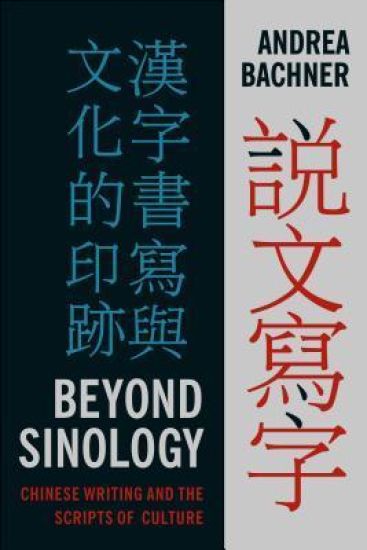
New communication and information technologies provide distinct challenges and possibilities for the Chinese script, which, unlike alphabetic or other phonetic scripts, relies on multiple signifying principles. In recent decades, this multiplicity has generated a rich corpus of reflection and experimentation in literature, film, visual and performance art, and design and architecture, within both China and different parts of the West. Approaching this history from a variety of alternative theoretical perspectives, Beyond Sinology reflects on the Chinese script to pinpoint the multiple connections between languages, scripts, and medial expressions and cultural and national identities. Through a complex study of intercultural representations, exchanges, and tensions, the text focuses on the concrete "scripting" of identity and alterity, advancing a new understanding of the links between identity and medium and a critique of articulations that rely on single, monolithic, and univocal definitions of writing. Chinese writing-with its history of divergent readings in Chinese and non-Chinese contexts, with its current reinvention in the age of new media and globalization-can teach us how to read and construct mediality and cultural identity in interculturally responsible ways and also how to scrutinize, critique, and yet appreciate and enjoy the powerful multi-medial creativity embodied in writing.
The Mark of Theory

The Mark of Theory

Andrea Bachner

FORDHAM UNIVERSITY PRESS
2017
sidottu
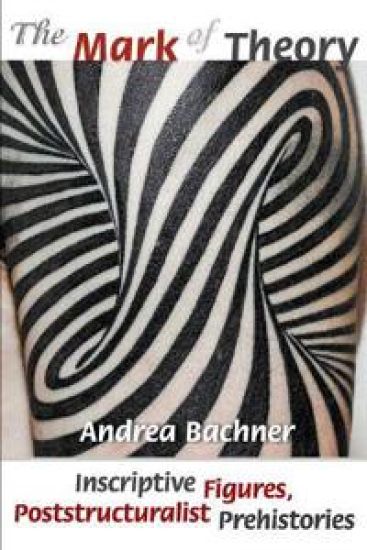
What imaginaries, tropes, and media have shaped how we theorize? The Mark of Theory argues that inscription constitutes one of the master metaphors of contemporary theory. As a trope that draws on a wide array of practices of marking, from tattooing to circumcision, from photographic imprints and phonographic grooves to marks on a page, inscription provides an imaginary that orients and irritates theoretical thought. Tracing inscriptive imaginaries from the late nineteenth century to today, The Mark of Theory offers a wide-ranging conceptual genealogy of contemporary thought. Navigating poststructuralism's attention to figurative language as well as media theory's attention to objects, phenomena, and practices of mediation, the book works through core questions for how we theorize. Across a range of disciplines and scholarly conversations—from literature and media to anthropology, race and gender, art, psychoanalysis, sound, and ultimately ethics—sites of inscription come to constitute the past legacy of a thought to come, a prehistory of our current moment. In focusing on materiality and mediation The Mark of Theory shows how inscriptive practices shape conceptual thought, as well as political and ethical choices. By contextualizing the fraught relationship between materiality and signification, The Mark of Theory lays the ground for a politics of theory that begins there where theory and politics are no longer conflated.
The Mark of Theory

The Mark of Theory

Andrea Bachner

Fordham University Press
2017
pokkari
What imaginaries, tropes, and media have shaped how we theorize? The Mark of Theory argues that inscription constitutes one of the master metaphors of contemporary theory. As a trope that draws on a wide array of practices of marking, from tattooing to circumcision, from photographic imprints and phonographic grooves to marks on a page, inscription provides an imaginary that orients and irritates theoretical thought. Tracing inscriptive imaginaries from the late nineteenth century to today, The Mark of Theory offers a wide-ranging conceptual genealogy of contemporary thought. Navigating poststructuralism's attention to figurative language as well as media theory's attention to objects, phenomena, and practices of mediation, the book works through core questions for how we theorize. Across a range of disciplines and scholarly conversations—from literature and media to anthropology, race and gender, art, psychoanalysis, sound, and ultimately ethics—sites of inscription come to constitute the past legacy of a thought to come, a prehistory of our current moment. In focusing on materiality and mediation The Mark of Theory shows how inscriptive practices shape conceptual thought, as well as political and ethical choices. By contextualizing the fraught relationship between materiality and signification, The Mark of Theory lays the ground for a politics of theory that begins there where theory and politics are no longer conflated.