Kirjojen hintavertailu. Mukana 12 390 323 kirjaa ja 12 kauppaa.

Kirjahaku

Etsi kirjoja tekijän nimen, kirjan nimen tai ISBN:n perusteella.

4 kirjaa tekijältä Andrea Charron

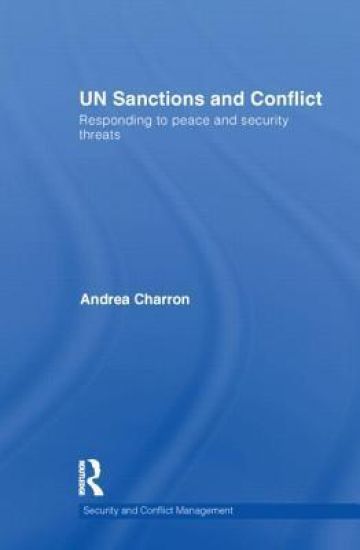
UN Sanctions and Conflict

UN Sanctions and Conflict

Andrea Charron

Routledge
2011
sidottu
This book examines the application of the UN Security Council's mandatory sanctions since 1946, and, in particular, the regimes adopted for specific types of conflict.Beginning in the Cold War period with South Africa and Southern Rhodesia and continuing today, following the post-9/11 experience with Al Qaeda and the Taliban, sanctions are a key tool in the UN's efforts to deal with conflict. This book argues that the type of threat greatly influences the types of sanctions measures applied by the Security Council, who is targeted, as well as the objectives tied to the sanctions. The question of sanctions application is approached by classifying all 29 mandatory Security Council sanctions regimes into four conflict types: interstate; intrastate; international norm-breaking states; and support to terrorism. All of the sanctions regimes within each conflict type are analysed for: the objectives sought by the Council through the application of sanctions measures the targets chosen what measures are applied and in what sequence compared to other Security Council tools (such as peacekeeping missions or peace negotiations). The book sheds new light on how the Security Council approaches international peace and security beyond the application of force. Offering an excellent summary of the ins-and-outs of UN sanctions, and useful summary tables of UN sanctions regimes by conflict type, this book will be of great interest to students of international organisations, peace and conflict studies, conflict resolution, security studies and international relations or politics in general.
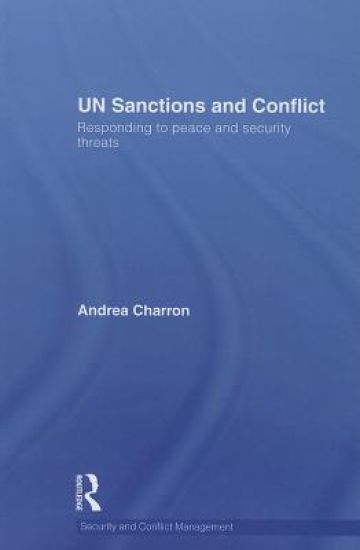
UN Sanctions and Conflict

UN Sanctions and Conflict

Andrea Charron

Routledge
2013
nidottu
This book examines the application of the UN Security Council's mandatory sanctions since 1946, and, in particular, the regimes adopted for specific types of conflict.Beginning in the Cold War period with South Africa and Southern Rhodesia and continuing today, following the post-9/11 experience with Al Qaeda and the Taliban, sanctions are a key tool in the UN's efforts to deal with conflict. This book argues that the type of threat greatly influences the types of sanctions measures applied by the Security Council, who is targeted, as well as the objectives tied to the sanctions. The question of sanctions application is approached by classifying all 29 mandatory Security Council sanctions regimes into four conflict types: interstate; intrastate; international norm-breaking states; and support to terrorism. All of the sanctions regimes within each conflict type are analysed for: the objectives sought by the Council through the application of sanctions measures the targets chosen what measures are applied and in what sequence compared to other Security Council tools (such as peacekeeping missions or peace negotiations). The book sheds new light on how the Security Council approaches international peace and security beyond the application of force. Offering an excellent summary of the ins-and-outs of UN sanctions, and useful summary tables of UN sanctions regimes by conflict type, this book will be of great interest to students of international organisations, peace and conflict studies, conflict resolution, security studies and international relations or politics in general.
NORAD

NORAD

Andrea Charron; James Fergusson; Lori J. Robinson; Pierre J.J. St-Amand

MCGILL-QUEEN'S UNIVERSITY PRESS
2022
sidottu
The North American Aerospace Defense Command (NORAD) has undergone wide-ranging changes since 2006, when it was given a new maritime warning mission and the NORAD Agreement was signed in perpetuity. Andrea Charron and James Fergusson trace NORAD’s recent history, marked by innovations in technology and in command and control, but also by unprecedented threats. The shared defence of North America remains an important issue that should extend to other areas, such as the joint defence of the maritime and cyber domains. Fuelled by a deep curiosity about the command and its decisions made in the face of inevitable geopolitical and technological changes, this book uses a functional lens to evaluate NORAD’s options and the technological and organizational solutions needed to defend North America. The authors investigate the ways in which the NORAD command might adapt in the future as it struggles to modernize and keep ahead of new threats.This book comes at a critical time. The rise of new peer competitors requires a fundamental reconsideration of North American defence. As one of very few contemporary analyses of the command and its future, NORAD will be a vital tool for scholars and practitioners.
NORAD

NORAD

Andrea Charron; James Fergusson; Lori J. Robinson; Pierre J.J. St-Amand

MCGILL-QUEEN'S UNIVERSITY PRESS
2022
nidottu
The North American Aerospace Defense Command (NORAD) has undergone wide-ranging changes since 2006, when it was given a new maritime warning mission and the NORAD Agreement was signed in perpetuity. Andrea Charron and James Fergusson trace NORAD’s recent history, marked by innovations in technology and in command and control, but also by unprecedented threats. The shared defence of North America remains an important issue that should extend to other areas, such as the joint defence of the maritime and cyber domains. Fuelled by a deep curiosity about the command and its decisions made in the face of inevitable geopolitical and technological changes, this book uses a functional lens to evaluate NORAD’s options and the technological and organizational solutions needed to defend North America. The authors investigate the ways in which the NORAD command might adapt in the future as it struggles to modernize and keep ahead of new threats.This book comes at a critical time. The rise of new peer competitors requires a fundamental reconsideration of North American defence. As one of very few contemporary analyses of the command and its future, NORAD will be a vital tool for scholars and practitioners.