Kirjojen hintavertailu. Mukana 11 469 638 kirjaa ja 12 kauppaa.

Kirjahaku

Etsi kirjoja tekijän nimen, kirjan nimen tai ISBN:n perusteella.

9 kirjaa tekijältä Andrea Curtis

What's for Lunch?: How Schoolchildren Eat Around the World
Whether their school is under a banyan tree, in a dusty tent held up with poles or in a sturdy brick structure in the heart of a bustling city, all children need a healthy lunch to be able to learn and grow. Good food nourishes both our bodies and our brains. It's one of the basic building blocks of life. As the world has become more interconnected, what we eat has become part of a huge global system. Food is now the biggest industry on Earth. Growing it, processing it, transporting it and selling it have a major impact on people and the planet. Unpack a school lunch, and you'll discover that food is connected to issues that matter to everyone and everything such as climate change, health and inequality. In What's For Lunch Andrea Curtis reveals the variety and inequality to be found in the food consumed by young people in typical school lunches from thirteen countries around the world, including Japan, Kenya, Russia, United States and Canada, Mexico, Brazil, and Afghanistan. In some countries, the meals are nutritious and well-balanced. In others they barely satisfy basic nutrition standards. The book includes graphic colour photos of each of the lunches described, and stimulating sidebars that deal with various global food issues. It also provides messages for parents, teachers and kids about the significance of food, and more significantly, a list of ways in which children can reclaim school lunches for themselves by insisting on healthy, nutritious food.

Eat This!: How Fast Food Marketing Gets You to Buy Junk (and How to Fight Back)
A provocative follow-up to the bestselling What's for Lunch?, Eat This zooms in on fast food marketing to children -- an immense industry worth billions of dollars. Andrea Curtis shows how fast food companies push their unhealthy food and beverages by embedding their sales pitches in everything from Snapchat filters to movies, from videogames to school curriculum. An exploration of media literacy and food literacy, Eat this looks at what exactly marketing is and touches on the latest strategies aimed at kids, including product placement, advergames, cartoon and celebrity endorsements and school fundraising. On each page spread, Andrea Curtis provides research-based insights into all aspects of the fast food industry and, perhaps most importantly, offers kids examples and ideas about how they can push back -- taking charge of their own health and well-being.
Barnaby

Barnaby

Andrea Curtis

Owlkids
2021
sidottu
A vain blue budgie flies the coop only to find that there's no place like home Barnaby is a blue budgie who's got it all: a golden cage, bells to jingle-jangle, and an owner who gives him all the snacks and attention he wants. Until his owner brings home a "friend" for Barnaby: a little yellow canary. Barnaby is not happy. When his tantrums don't convince his owner to get rid of the canary, Barnaby flies away and ends up hopelessly lost. While stopping for a rest, he encounters a flock of wild sparrows. At first, he looks down his beak at the drab, brown birds. But, growing hungrier and thirstier, he realizes he has a lot to learn from them. Soon Barnaby is a part of their flock, scavenging for seeds and riding on the wind. But Barnaby can't forget his former home, and every night he searches for his owner's house using tricks the sparrows taught him. Finally, he finds it, and Barnaby returns home a changed bird. With subtle messages about sibling rivalry and jealousy, readers will enjoy Barnaby's antics and the sweet conclusion to this story.
A Forest in the City

A Forest in the City

Andrea Curtis

Groundwood Books Ltd ,Canada
2020
sidottu
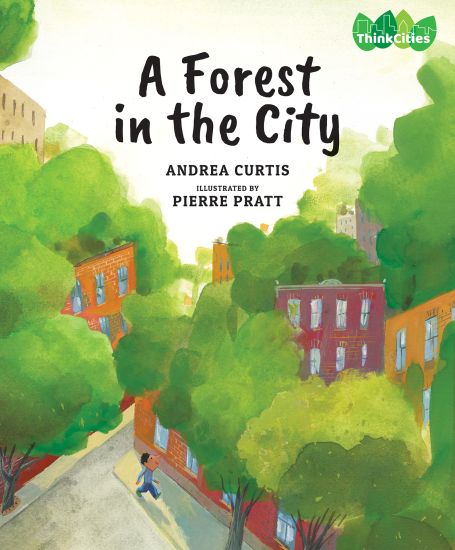
This beautiful book of narrative non-fiction looks at the urban forest and dives into the question of how we can live in harmony with city trees. “Imagine a city draped in a blanket of green … Is this the city you know?” A Forest in the City looks at the urban forest, starting with a bird’s-eye view of the tree canopy, then swooping down to street level, digging deep into the ground, then moving up through a tree’s trunk, back into the leaves and branches. Trees make our cities more beautiful and provide shade but they also fight climate change and pollution, benefit our health and connections to one another, provide food and shelter for wildlife, and much more. Yet city trees face an abundance of problems, such as the abundance of concrete, poor soil and challenging light conditions. So how can we create a healthy environment for city trees? Urban foresters are trying to create better growing conditions, plant diverse species, and maintain trees as they age. These strategies, and more, reveal that the urban forest is a complex system—A Forest in the City shows readers we are a part of it. Includes a list of activities to help the urban forest and a glossary. The ThinkCities series is inspired by the urgency for new approaches to city life as a result of climate change, population growth and increased density. It highlights the challenges and risks cities face, but also offers hope for building resilience, sustainability and quality of life as young people act as advocates for themselves and their communities. Key Text Features diagrams author's note glossary sources definitions Correlates to the Common Core State Standards in English Language Arts: CCSS.ELA-LITERACY.RI.4.7 Interpret information presented visually, orally, or quantitatively (e.g., in charts, graphs, diagrams, time lines, animations, or interactive elements on Web pages) and explain how the information contributes to an understanding of the text in which it appears.
City of Water

City of Water

Andrea Curtis

Groundwood Books Ltd ,Canada
2021
sidottu
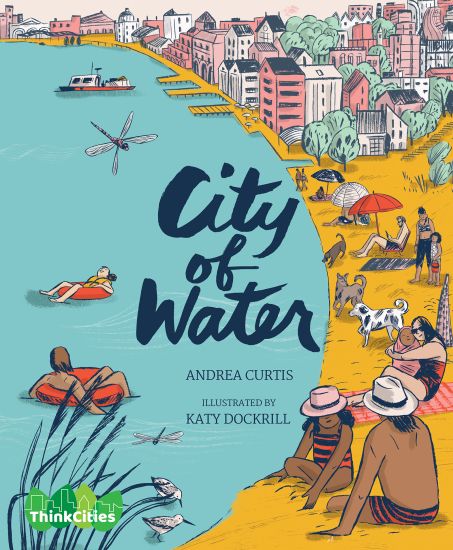
The second book in the ThinkCities series explores water as a precious, finite resource, tracing its journey from source, through the city, and back again. Living in cities where water flows effortlessly from our taps and fountains, it’s easy to take it for granted. City of Water, the second book in the ThinkCities series, shines a light on the water system that is vital for our health and well-being. The narrative traces the journey of water from the forests, mountains, lakes, rivers and wetlands that form the watershed, through pipes and treatment facilities, into our taps, fire hydrants and toilets, then out through storm and sewer systems toward wastewater treatment plants and back into the watershed. Along the way we discover that some of the earliest cities with water systems date back to the Indus Valley in 2500 BC; that in 1920 only 1 percent of the US population had indoor plumbing; that if groundwater is used up too quickly, the land can actually sink; and more. The text is sprinkled with fun and surprising facts — some water fountains in Paris offer sparkling water, and scientists are working to extract microscopic particles of precious metals found in sewage. Readers are encouraged to think about water as a finite resource, and to take action to prevent our cities and watersheds from becoming more polluted. More than 2 billion people in the world are without access to safe, fresh water at home. As the world’s population grows, along with pollution and climate change, access to clean water is becoming an urgent issue. Includes practical steps that kids can take to help conserve water. The ThinkCities series is inspired by the urgency for new approaches to city life as a result of climate change, population growth and increased density. It highlights the challenges and risks cities face, but also offers hope for building resilience, sustainability and quality of life as young people advocate for themselves and their communities. Correlates to the Common Core State Standards in English Language Arts: CCSS.ELA-LITERACY.RL.3.3 Describe the relationship between a series of historical events, scientific ideas or concepts, or steps in technical procedures in a text, using language that pertains to time, sequence, and cause/effect.
City Streets Are for People

City Streets Are for People

Andrea Curtis

Groundwood Books Ltd ,Canada
2022
sidottu
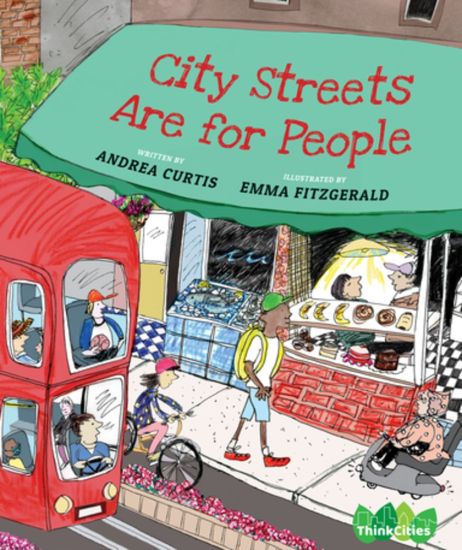
Congested city streets are noisy and thick with cars and trucks, while pedestrians and cyclists are squeezed to the dangerous edges—but does it have to be this way? Imagine a city where we aren’t stuck in cars, where clean air makes it easier to breathe, and where transit is easy to access—and on time. Imagine a city where streets are for people! This fun, accessible and ultimately hopeful book explores sustainable transportation around the globe, including electric vehicles, public transit, bicycles, walking and more. It invites us to conjure up a city of the future, where these modes are all used together to create a place that is sustainable, healthy, accessible and safe. Includes a list of ideas for children to promote green transportation in their communities, along with a glossary and sources for further reading. The ThinkCities series is inspired by the urgency for new approaches to city life as a result of climate change, population growth and increased density. It highlights the challenges and risks cities face, but also offers hope for building resilience, sustainability and quality of life as young people advocate for themselves and their communities. Key Text Features diagrams facts further information further reading glossary historical context illustrations labels resources references Correlates to the Common Core State Standards in English Language Arts: CCSS.ELA-LITERACY.RI.4.7 Interpret information presented visually, orally, or quantitatively (e.g., in charts, graphs, diagrams, time lines, animations, or interactive elements on Web pages) and explain how the information contributes to an understanding of the text in which it appears. CCSS.ELA-LITERACY.RI.5.3 Explain the relationships or interactions between two or more individuals, events, ideas, or concepts in a historical, scientific, or technical text based on specific information in the text. CCSS.ELA-LITERACY.RI.6.6 Determine an author's point of view or purpose in a text and explain how it is conveyed in the text.
The Story and Science of Hope

The Story and Science of Hope

Andrea Curtis

Groundwood Books Ltd ,Canada
2025
sidottu
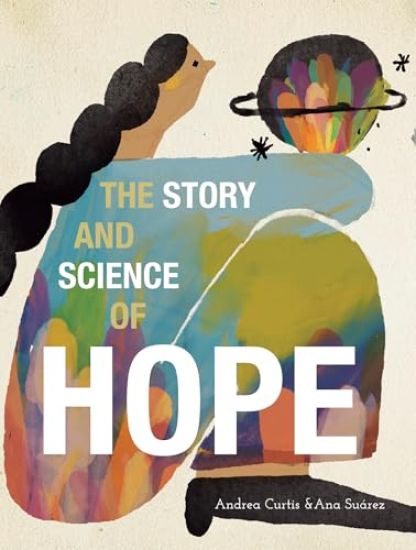
Hope is more than a feeling — it can change the world! Discover how new science and ancient knowledge can help us face an uncertain world. All over the world, kids are struggling with grief, anxiety and fear about the climate crisis, war, and a future that seems out of their control. Sometimes it’s hard to have hope – but hope may be the one thing that can change the world! Modern researchers – called Hope Theorists – are helping us to understand that we can use hope to improve our own lives and those of our neighbors, friends and even the planet. The Story and Science of Hope is an illustrated non-fiction book for middle-grade readers that weaves together ancient history with surprising new scientific research showing hope is more than a feeling — it’s essential for our well-being. People who are high in hope are happier and healthier, they live longer, do better in school and have stronger friendships. Learn the history of hope, how it can be measured, learned and practiced — even where you can find hope in your brain (spoiler: it’s the bilateral medial orbitofrontal cortex, above your eyes and a few centimetres inside your brain)! Backmatter includes real-world examples of hopeful environmental activists and a list of ways that kids can cultivate hope, as well as a glossary of unfamiliar terms, sources and further reading. Key Text Features illustrations definitions facts further information further reading glossary headings historical context Correlates to the Common Core State Standards in English Language Arts: CCSS.ELA-LITERACY.RI.4.2 Determine the main idea of a text and explain how it is supported by key details; summarize the text. CCSS.ELA-LITERACY.RI.4.8 Explain how an author uses reasons and evidence to support particular points in a text. CCSS.ELA-LITERACY.RI.5.2 Determine two or more main ideas of a text and explain how they are supported by key details; summarize the text. CCSS.ELA-LITERACY.RI.5.8 Explain how an author uses reasons and evidence to support particular points in a text, identifying which reasons and evidence support which point(s). CCSS.ELA-LITERACY.RI.6.2 Determine a central idea of a text and how it is conveyed through particular details; provide a summary of the text distinct from personal opinions or judgments. CCSS.ELA-LITERACY.RI.6.3 Analyze in detail how a key individual, event, or idea is introduced, illustrated, and elaborated in a text (e.g., through examples or anecdotes). CCSS.ELA-LITERACY.RI.6.5 Analyze how a particular sentence, paragraph, chapter, or section fits into the overall structure of a text and contributes to the development of the ideas. CCSS.ELA-LITERACY.RI.6.6 Determine an author's point of view or purpose in a text and explain how it is conveyed in the text.
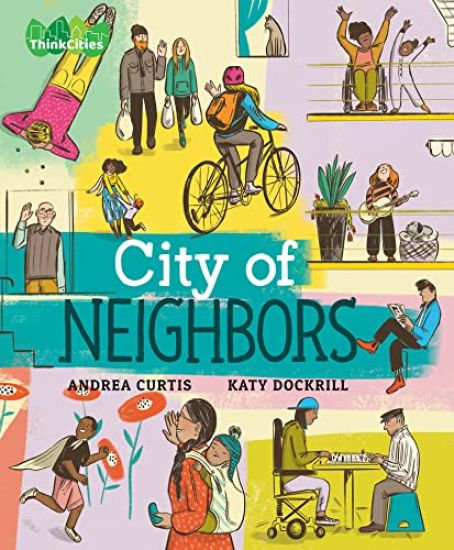
City of Neighbors

City of Neighbors

Andrea Curtis

Groundwood Books Ltd ,Canada
2023
sidottu
A splash of paint, a place to sit, a popup park or playground bring life and a sense of fun to our cities. Neighborhoods where people look out for each other, eat together, make art and build community are healthier, happier, greener and cleaner. Journey around the world to discover how people have been dreaming up new ways to ensure their cities and neighbourhoods are creative, inclusive and environmentally sustainable. These placemaking ideas can be big — like the skateboard park built on the grounds of an orphanage in Nairobi, Kenya — or small — like the painted rock snake that winds along a beach in Toronto, Ontario. Together, we can create public spaces where everyone belongs. Includes a list of ideas for children to get involved in their neighborhoods, along with a glossary and sources for further reading. The ThinkCities series is inspired by the urgency for new approaches to city life as a result of climate change, population growth and increased density. It highlights the challenges and risks cities face, but also offers hope for building resilience, sustainability and quality of life as young people advocate for themselves and their communities. Key Text Features fact further information further reading glossary historical context illustrations resources references Correlates to the Common Core State Standards in English Language Arts: CCSS.ELA-LITERACY.RI.6.1 Cite textual evidence to support analysis of what the text says explicitly as well as inferences drawn from the text. CCSS.ELA-LITERACY.RI.6.6 Determine an author's point of view or purpose in a text and explain how it is conveyed in the text.
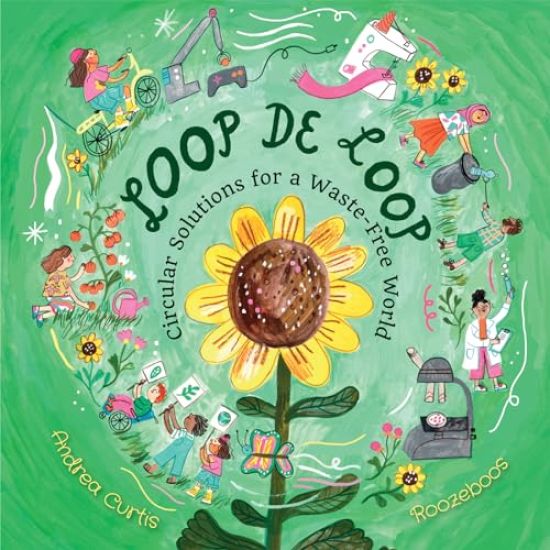
Loop de Loop

Loop de Loop

Andrea Curtis

Groundwood Books Ltd ,Canada
2024
sidottu
Get loopy with this playful introduction to the hopeful, transformative possibilities of circular systems! Nature works on a cycle, where everything in the loop has value and nothing is wasted. But modern humans have created a different kind of system: it’s less like a circle and more like a line. We take, make, use and then, when those things break or we’re finished with them, we toss them away. But our planet’s resources are limited, and we’ve taken too much. That’s why all over the world, people are reusing, repurposing, repairing and designing waste out of the system! Explore the ways that people everywhere are creating a loopier world: from growing building materials out of fungi to designing headphones (and cellphones!) that last, to producing vehicles that run on renewable energy. Plus, kids and families have a role to play, too. Loop de Loop introduces young readers to repair cafés, toy rentals, tool libraries and many more fun, innovative ways to build community and a more sustainable world. Includes a list of ways children can take part in circular systems, along with a glossary and sources for further reading. Key Text Features Illustrations glossary definitions further reading Correlates to the Common Core State Standards in English Language Arts: CCSS.ELA-LITERACY.RI.K.8 With prompting and support, identify the reasons an author gives to support points in a text. CCSS.ELA-LITERACY.RI.1.2 Identify the main topic and retell key details of a text.