Kirjojen hintavertailu. Mukana 11 627 220 kirjaa ja 12 kauppaa.

Kirjahaku

Etsi kirjoja tekijän nimen, kirjan nimen tai ISBN:n perusteella.

3 kirjaa tekijältä Andrea Friedman

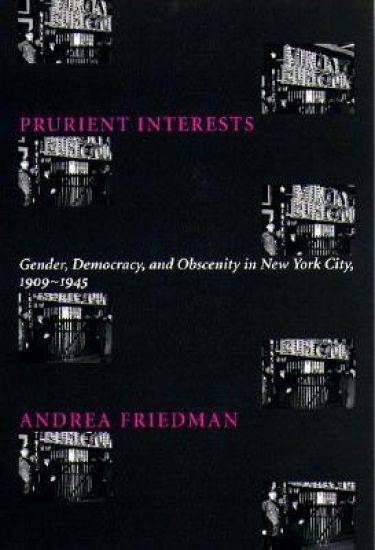
Prurient Interests

Prurient Interests

Andrea Friedman

Columbia University Press
2000
sidottu
Debate about what constitutes obscenity and how-if at all-it should be regulated has been at the center of the "culture wars" of the past two decades. While literature abounds on the contemporary politics of obscenity, there has been little inquiry into the historic origins of these issues. Focusing on New York City in the first half of the twentieth century, Andrea Friedman's Prurient Interests considers the ways in which the evolution of obscenity debates in decades past has significantly affected today's controversies. Exploring motion pictures, burlesque, and Broadway theater-three forms of entertainment that were regularly condemned by anti-obscenity activists in the early 1900s-Friedman traces the creation of a modern system of obscenity regulation in New York City. Friedman also shows how the rise of the concept of "democratic moral authority"-the idea that obscenity should be regulated according to the standards of the "average person" and that the mechanisms of regulation should themselves be controlled by the people-displaced middle-class women as anti-obscenity crusaders. At the same time, it offered inroads to male religious figures who were able to portray themselves as representatives of the people. As Prurient Interests vividly illustrates, many of the elemental arguments that censorship advocates still employ today were first delineated in this period: the capacity of certain forms of entertainment to encourage violence against women, to corrupt the minds of young audiences, and to spread homosexuality. Friedman's innovative study enriches our understanding of the obscenity debates still raging at the close of the millennium.
Prurient Interests

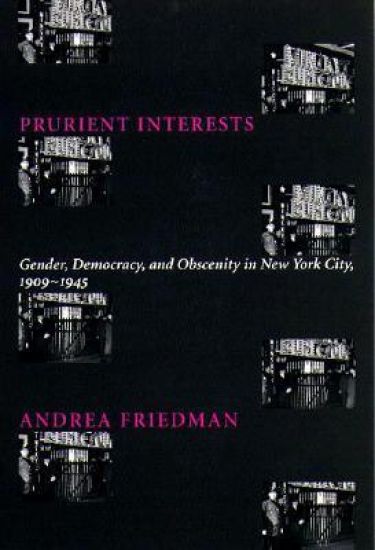
Prurient Interests

Andrea Friedman

Columbia University Press
2000
pokkari
Debate about what constitutes obscenity and how-if at all-it should be regulated has been at the center of the "culture wars" of the past two decades. While literature abounds on the contemporary politics of obscenity, there has been little inquiry into the historic origins of these issues. Focusing on New York City in the first half of the twentieth century, Andrea Friedman's Prurient Interests considers the ways in which the evolution of obscenity debates in decades past has significantly affected today's controversies. Exploring motion pictures, burlesque, and Broadway theater-three forms of entertainment that were regularly condemned by anti-obscenity activists in the early 1900s-Friedman traces the creation of a modern system of obscenity regulation in New York City. Friedman also shows how the rise of the concept of "democratic moral authority"-the idea that obscenity should be regulated according to the standards of the "average person" and that the mechanisms of regulation should themselves be controlled by the people-displaced middle-class women as anti-obscenity crusaders. At the same time, it offered inroads to male religious figures who were able to portray themselves as representatives of the people. As Prurient Interests vividly illustrates, many of the elemental arguments that censorship advocates still employ today were first delineated in this period: the capacity of certain forms of entertainment to encourage violence against women, to corrupt the minds of young audiences, and to spread homosexuality. Friedman's innovative study enriches our understanding of the obscenity debates still raging at the close of the millennium.
Citizenship in Cold War America

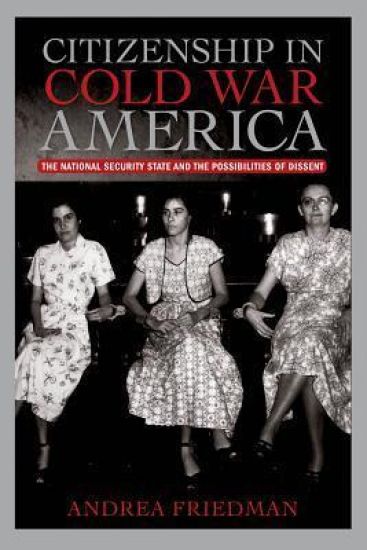
Citizenship in Cold War America

Andrea Friedman

University of Massachusetts Press
2014
nidottu
In the wake of 9/11, many Americans have deplored the dangers to liberty posed by a growing surveillance state. In this book, Andrea Friedman moves beyond the standard security/liberty dichotomy, weaving together often forgotten episodes of early Cold War history to reveal how the obsession with national security enabled dissent and fostered new imaginings of democracy.The stories told here capture a wide-ranging debate about the workings of the national security state and the meaning of American citizenship. Some of the participants in this debate - women like war bride Ellen Knauff and Pentagon employee Annie Lee Moss - were able to make their own experiences compelling examples of the threats posed by the national security regime. Others, such as Ruth Reynolds and Lolita Lebrón, who advocated an end to American empire in Puerto Rico, or the psychiatrist Fredric Wertham, who sought to change the very definition of national security, were less successful. Together, however, they exposed the gap between democratic ideals and government policies.Friedman traverses immigration law and loyalty boards, popular culture and theoretical treatises, U.S. courtrooms and Puerto Rican jails, to demonstrate how Cold War repression made visible in new ways the unevenness and limitations of American citizenship. Highlighting the ways that race and gender shaped critiques and defences of the national security regime, she offers new insight into the contradictions of Cold War political culture.