Kirjojen hintavertailu. Mukana 11 605 973 kirjaa ja 12 kauppaa.

Kirjahaku

Etsi kirjoja tekijän nimen, kirjan nimen tai ISBN:n perusteella.

12 kirjaa tekijältä Andrea Nye

Words of Power

Words of Power

Andrea Nye

Routledge
2019
sidottu
Originally published in 1990. A common complaint of philosophers, and men in general, has been that women are illogical. On the other hand, rationality, defined as the ability to follow logical argument, is often claimed to be a defining characteristic of man. Andrea Nye undermines assumptions such as: logic is unitary, logic is independent of concrete human relations, logic transcends historical circumstances as well as gender. In a series of studies of the logics of historical figures Parmenides, Plato, Aristotle, Zeno, Abelard, Ockham, and Frege she traces the changing interrelationships between logical innovation and oppressive speech strategies, showing that logic is not transcendent truth but abstract forms of language spoken by men, whether Greek ruling citizens, imperial administrators, church officials, or scientists. She relates logical techniques, such as logical division, syllogisms, and truth functions, to ways in which those with power speak to and about those subject to them. She shows, in the specific historical settings of Ancient and Hellenistic Greece, medieval Europe, and Germany between the World Wars, how logicians reworked language so that dialogue and reciprocity are impossible and one speaker is forced to accept the words of another. In the personal, as well as confrontative style of her readings, Nye points the way to another power in the words of women that might break into and challenge rational discourses that have structured Western thought and practice.
Words of Power

Words of Power

Andrea Nye

Routledge
2021
nidottu
Originally published in 1990. A common complaint of philosophers, and men in general, has been that women are illogical. On the other hand, rationality, defined as the ability to follow logical argument, is often claimed to be a defining characteristic of man. Andrea Nye undermines assumptions such as: logic is unitary, logic is independent of concrete human relations, logic transcends historical circumstances as well as gender. In a series of studies of the logics of historical figures Parmenides, Plato, Aristotle, Zeno, Abelard, Ockham, and Frege she traces the changing interrelationships between logical innovation and oppressive speech strategies, showing that logic is not transcendent truth but abstract forms of language spoken by men, whether Greek ruling citizens, imperial administrators, church officials, or scientists. She relates logical techniques, such as logical division, syllogisms, and truth functions, to ways in which those with power speak to and about those subject to them. She shows, in the specific historical settings of Ancient and Hellenistic Greece, medieval Europe, and Germany between the World Wars, how logicians reworked language so that dialogue and reciprocity are impossible and one speaker is forced to accept the words of another. In the personal, as well as confrontative style of her readings, Nye points the way to another power in the words of women that might break into and challenge rational discourses that have structured Western thought and practice.
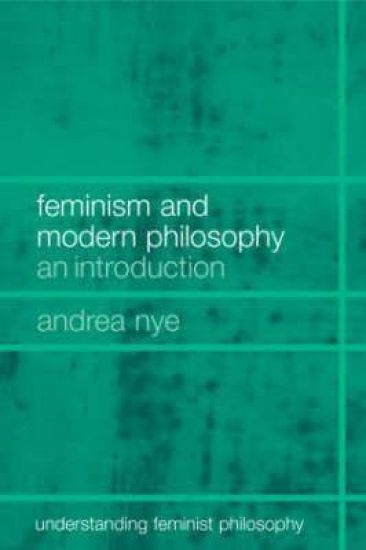
Feminism and Modern Philosophy
A feminist approach to the history of modern philosophy reveals new insights into the lives and works of major figures such as Jean-Jacques Rousseau and David Hume, and is crucial to an appreciation of the advent of feminist philosophy. Feminism and Modern Philosophy introduces students to the main thinkers and themes of modern philosophy from different feminist perspectives, and highlights the role of gender in studying classic philosophical texts.This book shows how the important figures in the history of modern philosophy have been reinterpreted by feminist theory, including:* feminist critiques of Descartes' rationalism* Locke's 'state of nature' as it relates to the family* the charges of misogyny levelled against KantIn addition, the book introduces lesser-studied texts and interpretations, such as:* the metaphysics of Leibniz's contemporary, Anne Conway* Annette Baier's recent presentation and defence of HumeFeminism and Modern Philosophy: An Introduction is written in an accessible and lively style, and each chapter ends with a helpful annotated guide to further reading. It will be appropriate for philosophy as well as gender studies courses looking at the development of modern western thought.
Feminism and Modern Philosophy
A feminist approach to the history of modern philosophy reveals new insights into the lives and works of major figures such as Jean-Jacques Rousseau and David Hume, and is crucial to an appreciation of the advent of feminist philosophy. Feminism and Modern Philosophy introduces students to the main thinkers and themes of modern philosophy from different feminist perspectives, and highlights the role of gender in studying classic philosophical texts.This book shows how the important figures in the history of modern philosophy have been reinterpreted by feminist theory, including:* feminist critiques of Descartes' rationalism* Locke's 'state of nature' as it relates to the family* the charges of misogyny levelled against KantIn addition, the book introduces lesser-studied texts and interpretations, such as:* the metaphysics of Leibniz's contemporary, Anne Conway* Annette Baier's recent presentation and defence of HumeFeminism and Modern Philosophy: An Introduction is written in an accessible and lively style, and each chapter ends with a helpful annotated guide to further reading. It will be appropriate for philosophy as well as gender studies courses looking at the development of modern western thought.
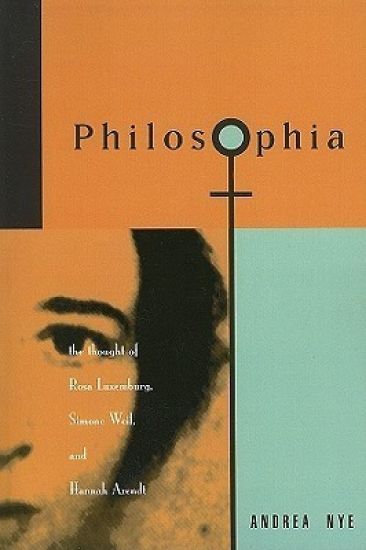
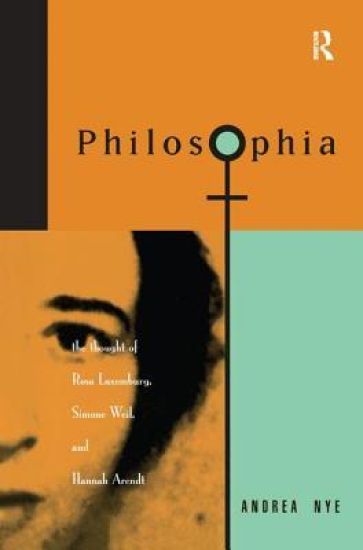
Philosophia

Philosophia

Andrea Nye

Routledge
1994
nidottu
Philosophia brings together, for the first time, the work of three major women thinkers of this century, producing a developing commentary on the human condition as an alternative to the mainstream, masculine, philosophical tradition.
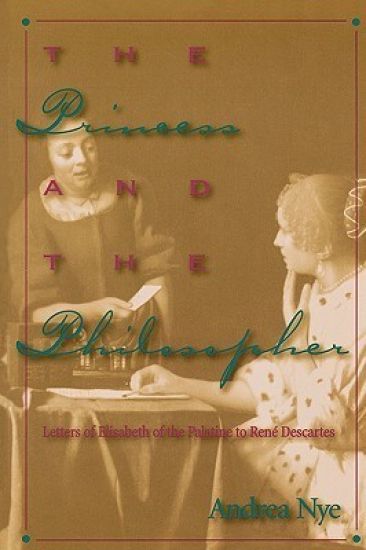
The Princess and the Philosopher

The Princess and the Philosopher

Andrea Nye

Rowman Littlefield
1999
nidottu
For a number of years, those interested in recovering women's thought have known about Princess Elisabeth, a seventeenth-century correspondent and friend of Descartes whose questions provoked the philosopher to think more seriously about ethics and the passions. Up to now, only a few of her letters have found their way into print. This volume includes translations of all of Elisabeth's extant letters to Descartes, as well as of other materials relevant to understanding her philosophical perspective and her life. Nye has supplemented the translations with a running commentary on the historical, biographical, and intellectual context of the letters. The letters were during a tumultuous time in European history. A devastating Thirty Years War had ruined Elisabeth's family and devastated their principality, the Palatine. On his part, Descartes was increasingly embroiled in bitter controversies surrounding his work in relatively free-thinking Holland. In her commentary Nye shows how personal experiences energized his and Elisabeth's different views of the relation between mind and body, the existence of God, and the nature of morality. What Nye evokes, along with the thinking of an extraordinary woman, is an alternative model for philosophy, a nonadversarial form of dialogue that does not pretend to objective theorizing. Such a philosophy depends on mutual respect and trust, on concern for the other's sensibilities and views, on friendship between women and men with a common concern for human life.
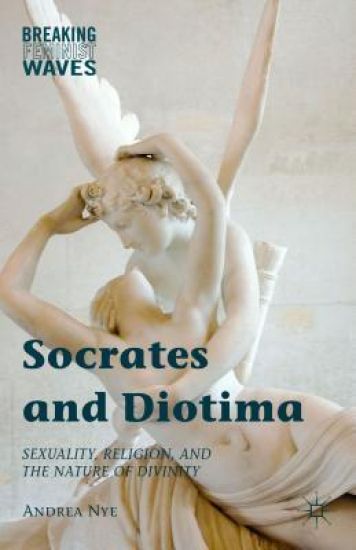
Socrates and Diotima

Socrates and Diotima

Andrea Nye

Palgrave Macmillan
2015
sidottu
Few women's voices have survived from the antiquity period, but evidence shows that, especially in the area of religion, women were influential in Greek culture. Drawing on Socrates' Symposium , Nye advances this notion by not only exploring the original religious meaning of Diotima's teaching but also how that meaning has been lost throughout time.
Philosophia

Philosophia

Andrea Nye

Routledge
2017
sidottu
Philosophia brings together, for the first time, the work of three major women thinkers of this century, producing a developing commentary on the human condition as an alternative to the mainstream, masculine, philosophical tradition.
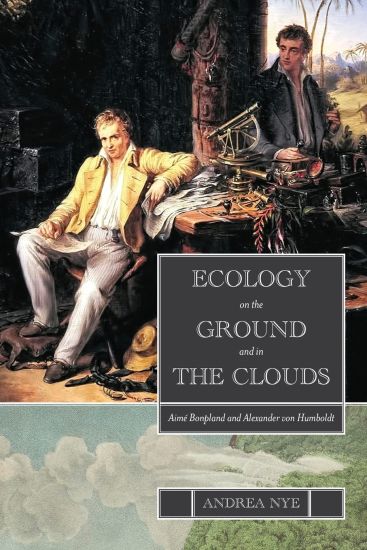
Ecology on the Ground and in the Clouds

Ecology on the Ground and in the Clouds

Andrea Nye

STATE UNIVERSITY OF NEW YORK PRESS
2022
pokkari
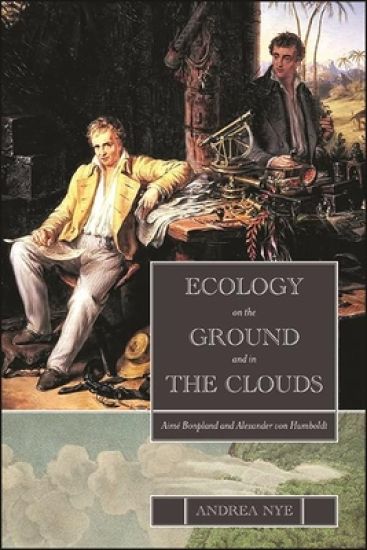
Follows Alexander von Humboldt and Aimé Bonpland as they travel together in South America and then go their separate ways, in the process illustrating two very different ways of understanding humanity's place in the natural world.In Ecology on the Ground and in the Clouds, Andrea Nye raises a question: In a time of climate change and environmental crisis, where should we look for inspiration? Is it to Alexander von Humboldt, the "inventor of nature" who viewed the cosmos from the lofty peak of Mount Chimborazo? Or is it to Humboldt's travel partner, the botanist Aimé Bonpland, who left Europe behind for forty years of conservation, agroforestry, and cooperative farming in the newly independent Republic of Argentina? For Bonpland, order and harmony are not unveiled with European reason and insight; they are made on the ground by intelligent, honorable, and diverse working men and women. Cosmos is not a hidden balance of nature; it is order in thought and action that ensures what we do is coherent and for the common good. It is fair and efficient government, just adjudication of disputes, and good management. It is loving attention to intricate "cogs and wheels" of natural processes at the same time as imagining new forms of beauty and stability in human communities and working landscapes.
Ecology on the Ground and in the Clouds

Ecology on the Ground and in the Clouds

Andrea Nye

STATE UNIVERSITY OF NEW YORK PRESS
2022
sidottu
Follows Alexander von Humboldt and Aimé Bonpland as they travel together in South America and then go their separate ways, in the process illustrating two very different ways of understanding humanity's place in the natural world.In Ecology on the Ground and in the Clouds, Andrea Nye raises a question: In a time of climate change and environmental crisis, where should we look for inspiration? Is it to Alexander von Humboldt, the "inventor of nature" who viewed the cosmos from the lofty peak of Mount Chimborazo? Or is it to Humboldt's travel partner, the botanist Aimé Bonpland, who left Europe behind for forty years of conservation, agroforestry, and cooperative farming in the newly independent Republic of Argentina? For Bonpland, order and harmony are not unveiled with European reason and insight; they are made on the ground by intelligent, honorable, and diverse working men and women. Cosmos is not a hidden balance of nature; it is order in thought and action that ensures what we do is coherent and for the common good. It is fair and efficient government, just adjudication of disputes, and good management. It is loving attention to intricate "cogs and wheels" of natural processes at the same time as imagining new forms of beauty and stability in human communities and working landscapes.